

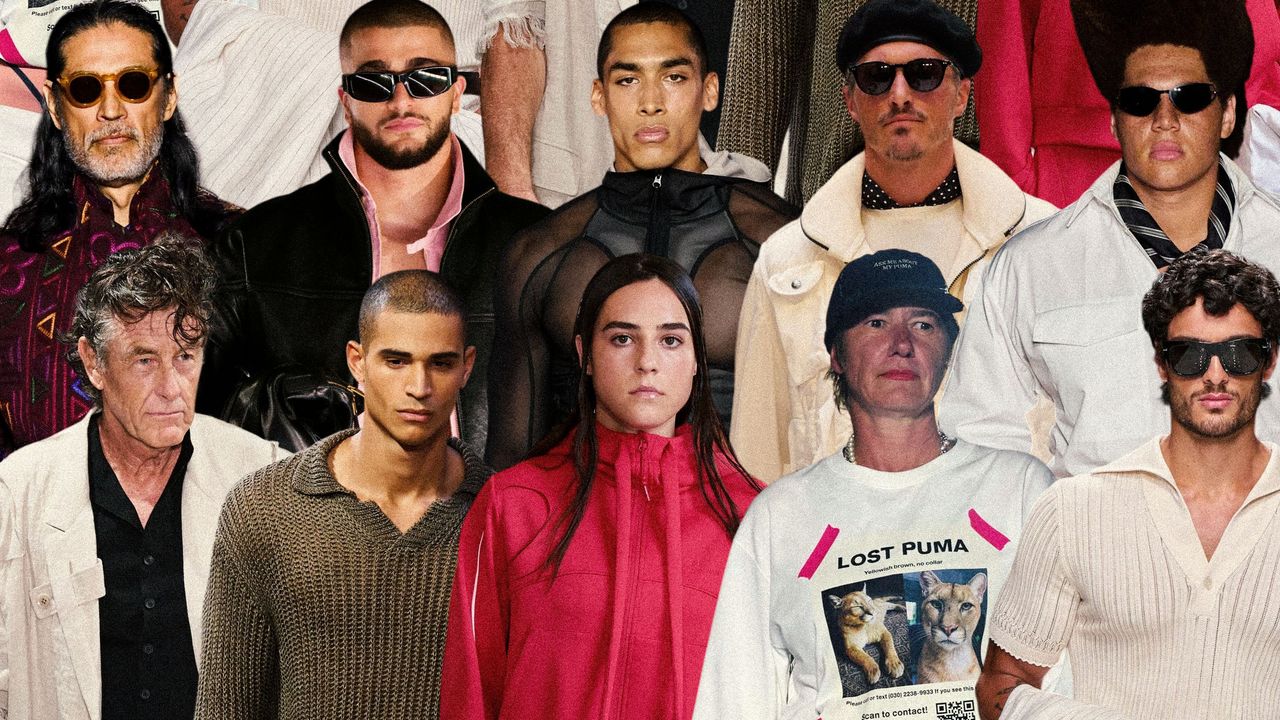
Paris, meanwhile, remained overwhelmingly in favor of straight-size casting, with 98.2% of looks shown on straight-size models. LGN Louis-Gabriel Nouchi once again led the season, with 27.5% of its cast classified as mid-size, followed by Feng Chen Wang with 12.8% and Doublet with 11.1%. Willy Chavarria and KidSuper also included a small number of mid-size models.
At the same time, industry observers pointed to the resurgence of very slim casting throughout the season. “To say that the majority of the male models on the runways were slender this season would be an understatement,” wrote fashion designer and creative director Edward Buchanan on an Instagram post, captioning it: “The vast majority of luxury brands do not fit my body, and I know I am not alone.”
“We’re presented with a relentless idealized male form on social media at all times, whether that’s muscular or skinny,” Dazed executive editor Jack Sunnucks told Vogue Business. “I think a lot of men I know now want this kind of muscular and lean physique, which is pretty impossible if it’s not your full-time job or without the help of peptides, steroids, or GLP-1s. The runway always reflects reality. So this trend was always going to come for the men’s runway.”
That tension around representation crystallized in a broader cultural flashpoint when controversial streamer Clavicular, known for popularizing “looksmaxxing” — an online trend encouraging men to optimize their appearances through often extreme physical procedures — walked in 424’s runway show, prompting immediate backlash online. For instance, French fashion commentator Lyas immediately posted from the front row, filming himself raising his middle finger toward Clavicular in a video shared on Instagram that got nearly 320,000 likes.
“Fashion is far beyond its stunt-casting, runway-gag era,” says i-D global editorial director Steff Yotka, referencing the backlash. Rather than being defined by a signal-dominant trend, she says this season reflected brands’ growing desire to establish distinct identities instead of following a shared aesthetic. Where previous seasons could be neatly categorized by movements such as streetwear, tailoring, or quiet luxury, designers are not focused on standing apart from one another by homing in on their true DNA. “Brands are realizing that if you’re part of the conversation, then you’re just another name on a list. You’re just another picture in a trend report.” The result, Yotka argues, is more individual and, in many cases, more wearable menswear. “I saw so many outfits on the men’s runways that didn’t require any tweaking to walk straight off the runway and into a bar.”
It’s why Jordan also believes those runway extremes are unlikely to translate directly into consumers’ wardrobes. “In reality, no, I don’t see this impacting how our customer wants to dress. The shows are embraced and absorbed by a narrow slice of the overall male fashion customer — the majority of our consumers are not engaging with the runway shows, so this very slim silhouette will not influence them,” she says. “The impact is newness for the runway, rather than a retail one, and in most cases, the brands will commercialize most of the fits in the showroom before the products hit the stores.”
