

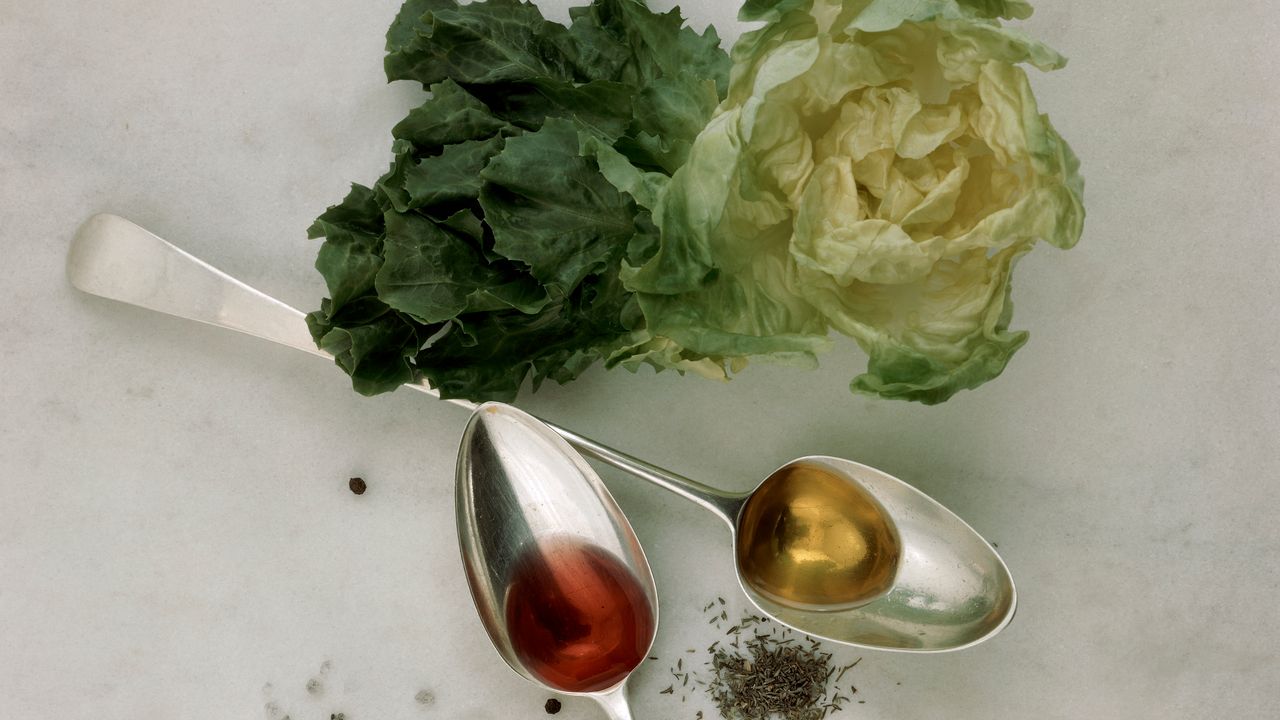
“Just because of the world we live in,” I heard the woman to my left say to the server, with a bit of a nervous laugh. “Does the burger have lettuce?”
The answer was no, and she proceeded with her dinner order. As I eavesdropped on my neighboring table at a Brooklyn restaurant last Thursday—and ordered charred green beans instead of a salad—I felt a twinge of satisfaction. I’d found a kindred spirit: a fellow worrier amid the cyclospora outbreak.
You know that friend? The one who’s the first to sound the group chat alarm during a food recall, virus, extreme weather event, or some other fresh hell coming our way? That’s me. So when I first heard about cyclospora a couple of weeks ago, it made me more than a little wary. I mean, what diarrhea-causing, food-borne parasite wouldn’t?
Since then, I’ve been second-guessing my office salads and wondering if “seared” truly means cooked. I ordered a chicken dish at a restaurant and eyed its garnish—a tuft of greens—with suspicion. And I’m not alone in this. Sara Tercero, a food influencer who goes by the “Salad Queen,” is currently steering clear of all leafy greens, according to an article in The New York Times that declared that the country is in the throes of “the Great Lettuce Scare.”
An informal poll of my Vogue colleagues revealed that some people have been switching from leafy greens to cucumber salad and forgoing their beloved chicken Caesar wraps. (Visits to salad-focused chains are reportedly down, according to multiple outlets.) “As someone who already has a fragile immune system, I’ve been avoiding lettuce altogether. And I can’t believe I’m saying this, but I actually miss salad,” Vogue beauty commerce writer Conçetta Ciarlo says.
Online, some people have been relishing the opportunity to avoid salad. Others are finding themselves desperately missing their greens. Some seem to be courting chaos, filming themselves eating salad and simply crossing their fingers and hoping for the best.
More than 4,100 confirmed cases of the illness have been documented across 41 states. Some cases have been linked to iceberg lettuce grown in Mexico, which is sold at some Taco Bell locations. (Taco Bell has said it has removed the lettuce.) Taylor Farms, America’s largest salad producer, has voluntarily recalled lettuce from central Mexico. For the record: The CDC recommends not eating shredded lettuce at Taco Bell in Indiana, Kentucky, Michigan, Ohio, and West Virginia, and of course, not eating the recalled lettuce.
Unfortunately, it’s not just lettuce. Raspberries, basil, salad mixes, cilantro, berry and fruit mixes, and snap peas are among the produce that have been linked to past outbreaks. So what can we eat?
Like a lot of things, it depends on your risk tolerance. But generally, it’s a good idea to thoroughly wash your vegetables. If you’re immunocompromised, you may want to cook them, because heat can kill the parasite. The director of food safety at Consumer Reports said in an article that “fruits and vegetables from a home garden, farmers market, or community-supported agriculture (CSA) program may be a less risky option.” Experts told CNN they recommend avoiding pre-cut or packaged produce. Essentially, it seems, the fewer hands involved in the chain from harvest to plate, the better.
So maybe it’s time to finally join that CSA you’ve been eyeing? I know I’m thinking about it.
