

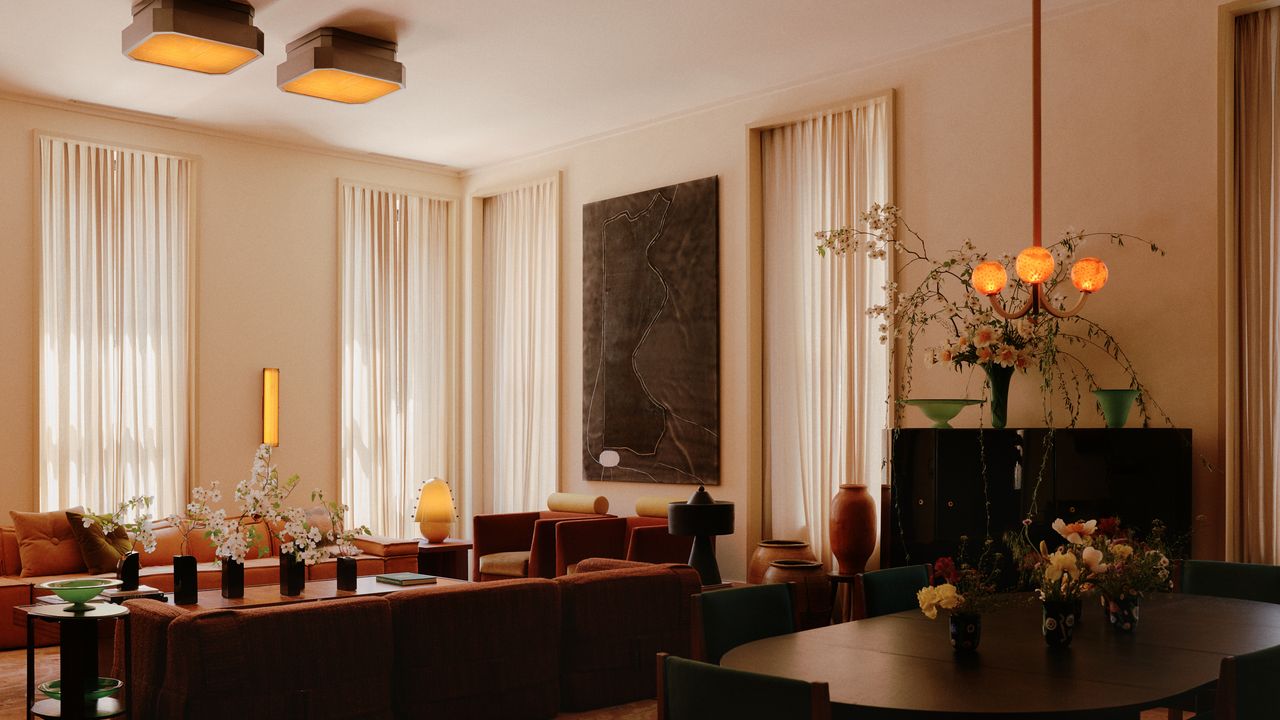
The great divide between industrial manufacturing and traditional craftsmanship is widely lamented among aesthetes. “It’s sort of like a TV dinner versus a home-cooked meal,” Nick Ozemba muses. He and his In Common With co-founder Felicia Hung founded their design studio firmly in the home-cooked category, but with the caveat of scaling up production far more than you typically see with old-world craft. They also anchored the company around collaboration, using each collection as an opportunity to work with specialized ateliers around the world, such as ceramicists, glassblowers, and metalsmiths.
A couple of years ago, Ozemba and Hung also opened a concept store, Quarters, in a 19th-century Tribeca loft as a way of seeing how their catalog sat in dialogue with other objects. The space is styled like a residence, and nearly everything—vintage furniture, independent works by fellow artists, In Common With collections—can be shopped. And though their design studio is known for its focus on lighting, In Common With’s latest release (titled Lido) signals an exciting expansion into making their own homewares.

In Common With’s Tribeca concept store, Quarters.Photo: In Common With
Ozemba and Hung founded In Common With in 2018, but initially met on their very first day of art school, where they both studied furniture design. “We naturally gravitated towards one another and knew we’d end up doing something together at some point,” Ozemba says. After graduating, Hung worked in manufacturing and design at several lighting and furniture studios, while Ozemba went into interior design. When the duo was ready to launch a business, they pivoted toward lighting, but with the intention of eventually expanding. “We’ve always thought of ourselves as a design studio rather than exclusively a lighting company,” Ozemba explains, “but lighting just happened to be our first category because of the scalable manufacturing model that we made.”

Lighting from the Lido collection, installed in Quarters.Photo: In Common With
