

China’s low-cost e-commerce export sector is facing another setback, with rising jet fuel costs worsening the demand slump triggered by the end of the U.S. duty-free de minimis exemption.
These online shipments out of China fell 10.9 percent year over year in April to $9.8 billion, marking the fifth straight monthly decline for the sector, based on Luxembourg-based consultancy Trade and Transport Group’s analysis of Chinese customs data.
The dips are likely to have had an impact on the top and bottom lines of China-associated e-commerce giants including Shein, Temu and Alibaba’s AliExpress.
On May 2, 2025, the U.S. scrapped the trade exemption, which allowed e-commerce sellers to ship packages from China into the U.S. tax-free as long as the total value was worth $800 or less.
The EU is soon following suit, agreeing to a 3-euro ($3.46) tax on parcels from all foreign countries that will go into effect July 1. The exemption previously enforced a 150-euro ($173) minimum for sellers to ship goods duty-free.
The cumulative effect of these policy shifts is now compounding with the fuel costs, squeezing margins for sellers who had already been adapting to the new tariff landscape.
A Reuters report indicated that the war in Iran, which sent oil prices surging in the spring months, forced sellers on the platforms to increase prices on their goods to offset the higher transportation expenses. One Shenzhen-based seller told the publication she had to raise sales prices $2 because her shipping costs per cart increased on average by $1.
Air freight rates worldwide have skyrocketed since the start of the war, with flights out of the Asia Pacific region seeing prices to the U.S. jump 36 percent year over year, according to data released Saturday by air cargo market intelligence firm WorldACD. Similarly, rates from last year to Europe leapt 39 percent.
The higher costs add incentives for companies with Chinese supplies to move inventory closer to customers. For example, Shein has been expanding its warehouse capacity in Europe, last month opening its third warehouse in Cannock, near Birmingham in the U.K.
Despite the decline in low-value shipments, China’s wider exports economy is expected to remain healthy as more companies are pulling forward their orders ahead of fuel price adjustments and extra surcharges from the ocean carriers.
According to a Reuters poll of 32 economists, exports from the world’s second-largest economy are forecast to have risen 15 percent year-over-year in dollar terms. This would be an increase from the 14.1 percent annual growth recorded in April.
China’s trade surplus is forecast to come in at $92.1 billion in May, up from $84.8 billion a month prior and from $51.3 billion in March.
FedEx collaborates with top China cargo airline
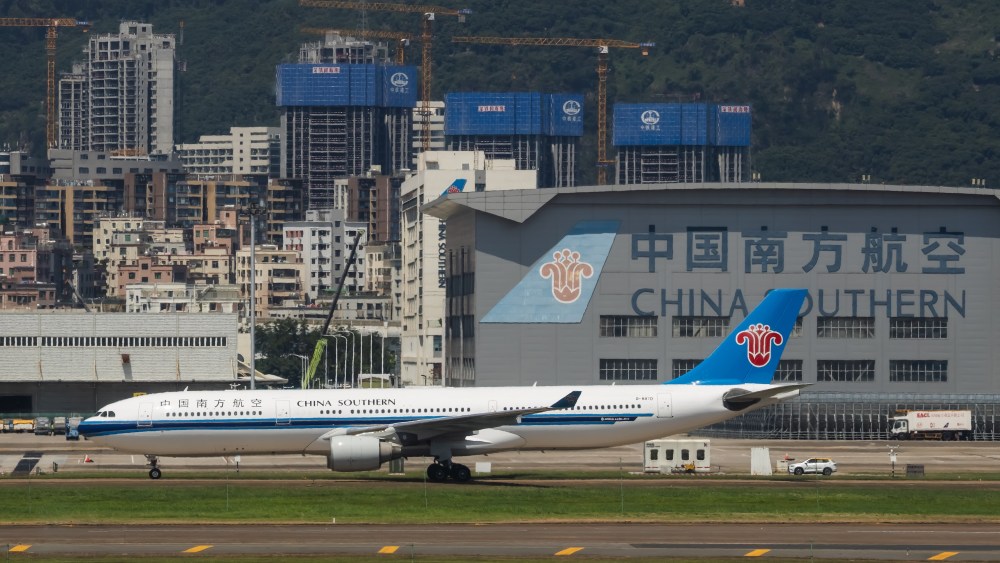
As Chinese sellers navigate the fluid trade environment, FedEx is looking to expand its presence in China by formally establishing a relationship with airline China Southern Air Logistics. China Southern is one of three major airlines in the country, including Air China and China Eastern Airlines, and the only one of the group that swung to profitability in 2025.
Both FedEx and China Southern have common ground in Guangzhou, with the Chinese air carrier headquartered in the port city and both companies operating major cargo gateways at Guangzhou Baiyun International Airport (CAN).
FedEx is currently expanding its hub to include a regional operations center that plans to become operational in 2027. The completed hub would double the size of FedEx’s capacity at the airport, and triple its current sorting capacity to 25,000 packages per hour.
The companies expect to focus on five key areas of collaboration, including international flight and hub connectivity, network planning, fleet resources, ground operations and digitalization.
As of late 2024, FedEx said it operated more than 300 weekly international flights in and out of China. China Southern operates 19 Boeing 777 freighters, and also manages cargo carried in the belly of its passenger planes.
“By integrating FedEx global air network resources with China Southern Air Logistics’ operational experience in both domestic and international markets, we will further enhance route connectivity and operational efficiency,” said FedEx China president Poh-Yian Koh in a statement. “Together, we will build a smarter, more agile, and more resilient air logistics ecosystem—better serving the growing cross-border logistics needs of Chinese customers and injecting new momentum into the smooth flow and development of the global supply chain.”
