

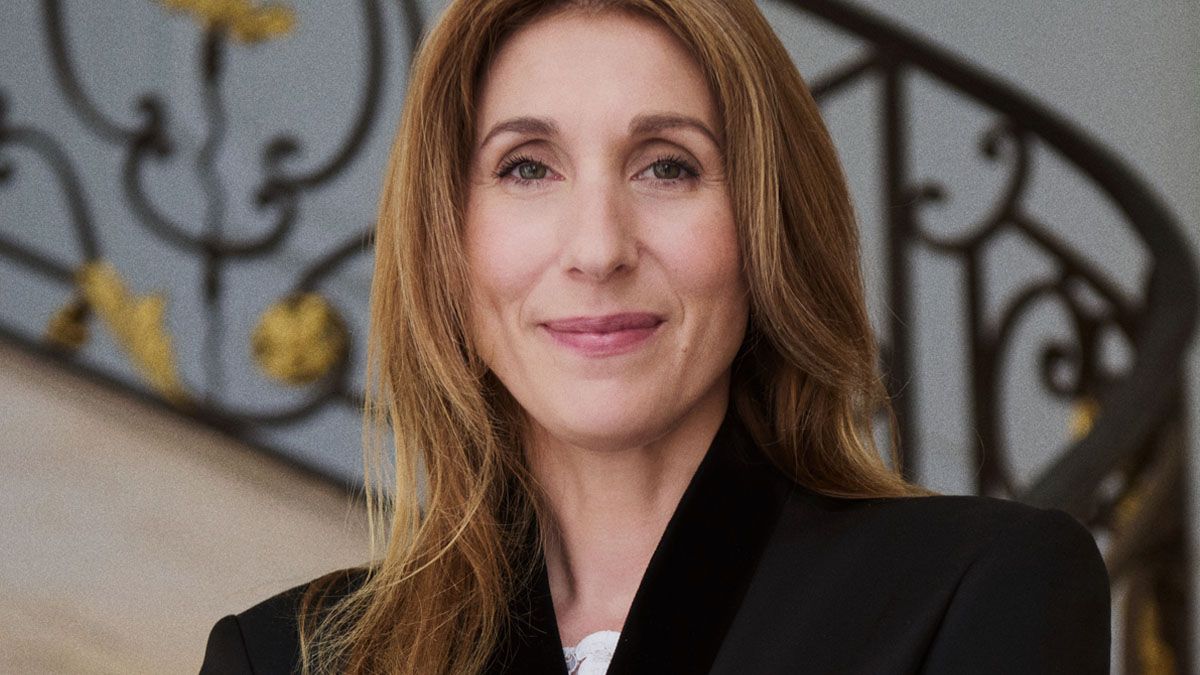
“If you want to become the best version of yourself, you first have to acknowledge who you are,” says Charlotte Coupé. From the sound of it, this decade-long LVMH veteran has embarked on a course of self-improvement. However, the object of her scrutiny is not herself, but Kenzo: the house whose future was entrusted to Coupé when she was appointed CEO just over one year ago.
Speaking in her first interview since taking the role, the 43-year-old is refreshingly frank about the task ahead. Her diagnosis is that Kenzo requires a course of reconnection: to its founder’s original proposition, to the reality of the business it currently is, to the client it currently serves, and eventually, to the more successful version of itself she believes it will become. “The dream has to be ambitious,” she says, “but it has to be realistic.”
That recalibration began on Monday at Place des Victoires, where Kenzo opened a week-long activation to the public during Paris Fashion Week Men’s. As of Wednesday, editors will see artistic director Nigo’s Spring/Summer 2027 collection by appointment, alongside the broader public-facing amplification that includes a FW26 pop-up, a flower shop, a Kenzo café, a Japanese konbini, and a T-shirt bar. The result, says Coupé, is intended as an open-to-all “tour of the brand”, rather than a 15-minute spectacle directed solely at the industry.
.jpg)
This will be Kenzo’s second season on the trot without a fashion show. Coupé says: “If we want to exist in fashion week with purpose, with cultural relevancy, it’s probably better to spend the money differently.” She adds: “I’m not saying that we won’t go back on the runway, but this particular format seems to be more relevant and more efficient for a brand like us right now.”
The logic behind that decision rests in Coupé’s unsentimental reading of Kenzo’s position. “We have humble clothes, we have humble products,” she says. “We’re not a luxury house.” Within LVMH, where Kenzo sits alongside some of fashion’s most powerful luxury players, this seems a startling admission. Yet Coupé frames it as a USP that is central to the house’s opportunity within the broader architecture of the group.
That opportunity is rooted in the house’s atypical beginnings outside the rarefied milieu both of Paris and mainstream French fashion. Founder Kenzo Takada was a hotelier’s son from the small Japanese town of Himeji, who traveled to Paris in 1965. He staged his first show in April 1970 at Jungle Jap, his tiny boutique in Paris’s Galerie Vivienne; from there, Takada built a fashion women’s proposition rooted in ebullience and fun rather than distance and froideur. Japanese in authorship, Parisian in setting and uniquely open in spirit, Kenzo was relished for its exuberance in color, print, and movement. Menswear followed in 1983, later formalized as Kenzo Homme, while Kenzo Jeans and Kenzo Jungle (kidswear) extended the house’s reach in 1986.
