

Nike full-year revenues were down 2% in constant currency for fiscal 2026 to $46.4 billion, the brand said on Tuesday. For the fourth quarter of fiscal 2026, sales were down 1% year-on-year to $11 billion. Full-year results beat analyst expectations of about $46.27 billion, reflecting steps towards Nike’s much-needed turnaround. Shares fell 3.4% after markets closed.
“I’m proud of the progress our team made in fiscal year 2026. When I look back at where we started the year and where we are today, it’s clear that we’re building a much stronger foundation for our company,” president and CEO Elliott Hill, who is approaching two years in the role, said on Tuesday’s earnings call. “Through our Win Now priorities, we’re elevating the fundamentals of our business across our team culture, innovative product, brand strength, and how we serve consumers in our countries and cities. As our foundation approves, the Sport Offense is starting to create impact. Our renewed obsession with sport and the success of our athletes is fueling energy for our brands and building momentum in our performance business, which grew mid-single digits this fiscal year.
Hill acknowledged that the company still has a way to go. “Overall, the results aren’t there yet. We know we’re not living up to our full potential, particularly in Nike Sportswear and Jordan Streetwear, where sell-through remains challenged, impacting both current discounting and future order books,” he said. Nike Running is a bright spot, the CEO noted, coming off of five consecutive quarters of double-digit growth. “Over that period, we’ve added roughly $1 billion to our running business,” he said.
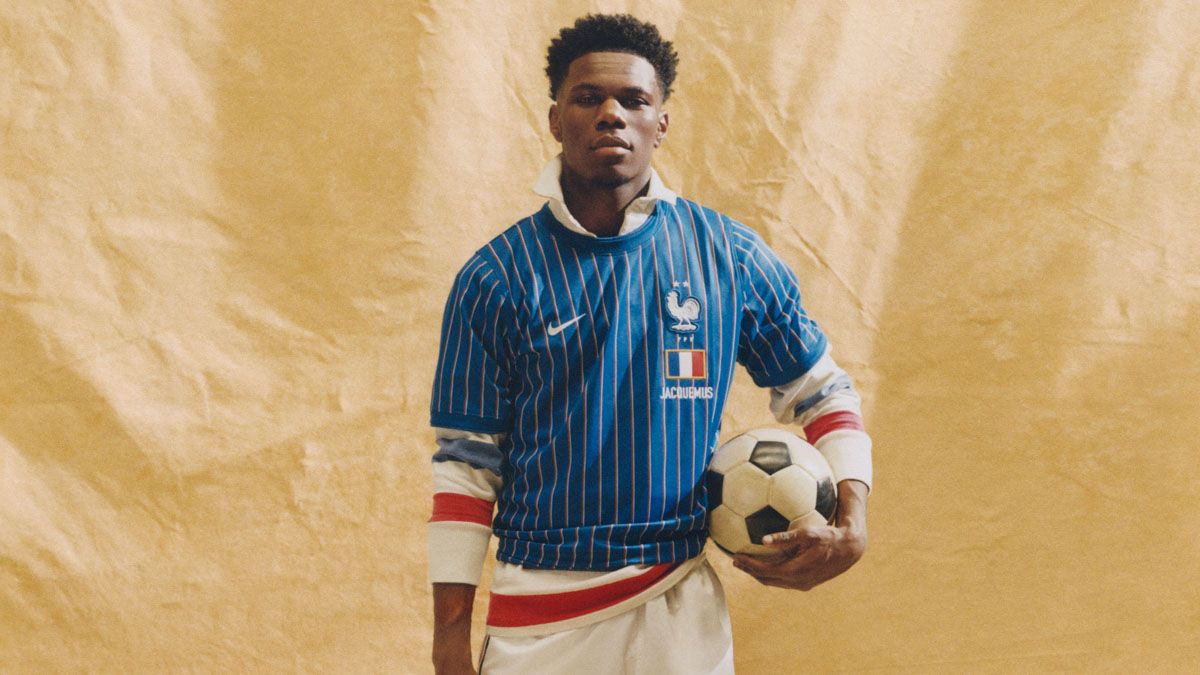
The CEO also highlighted Nike’s recent World Cup wins. “It’s been an incredible few weeks of the World Cup. What feels different this time around is we’re not treating the tournament as a single moment — we’re using it to reshape our business, telling a connected story over time, engaging different communities in relevant ways and building momentum that carries well beyond the tournament,” he said. Nike’s Rip the Script campaign film and global fashion brand National Team kit collaborations have all helped build what Hill calls the ‘Nike Football universe’. By the start of the tournament, Nike had already sold 2.5 times the number of kits compared to the same period in World Cup 2022, Hill said. “The World Cup is always a moment to prove ourselves,” the CEO said. “It’s one of the toughest battlegrounds in sport. We’re leading the conversation in shaping football culture, a strong early proof point for the Sport Offense.”
Full-year revenues for the Nike brand were $45.2 billion, down 1% year-on-year, and Nike brand revenues for the fourth quarter were $10.7 billion, down 3% year-on-year. Nike also owns Converse, which was rumoured to be gearing up for a sale, though Hill denied these rumors during last quarter’s earnings call in April. On Tuesday, he said that Converse’s role within Nike is becoming clearer, highlighting the Chuck Taylor and Jack Purcell franchises.
“Our fourth quarter financial performance was in line with our expectations,” Matthew Friend, EVP and CFO, said on the call. “However, the operating environment became more challenging as we progress through the quarter. After a stronger start in March, especially in North America, by mid-April, we began to see a deceleration in retail sales trends. Our consumer is under pressure around the world, and we can particularly see it having a larger impact on sportswear, which declined double digits in the quarter with a similar decline in retail sales.”
By channel, for the full year, Nike’s direct-to-consumer (DTC) sales were $17.7 billion, down 8% year-on-year. Wholesale revenues were $27.5 billion, up 4% year-on-year. For the fourth quarter, DTC sales were $4.1 billion, down 9%, and wholesale revenues were up 1% to $6.6 billion.
