

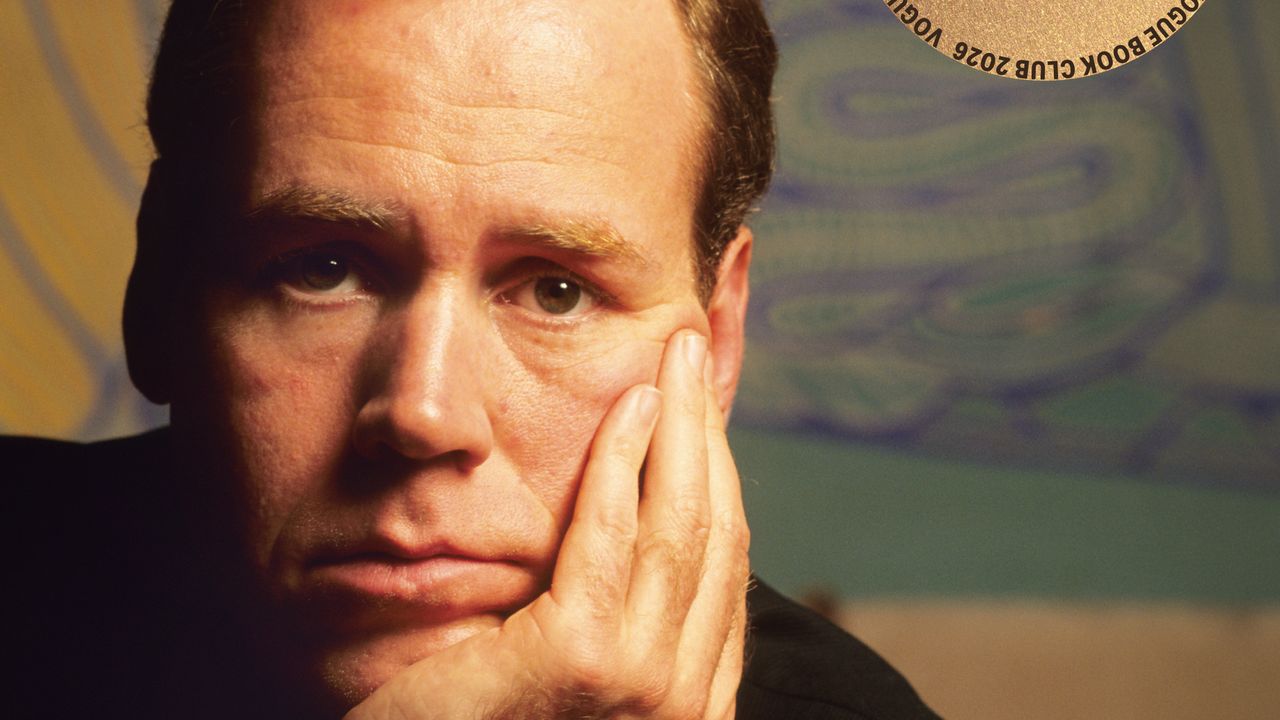
In 2003, I was a recent college grad living in New York. During the day I worked as a grant writer for a nonprofit while, by night, I chipped away at a first novel that fell squarely in the genre of (surprise) Recent College Grads Living In New York. The circumstances by which I met Bret Easton Ellis were as unremarkable and clichéd as many first drafts of first novels. My then-boss knew the author of Less Than Zero and American Psycho socially and had invited Bret to a fundraising event that spring. Near the end of the party, this boss, tipsy, introduced us and suggested that, hey, maybe I could send Bret my unagented, unpublished manuscript. Bret was on his way out of the crowded venue and I stood there, shrugging and nodding and trying to appear casually confident as opposed to starstruck and sheepish. Bret wore the dark overcoat that had become a fixture of his media coverage throughout the prior two decades. While frequent profiles depicted a serious and elusive artist, in person he was disarmingly warm. He said sure with a graciousness that shocked me, as if he actually would be glad to read the half-baked draft of an employee of an acquaintance of his.
The next day, I attached the work-in-progress—a sort of love quadrangle loosely based on former college classmates—to an aw-shucks email and he replied, Happy to take a look. B. I did not expect to correspond with him ever again, but I still experienced a substantial thrill at having a true literary figure’s name in my inbox. I was 22 and had been writing since I was 14. Even the cursory exchange seemed like movement in the city’s opaque publishing apparatus.
I remember also feeling guilty. If you were a young person living in New York and aspiring to write fiction, you were absolutely supposed to read Bret Easton Ellis, and not just Less Than Zero and American Psycho. If you were truly serious, you should be conversant in The Rules of Attraction, The Informers, and Glamorama. But I’d only read Glamorama, which I’d bought at Housing Works one rainy afternoon. While I had been gripped by the book, with its long, controlled sentences and ceaseless pop references, what I remember most was that the interrogation of culture that coursed through its pages was not something I felt sophisticated enough to understand—and my own work lacked it entirely.
Bret, astonishingly, did read the draft I sent him. He wrote to me that, while the novel was not yet any good, he could sense that I was obsessed with this particular story and that its characters represented aspects of early adulthood that confounded me. He offered to help work the book into a publishable form. Over the better part of a year, he treated me as an editor would, with pages of brutal, sometimes devastating line-note feedback. To have a writer of generational stature take my work semi-seriously filled me with gratitude and provided the motivation for the hundreds of hours I spent preciously belaboring each word. These hours often resulted in Bret informing me, without any leavening, that my writing had no style, was frequently idiotic, and that one scene I kept hanging onto was so preposterous as to render him cross-eyed with bewilderment. Bret did not believe in a gentle bedside manner and he admonished me to start placing this story in the city as it was and not as I wished it would be.
