

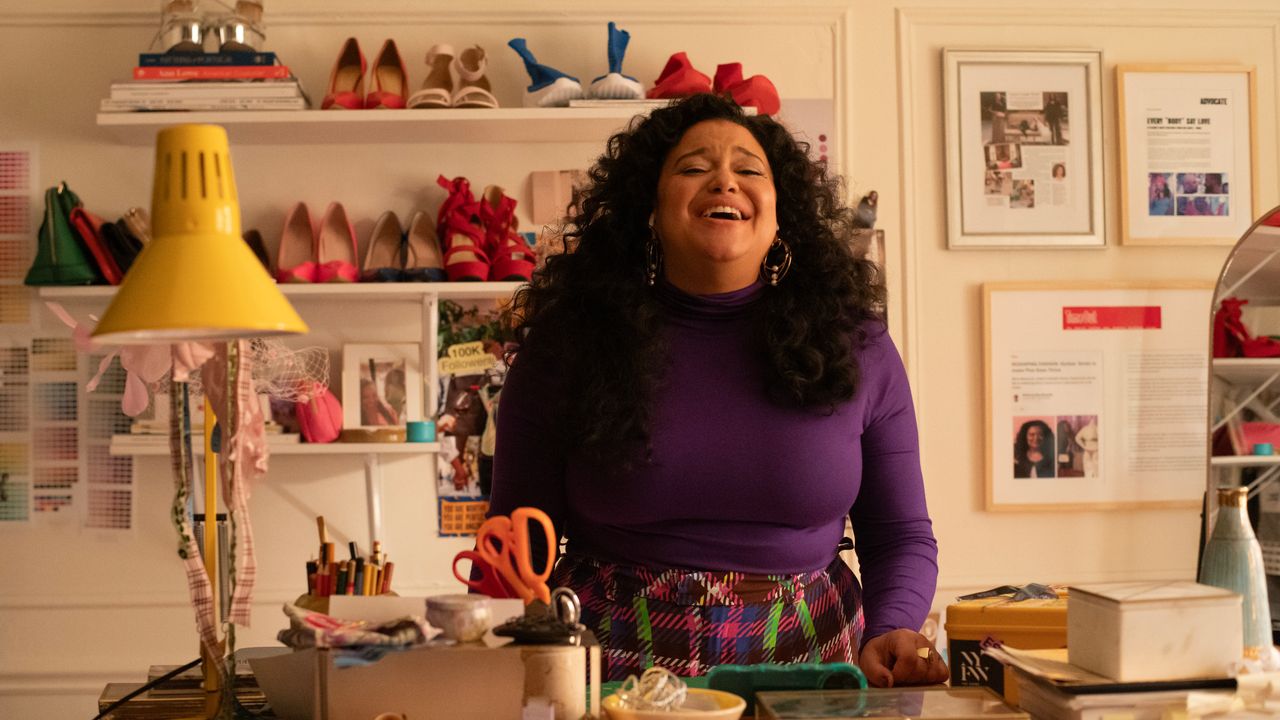
This interview contains spoilers for Season 3 of Survival of the Thickest.
It’s rare for a TV show to move into rom-com territory without sacrificing its spark, but that’s exactly what Michelle Buteau’s Survival of the Thickest—which returned to Netflix for its third and final season this week—manages to pull off, as its stylist and designer protagonist Mavis (Buteau) strives to start a family with her partner Luca, navigates serious setbacks, reaches new heights in her career, and ends up having one of the sweetest onscreen weddings in recent memory.
There’s plenty of lightness and joy on Season 3 of Survival of the Thickest, but there’s pain, too. Buteau has always had range, but in this season she shows it off, portraying Mavis’s heartbreak as well as her flair for fashion and signature zest for life with aplomb. This week, Vogue spoke to her about it all.
Vogue: What was your biggest goal for this season of Survival of the Thickest?
Michelle Buteau: I just wanted to give Mavis her flowers. Season 1 was about trying to get it right, and crossing all the “t”s and dotting the “i”s and having fun; it was really just this love letter to fatty baddies and hottie bodies and non-binary royalty, and getting into choosing yourself and loving yourself and the idea that we all matter. Then Season 2 was such a love letter to women, all types of women, and [about how] we deserve a happy ending in a soft life, a soft era—but a hard paycheck, hello—for Black women, fat women, trans women, all women.
For Season 3, I was like, “Oh, this has got to be a love letter to Mavis. If Mavis is going hard at life, she’s got to go hard in other chapters of her life, too, and just speak about what she wants without apology.” It’s like, she wants a kid! And that’s okay! If you want a kid, try to have a kid! I hope I did a good job talking about the lack of access to knowledge about our bodies during infertility treatments, and access to our feelings when we’re going through stuff, and how even if we have a community, we can still feel lonely. I wanted Mavis to see that you can’t know how good it is until you know how bad it is.
