

MILAN — Franco Zeffirelli, the late director of films including the 1968 “Romeo and Juliet” and 2002’s “Callas Forever,” found solace in a villa in Positano, Italy, overlooking the Tyrrhenian Sea.
Originally an 18th-century retreat belonging to the Duchess of Villarosa, Fernanda Rocchi Notarbartolo di Villarosa, Villa Treville was later transformed by Zeffirelli into a home decorated through his own artistic lens, at the height of the Dolce Vita era.
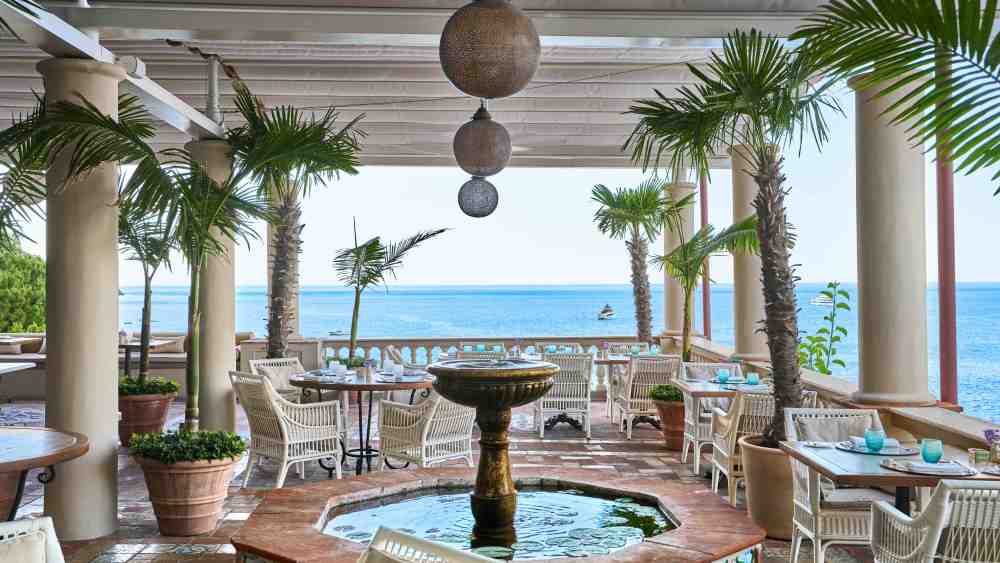
On Friday, Neapolitan architect Antonio Girardi unveiled his refresh of Villa Treville’s outdoor spaces, including its Maestro restaurant and the beach area of the former home, which in the past hosted A-list figures such as Elizabeth Taylor, Richard Burton, Liza Minnelli, Sylvester Stallone and Michael Jackson. It became a hotel in 2009.
“When I think about the conversations that took place in this house, it’s unreal,” said Girardi, whose studio is based in Rome. Girardi has become known across Italy for what he describes as a “colonial Mediterranean eclecticism,” seen in projects such as Hotel du Tasso in Sorrento, Ristorante Donna Emma at Miramalfi in Amalfi, and Nox, a club set to open later this month at Jumeirah Capri Palace.

Architect Antonio Girardi.
Francesco Dolfo
In reworking the terraces, Girardi said respecting Zeffirelli’s original vision was paramount.
At Maestro’s, Girardi introduced a custom-made textile canopy to soften and redefine the terrace, reworked the greenery with climbing plants, palms and Mediterranean species, and improved the kitchen and workstations to enhance functionality. Throughout, he incorporated a Mediterranean-inspired palette — especially shades of blue — across umbrellas, fabrics and furnishings to strengthen the dialogue between the architecture, the rock and the coastal landscape.
“We didn’t change the language, and we were very conscious that this was his personal home,” he said, adding that the team chose Bonacina rattan furnishings, a favorite of the director, who died in 2019. Elsewhere, the project incorporates ceramic tiles by local ceramicist Lucio Liguori and artwork by Paolo Sandulli, who works with sea sponges.
Girardi is also working on Villa Maura, the fourth villa on the Villa Treville estate, which was turned into a luxury hotel in 2009 by Giovanni Russo. Since becoming a hospitality destination, the property’s luxury status has only grown, as guests increasingly recognized that staying there offered a glimpse into Zeffirelli’s cinematic scenography. During peak season, rooms start at 3,100 euros a night.

Villa Treville Positano.
Francesco Dolfo
The revamp coincides with the June release of “Villa Treville Positano,” a new Assouline coffee table book that opens a window onto Zeffirelli’s “dream world,” marked by opulent interior spaces that call to mind his famous films and featuring props from La Scala and the Metropolitan Opera, as well as his own collection of antiques and art objects.
Assouline said more recent additions by Villa Treville’s current owner, Govind Friedland, include multiple terraces, hidden pools, a beach club, the renovation of several villas on the property, a spa developed with Dr. Barbara Sturm and the restoration of the famed Salone Bianco, now known as Bianca Bar. The book was co-written by travel journalist Nicky Swallow and Friedland.

Villa Treville Positano,” a new book published by Assouline in June celebrates the property’s rich history.
Courtesy of Assouline
