

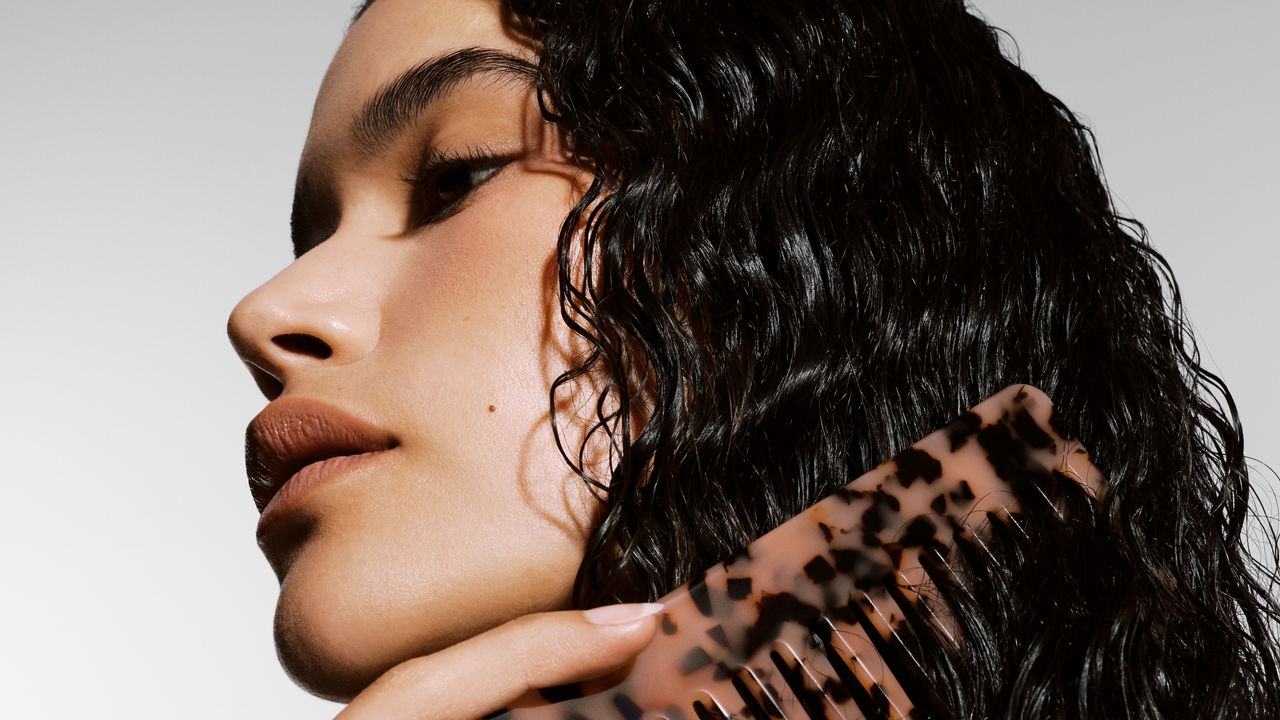
Lather, rinse, and repeat has long been the routine we’ve all come to know when washing our hair. But have you ever considered switching up the order? Let us introduce you to reverse hair washing. More than just another buzzy trend—this method can lead to your most lustrous lengths yet. And it’s exactly as straightforward as it sounds: simply apply conditioner before shampooing.
“The primary benefit of reverse hair washing is keeping the hair looking hydrated and smooth while maintaining volume at the root,” says board-certified dermatologist Sandra Oska, MD. “You get the benefits of detangling and conditioning the hair without the buildup that can result.”
Vogue’s Favorite Reverse Hair Washing Picks
The concept, Dr. Oska explains, is that conditioners create a temporary protective lipid barrier that “patches up porous areas of the cuticle, helping to shield the vulnerable hair shaft from the stripping action of surfactants in shampoos.” What’s more, applying conditioner first allows shampoo to remove any microscopic residue left behind on the hair shaft, helping prevent the weighed-down feeling some formulas can leave behind.
Board-certified cosmetic dermatologist Dmitriy Schwarzburg, MD agrees, explaining that reverse hair washing is especially helpful for people with fine hair or strands that are easily weighed down, as it provides enough conditioning without sacrificing body. “People with very coarse, thick, or highly textured hair generally require more lasting moisture, so they may not experience the same benefit and may actually prefer the traditional shampoo-then-conditioner approach,” Dr. Schwarzburg tells Vogue.
After speaking with the experts, I started to wonder whether conditioning first offered similar benefits to my pre-shower hair oiling routine. As it turns out, the two serve entirely different purposes. While “a conditioner is designed to soften the cuticle, improve manageability, and reduce friction while you’re handling the hair,” per celebrity hairstylist Kee Taylor, “hair oils are often used as a protective treatment before cleansing to help minimize moisture loss.”
That said, considering your own hair type is key, as reverse hair washing isn’t a one-size-fits-all method. “Knowing your hair really matters,” she adds. “I always tell people that healthy hair isn’t about following every trend; it’s about understanding what your hair actually needs.” Read on to learn the proper way to reverse hair wash—and whether this method is right for your hair type.
In This Story
Step One: Start with Conditioner
Taylor recommends reverse hair washing for those with thin, easily weighed-down hair, as well as anyone with waves or looser curl patterns. Conditioning first can also help minimize tangles and create a smoother surface before shampooing. Still, she reminds us there’s no universal routine, emphasizing that your hair’s porosity, density, and texture should always guide your approach. If your strands seem well-suited to the method, there are a few best practices to keep in mind. “You don’t need to let it sit for 20 minutes—just two to five minutes is plenty of time for most hair types,” says Taylor, advising that conditioner be applied only from the mid-lengths to the ends.
