

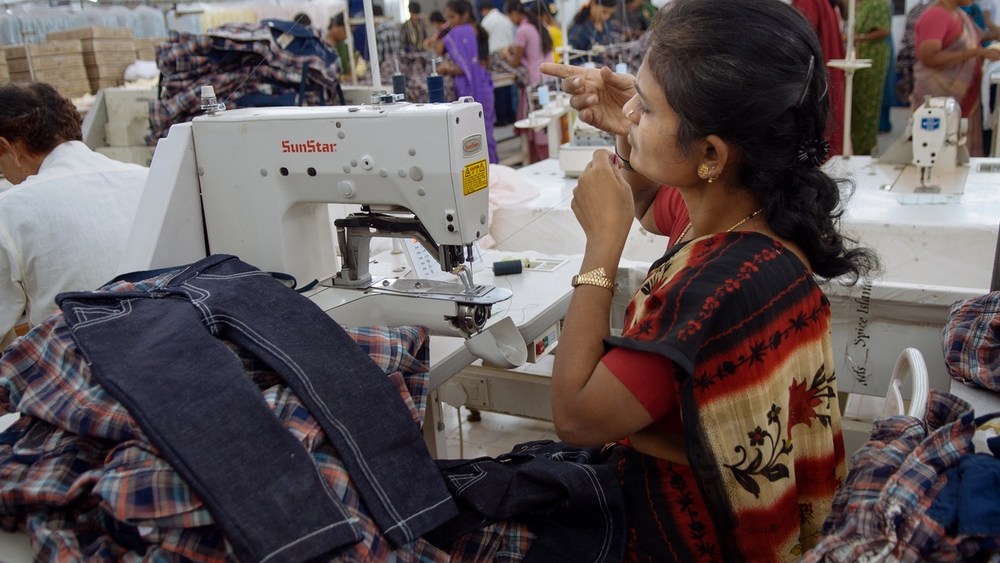
Apekshita Varshney has heard it all.
As founder of HeatWatch, a New Delhi–based research and advocacy nonprofit focused on the escalating threat of extreme heat, she has spent years listening to garment workers describe worsening exhaustion, fainting spells, severe urinary tract infections, menstrual dysfunction and other heat-related ailments caused by surging temperatures that can easily climb past 45 degrees Celsius, or 113 degrees Fahrenheit.
For Varshney, the need to bring stakeholders together for an honest discussion about how to address extreme heat’s impact on people is clear. But just as important, she said, is making heat in supply chains more tangible.
“We were thinking, how do we make something as abstract as heat, which is primarily felt and not seen, visible to all of us?” she said.
To answer this, HeatWatch has been working with Open Supply Hub, an open-source platform that maps manufacturing facilities worldwide, to build an interactive dashboard that provides a comprehensive view of heat risks at the geographic scale while showing how rising temperatures may affect garment manufacturing units across industrial clusters in India.
Drawing on geocoded meteorological information augmented by additional climate inputs, the dataset is the most comprehensive heat-exposure resource for India’s textile industry, covering nearly 13,000 manufacturing facilities across the country, said Manvika Athwani, a software engineer on the project.
The temperature data comes from the India Meteorological Department, processed through IMD Live and mapped to the nearest facility coordinates. Humidity data is pulled from the Open-Meteo API. The result is a daily-updating dataset that tracks minimum and maximum temperatures and average humidity at the facility level.
Opening the dashboard unfurls India’s textile manufacturing landscape as a district-level heat map, color-coded from cool blue (20–24 degrees Celsius) to deep red (45 degrees Celsius and above) to give what Athwani described as an “immediate geographic picture” of where the heat burden is concentrated.
Overlaid on the map are cluster markers—numbered gray circles that resolve into individual facility pins as you zoom in. These are paired with seasonal filters that let users toggle between winter, summer, monsoon season and fall to see how heat exposure shifts across the year.
Clicking on any individual facility opens a side panel displaying its name, address, associated organizations and most recent climate reading.
“This is where the dataset’s daily resolution becomes meaningful,” Athwani said. “You’re not looking at a seasonal average now or a district estimate, but what the conditions were like near the facility as of yesterday.”
For brands sourcing from India, the tool offers something few others do: a clear view of where heat burden is concentrated, how it is changing and which facilities are most vulnerable.
But that visibility cuts both ways. Because the panel reveals which brands or certification bodies are tied to each facility, it also provides a “direct link” between a brand and heat conditions in its supply chain that labor organizers can easily cite.
To be sure, the map and numbers only tell one part of the story. The other half, Athwani said, comes from firsthand accounts of workers who compare working on the production line to being “boiled alive” under “hellish” conditions.
“The stories tab exists because the combination of daily updated climate data, alongside first-person accounts from the workers those numbers represent, is what makes this a tool for advocacy rather than just the research interface,” she said.
Mapping heat stress
The question the data asks is simple: How much of the year are workers in India’s textile facilities exposed to ambient temperatures that put them at physiological risk, even without accounting for wet-bulb conditions that can further increase strain in humid weather?
In Gujarat, where the danger threshold is 40 degrees Celsius, 40 percent of tracked facilities crossed it for at least a month in 2016. In 2024, during a similar El Niño phase, that figure rose to 52 percent, adding roughly 140 additional facilities that wouldn’t have crossed the threshold a decade ago. Delhi’s pattern is just as dramatic. In 2016, 55 percent of tracked facilities exceeded 40 degrees Celsius for at least one month. By 2024, that figure hit 100 percent, meaning every factory breached the threshold.
Tamil Nadu warrants a different framing. Its dangerous-month breach rate is high in most years because the threshold is lower at 35 degrees Celsius, reflecting the combined effect of persistent heat and humidity at its latitude.
“In Tamil Nadu, the chronic story is more important than the year-on-year change,” Athwani said. Karur, India’s home textiles capital, averaged nearly six dangerous months per year over the past decade—not just in extreme El Niño years. Tiruppur, the world’s largest knitwear hub with nearly 1,900 facilities, averages roughly two dangerous months per year, moderated slightly by higher elevation near the Western Ghats, but still significant, she added.
For Thivya Rakini, president of the Tamil Nadu Textile and Common Labour Union, heat has long ceased to be a seasonal discomfort.
Garment factories are already difficult places to work, she said. Hot, cramped and dusty, they become even more grueling as temperatures rise, turning heat exposure into a workplace safety risk for workers enduring nine- to 11-hour shifts without adequate breaks, ventilation or heat protections.
“It is important to say that heat does not become dangerous on its own,” Rakini said. “It becomes dangerous because of the working conditions in which workers are forced to work in factories. With proper ventilation or cooling systems, regular paid breaks, clean and cold drinking water, accessible toilets and realistic production targets, heat would not have the same harmful impact on workers’ bodies.”
Workers, she said, cannot be expected to keep up the same pace of production while coping with this added physiological strain.
“For women workers, this is also a question of dignity,” Rakini said. “When they are sweating continuously, unable to use clean toilets, unable to change their pads in time or unable to wash, they feel shame and discomfort. Workers have told us that even wiping sweat from their face can be criticized because supervisors worry about the garment getting dirty. This shows how the value of the garments is often placed above the health and dignity of the women making them.”
Heat shouldn’t be seen as only a matter of temperature, but also as a question of working conditions and wages, she added.
“Heat is a climate issue, but in the garment industry it is also a labor rights issue, because unsafe work systems are what make rising temperatures so harmful to us,” Rakini said. “It is also a poverty issue. In the last month alone, at least 20 workers asked me for help to get a fan. If workers making clothes for global brands cannot afford a basic fan during extreme heat, it shows how little this supply chain is returning to the people who keep it running.”
Supply chain mapping is important because it helps people understand who is producing what and for whom, said Nandita Shivakumar, stakeholder engagement manager at Open Supply Hub.
“Almost everything we use is produced through complex supply chains,” she said. “A garment may be produced in a factory in India, but it might be sold by an American brand to a consumer in Europe, and sometimes the supplier and the worker may not receive a fair share of the value created, but the consequences of that production—overuse of water, air pollution, unsafe working conditions—are experienced locally by the workers and communities.”
Another reason it matters is that it helps identify the broader ecosystem of actors connected to a particular region, sector or factory, including multi-stakeholder initiatives, service providers, grievance hotlines and auditors.
“I would argue that this kind of supply chain data has to be in the open,” she said. “Take the case of a dyeing unit that’s linked to water pollution as an example. Is it solely responsible for this violation, or was there a larger buyer or a sourcing model that pushed prices so low and timelines so tight that environmental harm became built into the production model? The value of the dashboard is very similar to this. Workers know and feel heat in their bodies. What the dashboard does is connect that lived experience to the wider structure of the supply chain.”
It also helps surface who is profiting from production under these conditions, who is bearing the cost and what needs to change, Shivakumar said.
“By mapping these garment facilities and overlaying heat and climate data, we begin to see where the heat risk is more severe, which workers and regions will be most affected, and where policymakers, brands and suppliers need to act immediately,” she added.
