

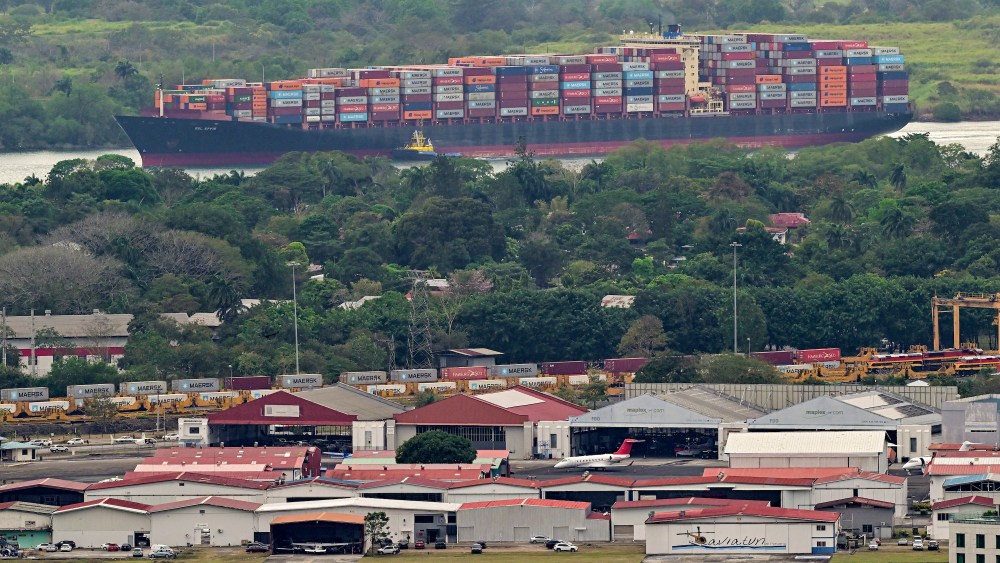
The Panama Canal could face renewed shipping disruptions over the next year after U.S. forecasters warned that a strengthening El Niño is likely to become one of the most powerful on record, increasing the risk of drought conditions that have previously curtailed vessel traffic through the waterway.
According to an outlook from the U.S. National Oceanic and Atmospheric Administration (NOAA) Climate Prediction Center posted June 11, El Niño conditions are now present and expected to strengthen through the Northern Hemisphere winter 2026-27, with a 63 percent probability of reaching “very strong” status during November through January.
This would rank among the largest El Niño events in the historical record going back to 1950, the NOAA said.
“Even very strong El Niño events do not lead to the expected impact everywhere, but stronger events can more significantly tilt the odds in favor of expected outcomes,” according to the advisory.
Earlier this month, the Panama Canal Authority (ACP) announced it would reduce the maximum authorized draft for Neopanamax vessels from 50 feet to 49.5 feet effective July 3 as a preventative measure to conserve water in the event another drought takes place like the one that forced the canal to begin implementing transit restrictions throughout 2023.
Neopanamax ships can carry up to 14,000 20-foot equivalent units and are longer than 966 feet, and are the class of vessels built specifically to sail through the expanded Panama Canal after it added two new sets of locks in 2016.
“The ACP will continue to closely monitor lake levels and hydrological projections and will announce any additional operational adjustments as deemed necessary,” said Boris Moreno Vásquez, vice president for operations at the ACP in the June 4 advisory to shipping companies.
The advisory followed a previous message from the authority last month, which indicated that current data does not forecast the need for transit restrictions through Dec. 31, 2026. The ACP said it typically maintains 38 daily transits, which reached a high of 41 across May.
Transit restrictions ended up being implemented at the canal in June, but were unrelated to any weather patterns.
The east lane of the Gatún locks was closed for dry lock maintenance from June 9-17, forcing arriving vessels to alternate in a single lane. As a result, the number of slots available in the Panamax locks was cut to 16, down from the typical maximum capacity of 34-to-36 vessels per day.
According to a report from the trade association BIMCO, the Panama Canal has already seen an estimated 8 percent increase in traffic in 2026. BIMCO said the increased volume of oil tankers and liquefied gas carriers was largely due to the restricted traffic at the Strait of Hormuz and increased U.S. exports to Asia, in which countries attempted to make up for the shortfall from the Middle East.
El Niño conditions are characterized by warmer-than-normal water temperatures in parts of the equatorial Pacific Ocean that typically bring higher air temperatures and less rain to the area.
Such conditions were a primary driver of the months-long drought at the Panama Canal from mid-summer 2023 to early winter 2024. The drought was ill-timed for the canal’s operations and the water levels at Gatún Lake, as Panama’s rainy season lasts from May through November.
At the time, the ACP had restricted total transits to as low as 22 per day, with plans to cut further to 18 per day before reversing course after the winter trough.
El Niño was categorized by the NOAA as “strong” during the period, leading to Gatún Lake water levels dropping to 79.2 feet, which was the third-lowest recorded since 1965, when measurements began.
Under average circumstances, the water levels in Gatún Lake generally vary between 85 and 88 feet.
In August 2024, Panama Canal administrator Ricaurte Vásquez Morales said the ACP expected another El Niño-driven drought within four years, which would mean prior to August 2028. The canal’s planned $1.6 billion Indio Rio reservoir project is not expected to be completed before the next drought, with a target completion year of 2031.
