

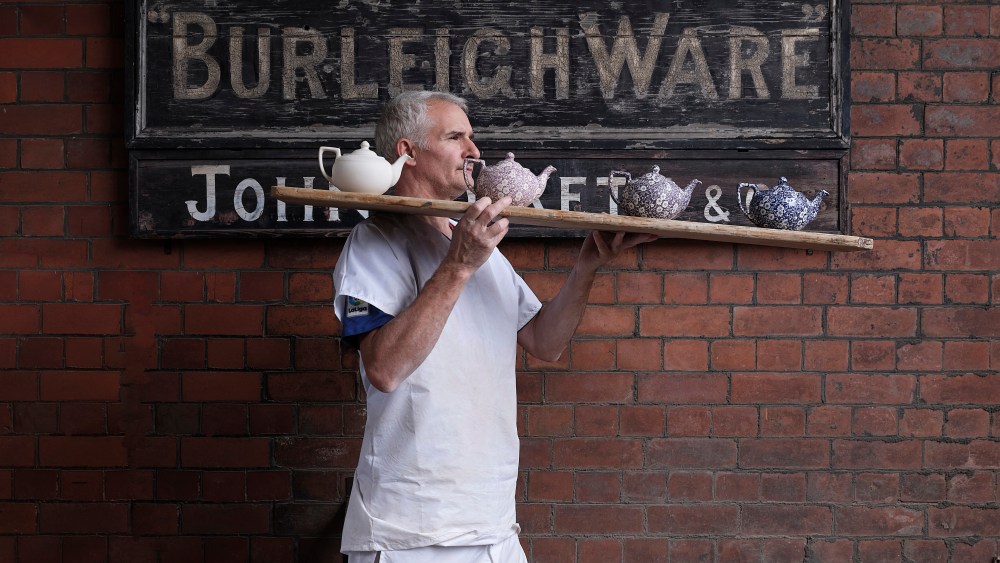
LONDON – Burberry’s former designer and chief executive Christopher Bailey is back, and has joined a small group of investors to acquire Burleigh Pottery, the British ceramics house founded in 1851 and known for its highly-detailed, handmade designs.
Burleigh, the oldest, continuously working Victorian potter in England, is best known for its “tissue transfer printing” technique that sees intricate pigmented patterns transferred onto raw clay. It is the last heritage pottery company in the world still using this traditional method, which requires years of training.
The company, based near Stoke-on-Trent in Staffordshire, is internationally recognized, with a particularly strong following in the U.K., Japan and the U.S. and a loyal customer base.
Its designs, including Asiatic Pheasants, Arden, Calico and Regal Peacock, are considered benchmark examples of English tissue transfer ware. The company has myriad partnerships with brands including Ralph Lauren, Soho House and Daylesford.
Bailey said he has always loved Burleigh pottery. “This company has an extraordinary history, and what makes it so special today is the skill, care and creative spirit that continue to define the business. It is a privilege to become part of that story,” he said.

The Burleigh pieces are handmade at the oldest working Victorian pottery in England.
“I am deeply committed to protecting and showcasing the craftsmanship and character that make Burleigh unique, while helping to shape its future as a distinctive and meaningful British design and ceramics house,” he added.
The terms of the deal were not disclosed. It is understood that Bailey will help set the strategy and vision for Burleigh, and be involved with the pottery on a daily basis.
According to a statement, the new investment will ensure that production at the Middleport Pottery, where the Burleigh ceramics are made, “will continue without interruption.”
Burleigh was previously owned by Denby Pottery, which went into administration in March due to the cost of energy, and employment, both of which have risen sharply under the Labour government. Denby Pottery was even older that Burleigh, having been founded in 1809.
Burleigh said it was “enormously grateful to its craftspeople and wider team, its loyal customers, partners and collaborators and to the Stoke-on-Trent community for their continued support, belief and resilience throughout this period.”

The statement said Burleigh is entering its new period “with profound respect for its enduring heritage and a clear commitment to its future focused on thoughtful growth, cultural relevance and exceptional craftsmanship.”
Bailey, who spent 17 years at Burberry serving in both creative and management roles, has long embraced craft, touting the work of the brand’s trench coat factories in Yorkshire; the apprenticeships offered by the Burberry Foundation; and even the organic dishes on the menu (which he handpicked) at Burberry’s former café on Regent Street in London.
During his tenure, Bailey was also a great promoter of English and Scottish mills whose fabrics he plied into Burberry’s collections.
He is also the latest British designer to support Britain’s small, struggling craft-based companies.
Last September, Jonathan Anderson unveiled a special collaboration with Wedgwood to make a collection of teacups, coffee cups and saucers designed by the late British ceramicist Lucie Rie in 1964. They never went into production but he was determined to change that.
He approached Wedgwood with the idea of reviving Rie’s original designs “making them locally, and with different craftspeople. It was a kind of anchor point for me to be able to do this collaboration. I wanted Wedgwood to do them as she wanted them,” he said.
The collection, for JW Anderson, has been colored in Wedgwood’s signature Jasper blue with white inlays. Each piece is formed by hand, then high-fired to create a matte, tactile finish, according to Wedgwood.
Emma Glynn, creative director of Wedgwood, said the main reason why Rie’s pieces were never produced is because of the complexity of the white inlay technique they require.
“It’s incredibly delicate and skilled work, but we’ve proven with this collaboration that those challenges can be overcome. It just takes time, care and a level of commitment that this project has really allowed us all to embrace,” Glynn said.
