

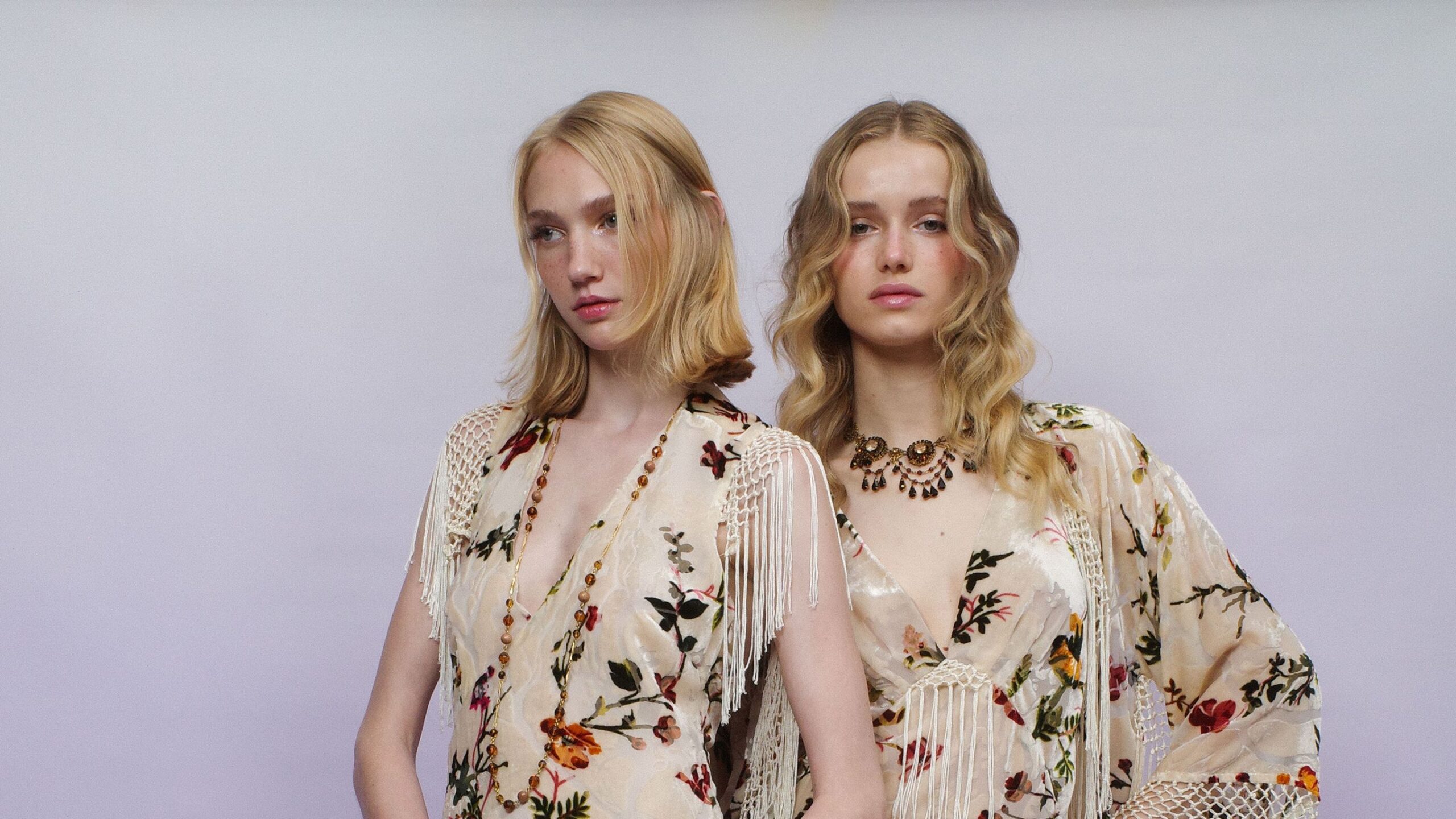
The 1960s were a time of great expansion; change was the norm, both in the world and the wardrobe. The decade opened with ladylike looks (think Jacqueline Kennedy’s slightly boxy pink suit). As hats and gloves fell out of fashion, hems rose; minis and babydoll dresses celebrated youth. Then sweet segued into spacey as psychedelia seeped from San Francisco into the mainstream. Anna Sui registered all of these disparate tendencies in a cheery resort collection that was at base a reflection on glamour and how it’s imprinted on popular culture.
The portal through which the designer approached her favored decade was the work of Pauline Boty, who is credited as the co-founder of the otherwise all-male British Pop movement. Sui, who describes Boty as “a flash wonder,” was first drawn to the painter’s depictions of Marilyn Monroe (one of which was cheekily titled The Only Blonde in the World) and became more broadly interested in the way in which she “made such legends out of iconic ’60s women like Brigitte Bardot and Christine Keeler and Marilyn Monroe.” (A Boty self-portrait in lingerie also left its mark on the collection.)
In the course of researching her subject, Sui noticed that collaged or otherwise reworked clippings from glossies and tabloids were the basis for much art of the period, and she made a connection between that era’s analog sources of information and our digital ones. This is a topical subject: Olivia Rodriguez’s choice to wear babydoll dresses—some designed by Sui—as she promotes her new album, has led to outraged online discourse. (The designer said she admired the singer’s response to critics.)
Sui’s first claim to fashion fame was the babydoll dress, and there were a few in this collection. One of them, made with a cocoa and white ditsy print, was shown with a pair of jeans with groovy appliqués of mushrooms, clouds, and the like at the hem. This outfit was an explosion of references—Twiggy meets hippie meets grunge—and spoke to the way Sui’s work scrambles time and keeps it relevant.
Another defining characteristic of the brand is how the designer keeps things personal. For resort this extended way past the mood boarding. The Western theme was related to the reaction Sui received when she wore a cowboy shirt to a line dance party hosted by her good friend Sofia Coppola. On a trip to Los Angeles, the designer reconnected with Michelle Kim, a former assistant, who did appliqué work, and who for this collection has added frills of pretty fabrics to Levi’s mini skirts. They were adorable. Yet another friend, the artist Ellen Berkenblit, was tapped to revisit the ruched lingerie pieces she once sold at Le Corset by Selima in SoHo. “It was my favorite top in the ’90s,” noted Sui.
While this collection was largely self referential, it doesn’t exist outside of fashion. Sui’s use of devoré velvets, fringe, pouch bags, scarf details, lingerie, and layering are all part of the current fashion conversation, as is glamour, which comes in many variations besides blonde.
