

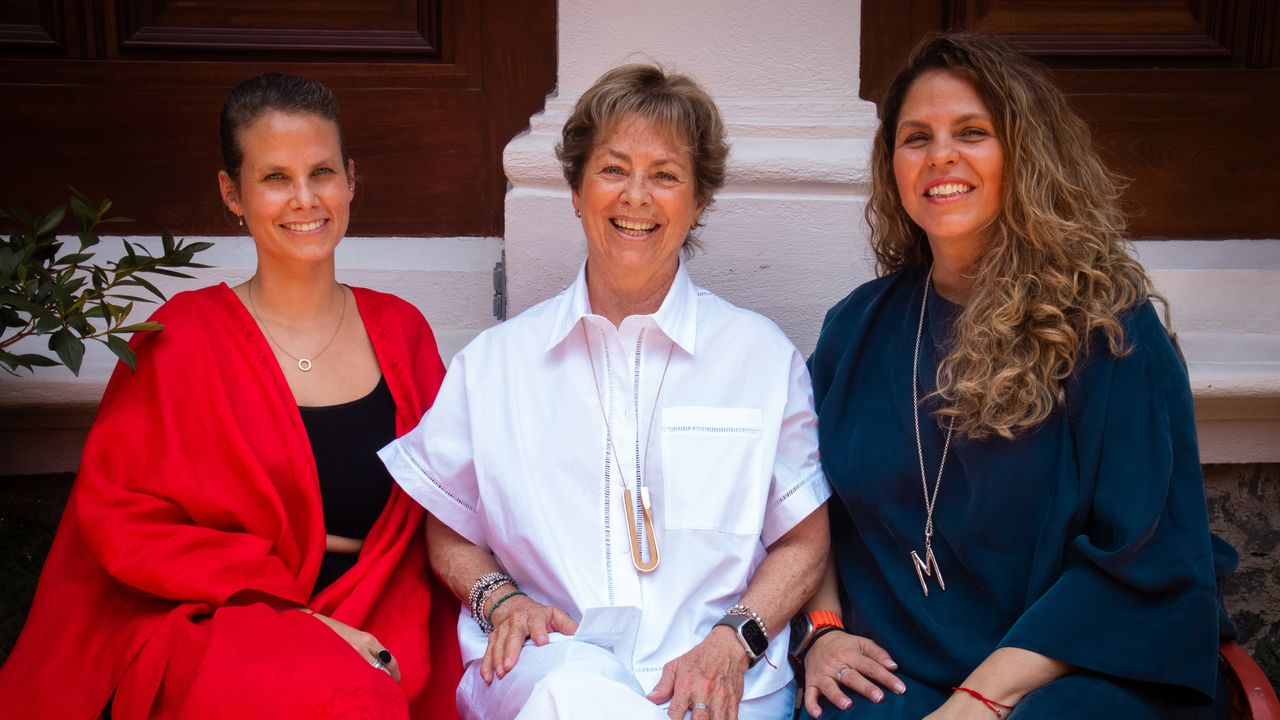
The U.V. index reaches 13 in Mexico City. This I learned on an April day while sitting in the sun-drenched courtyard of the Kahlo family’s ancestral home, Casa Kahlo, in the southern neighborhood of Coyoacán. Across from me were the artist’s closest living family members and former inhabitants of the home-turned-museum, Cristina Kahlo’s granddaughter, Mara Romeo Kahlo, and her two daughters.
Frida Kahlo’s grand- and great-grand-nieces kindly agreed to show me a lesser-known side of the inimitable painter, who they insist would still reject the commonly bestowed title of surrealist. “She painted her reality,” said Mara Romeo Kahlo, the artist’s grandniece, “and Diego always maintained that she was the better artist between them.” Diego Rivera was decidedly not the focus of my time with the Kahlos, who held that during the prolific muralist’s lifetime, Frida Kahlo was something of a public distraction—“the wife of Diego,” as they put it.

The legend of Kahlo has only grown in recent years, however, with many social movements rediscovering the artist’s many activist interests. Her legacy has found new thrust among LGBTQIA+, Indigenous, disability, feminist, and Latin American empowerment movements. Kahlo’s cultural saturation coincides with the record-setting sale of El Sueño (La Cama), the haunting work that fetched $54.7 million in November 2025.
Fame in her death, so-called “Fridamania,” has brought with it a nearly unprecedented level of commercialization of both the authorized and illegal ilk. During my time with them, the Kahlo family was remarkably kind and measured for a group of people in the midst of a protracted legal battle for the rights to their grand-aunt’s name, image, and likeness.
Mexico City served Kahlo as muse and mistress. She held just one solo exhibition there during her lifetime. “The best artists are only recognized after their time,” great-grand-niece Frida Hentschel assures me. Much of her art needed international acclaim before it held weight in her home country. For visitors to Mexico City in search of deeper Frida immersion than the typical sites, what follows are some personal recommendations from her closest living family.
Museo Casa Kahlo
Opened to the public in late 2025, Museo Casa Kahlo—with myriad aliases including Casa Roja and Casa Aguayo—is the beating heart of the Kahlo clan, purchased originally by patriarch Guillermo Kahlo in 1930 and later paid off by Diego Rivera. A hibiscus red facade hides an interior courtyard and an artful restoration by Rockwell Group and local architect, Mariana Doet Zepeda Orozco, who also happens to be the granddaughter of one of the “Big Three” Mexican muralists of the 20th century, José Clemente Orozco.
