

New Jersey Attorney General Jennifer Davenport is suing Amazon over what she described as the e-commerce Goliath’s use of its market power to suppress driver wages, undermine workers’ efforts to unionize and curb competition among its delivery service partners through “no-poach” agreements.
Filed in the U.S. District Court for the District of New Jersey, the complaint alleges that Amazon violated the federal Sherman Antitrust Act and the New Jersey Antitrust Act, both of which prohibit anticompetitive business practices, trade restraints and unlawful monopolies. Davenport said these practices leave thousands of New Jersey residents earning less and enduring harsher working conditions than they otherwise would.
“My office is acting to stand up for thousands of New Jersey delivery drivers who are being exploited every day by one of the world’s biggest, richest corporations,” Davenport said in a statement on Tuesday. “As our complaint alleges, Amazon built a company worth trillions while subjecting drivers in its delivery network to artificially low pay and punishing working conditions thanks to its overwhelming power in the labor market.”
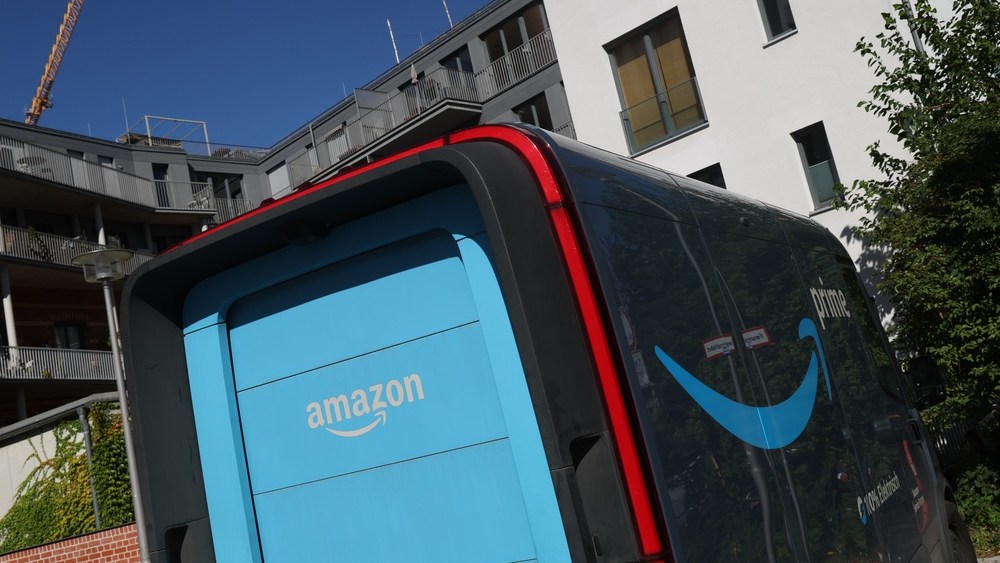
She added that although Amazon classifies its delivery service partners as independent “entrepreneurs,” Davenport considers them anything but. Amazon not only supplies the packages to be delivered, she said, but it also dictates the exact routes drivers must take, the branded uniforms they must wear, the software they must use and the company-branded delivery vans they must drive, leaving them economically reliant on Amazon.
“DSPs are not true independent businesses that can resist Amazon’s demands,” the lawsuit said. “Rather, Amazon created DSPs to be creatures of Amazon, wholly beholden to, and the vehicle through which Amazon imposes its monopsony power on delivery drivers. DSPs must rely on Amazon for various assets and infrastructure, including the process for assigning packages and designing delivery routes. To serve any other potential customer, a DSP would need to recreate that infrastructure, including having its own unbranded vans and its own route software.”
Amazon rejected the allegations, saying the complaint “is not grounded in fact” and that claims about working conditions are “just wrong.”
“The truth is, DSPs are independent business owners who make their own decisions about hiring, fleet management, and capacity planning—and they choose whether to work with other companies besides Amazon,” Steve Kelly, an Amazon spokesperson, wrote in an email. “Had the Attorney General bothered to look at the facts, they would have also seen that the vast majority of routes are finished on time or early—built on real-world data accounting for stop complexity, traffic and geography.”
The Everything Store launched its DSP program in 2018 to expand its last-mile delivery capacity and reduce its reliance on commercial carriers such as UPS and FedEx. Following a high-stakes contract dispute with the U.S. Postal Service and a sweeping $4 billion investment in its rural delivery network, Amazon reached a deal with the agency in April to reduce the volume of packages it sends through USPS by 20 percent.
Amazon’s logistics arm is now the largest parcel carrier in the United States by volume, according to shipping consultancy ShipMatrix. In 2025, it delivered 6.7 billion parcels, narrowly edging out USPS at 6.6 billion, with UPS at 4.4 billion and FedEx at 3.6 billion.
The lawsuit said Amazon’s DSP drivers earn significantly less than delivery drivers for UPS, FedEx and USPS. It cited drivers who described their working conditions as “atrocities,” saying inhumane demands forced them to urinate in water bottles during shifts to meet demanding delivery quotas. Drivers have also reported invasive surveillance that tracks their every move at work and the ever-present risk of immediate termination for minor infractions.
The complaint further alleged that engaging in pro-union activity can result in drivers losing their jobs not only at one DSP but across the entire network “because of the monopsony power it possesses.” It said Amazon “abuses its power as a technological behemoth with near-unlimited resources, infrastructure and technological capabilities to track, intimidate and suppress DSP drivers who seek to unionize, including, upon information and belief, even taking and analyzing surveillance videos of those who even attempt to exercise their rights.”
Kelly said DSP employees are “free to choose their employer and associate with who they want, full stop.” He added that he was confident that Amazon would prevail in court.
Davenport is seeking injunctive relief requiring Amazon to fundamentally restructure its relationship with the DSPs, prohibiting the company from restricting unionization efforts, enforcing “no-poach” agreements across its network or using its economic leverage to impose wage ceilings and stifle competition for drivers. She is also pursuing treble damages for lost compensation that DSPs and their drivers would have earned “absent Amazon’s anticompetitive conduct.”
“Amazon is a monopsonist,” the lawsuit said. “A monopsonist is a dominant buyer of specific goods or services that can control or dictate the terms of payment for the services it demands. A monopsonist can pay its suppliers (or workers) less and subject them to worse conditions because the sellers (or workers) lack alternative purchasers for their goods and services.”
This isn’t the first time New Jersey has taken on Amazon. In 2023, it joined the Federal Trade Commission and 16 other states in filing a lawsuit accusing Amazon of using anticompetitive strategies, including algorithmic price manipulation and restrictions on sellers, to thwart competition and maintain its monopoly power.
Last October, the New Jersey attorney general’s office under Matthew J. Platkin filed a civil rights lawsuit alleging systemic discrimination and retaliation against pregnant and disabled warehouse workers, including placing those who requested accommodations on unpaid leave and, in some cases, firing them. The same month, the New Jersey Department of Labor filed a separate complaint against Amazon for what it said was the unlawful misclassification of its Amazon Flex delivery drivers as independent contractors, depriving them of wages, benefits and other legal protections to which formal employees are entitled.
