

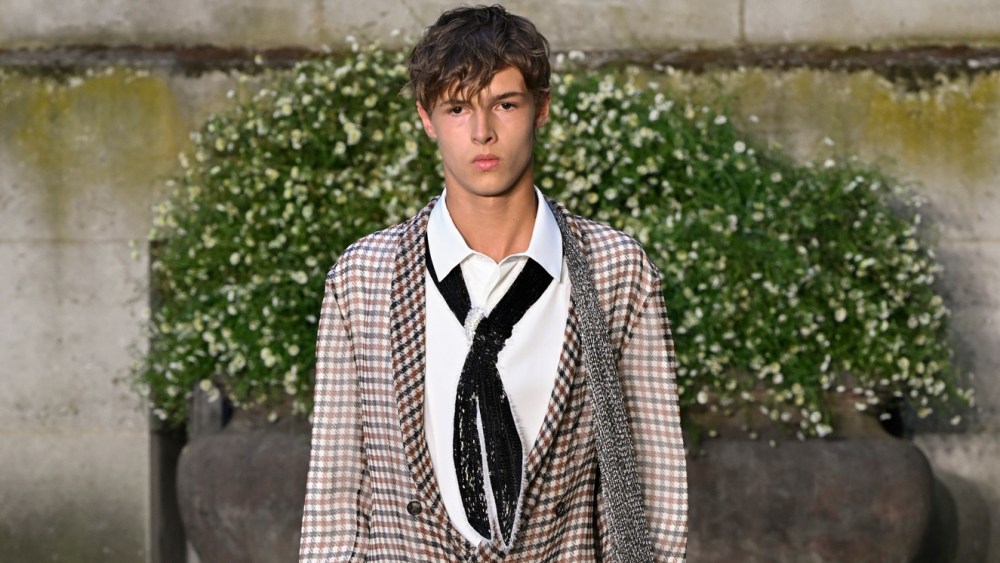
Menswear is in the midst of an identity crisis.
Today’s market is seemingly splintered into a number of different style tribes. There is still the street customer, but now preppy, younger men are buying suits — and even ties — while the older consumer continues to seek luxury. Add to that all the direct-to-consumer labels found on everything from the web to Instagram and TikTok and the picture gets even more confusing.
That leaves brands and retailers scratching their heads trying to figure out who the men’s consumer is today, where they get their information — and, most importantly, how to appeal to them.
To attempt to gain a better understanding of today’s men’s customer, WWD asked two questions of executives and designers at the spring 2027 men’s shows in Europe:
- Who is the men’s consumer today and how is he changing?
- How, in your opinion, do you reach that consumer and what do you have to do to attract them?
Here are the responses:
Jonathan Anderson, creative director, Dior
It’s my fantasy character of Dior, and each time it’s about how you keep changing the angle on it, refining it and refining it. It’s about having fun with it, and trying to work out new codes and take codes away that you’ve put in.
I have an interesting job because I have to talk to an existing customer, which is a loyal client, and I have to recruit customers. So for me, in a weird way, I enjoy kind of screwing with it. So you can have the beautiful suit, but then you can have the shoe that is more distressed. You can have the tailoring look at the very beginning, but then you’re ripping out all the inners of it, and rebuilding it as a lining structure. It’s about experimentation.
My thing with Dior is I want to try to elevate the appearance of the guy. It’s not just merchandising, it’s about how we build characters so that it can appeal to different age demographics. You can have a beautiful suede coat, we can put it with a gold python trouser or gold python shorts, but at the same time when you break it, it can be for my dad, or it can be for me in the summer.
It takes time to define a look, and I think slowly, bit by bit, it starts to kind of click into place, and it’s enjoyable. I think fashion needs to be enjoyable.
Mike Amiri, founder and creative director, Amiri
I used to come to Paris, and think “How do you show up for Paris?” And I’ve kind of learned that my strength is that I bring what I have from Los Angeles here, and I execute it at the level that’s expected on these platforms, so for me it’s kind of a continued evolving story, trying to maintain the same pose and give people that character. Sometimes it’s a hero, this season it might be the villain you’re rooting for a little bit.
Pharrell Williams, men’s creative director, Louis Vuitton
Our consumers are primarily folks who are in some way, shape or form executives, or athletes, or professionals, or people who are inspired by those and that archetype. The executives are our primary consumer, those who love that standard and luxury.
I’m a creative director, but I’m a consumer’s designer. I design things that I know I’m going to consume.

A look from Louis Vuitton.
Kuba Dabrowski/WWD
Giovanni Bianchi, head of design at L.B.M. 1911 and Luigi Bianchi
Our challenge now is reaching the end consumer much more directly, beyond the traditional retailer-dependent model. It is not yet clear what the right formula is, whether direct retail would largely be just a driver of brand awareness. We are starting to work with multibrand partners to carve out spaces of our own. That will be one of the key challenges in the coming years.
Collection-wise, our product continues to evolve, and discerning consumers can see that. We have codes we want to honor without overturning them. The goal is to make that evolution come through, subtly.
Claudio Marenzi, president and chief executive officer of Herno
Consumers need to have a high level of trust in the brand. I no longer believe that Made in Italy alone makes the difference. We are addressing it ideologically, while I believe we should not defend it so much as enhance it. To do that, a brand needs authority in the eyes of the consumer, backed by strong design value, a flawless proposition and a level of quality that is evident wherever the product is made.
As the big brands widen the gap between luxury and everything else, with an increasingly polarizing focus on ultra-high-net-worth individuals, other labels are left facing a new wave of austerity and reduced spending capacity. At Herno, we have been thinking about this because we could represent a meeting point between those two extremes. The sweet spot could lay in the middle and that is where we operate: offering a product that is conceived to exalt quality and value.
Joo Woo, senior vice president, general merchandise manager, men’s for Saks Fifth Avenue and Neiman Marcus
Today’s customer shops with greater intention, gravitating toward unique and exclusive pieces and experiences. Our edit and curation of new and emerging brands as well as limited-edition and exclusive products create a sense of discovery in our stores. This along with an elevated in-store experience, personalized styling, knowledgeable sales associates that can tell the story of the craftsmanship and meaning behind what they buy, all keeps the customer engaged.
Jian DeLeon, men’s fashion director for Nordstrom
The men’s consumer is in an exploratory mood, willing to push the envelope a bit and discover new brands and ways to style their wardrobe. Reaching them is about curating the best brands and best products and having a level of service that helps the customer feel the most comfortable in how they can make the latest trends work.
David Thielebeule, fashion director for Bloomingdale’s
Our men’s customer is looking for inspiration as much as product. He is incredibly informed, shops across channels and has access to more brands and information than ever before. What is changing is that he’s becoming more intentional, less interested in chasing trends and more focused on building a wardrobe that reflects his lifestyle and personality. He wants quality, authenticity and a point of view, but he also expects ease, flexibility and a fabulous experience in the store. The brands that are winning are the ones that create a world he wants to be part of, not just a product he wants to buy.
We are all overscheduled and constantly being bombarded with information, so I think the biggest challenge is earning attention. We need a clear point of view that makes shopping feel effortless, whether that’s through compelling storytelling, memorable experiences or simply presenting the right product at the right moment.
At Bloomingdale’s, we’re elevating the physical store experience, deepening our focus on clienteling and relationships and building even stronger partnerships with brands. Ultimately, you have to create a little bit of magic — something that inspires him to keep coming back.

Bloomingdale’s works to elevate the store experience.
NurPhoto via Getty Images
Sophie Jordan, menswear buying director for Mytheresa
Today’s menswear customer is highly considered in his purchasing decisions. He knows what he wants and places great value on craftsmanship and quality. He is not driven by trends; instead, he is a wardrobe builder who prioritizes versatility and increasingly adopts a timeless approach to spending. That is not to say he avoids taking risks or maintains a conservative wardrobe. He still embraces color and appreciates the fashion-led nuances of each season. Ultimately, however, products must feel effortless, easy to style, flattering and comfortable.
Our strategy is built around a tightly curated brand portfolio. This ensures our customer understands that we select only the strongest products, pieces that offer a distinctive point of view within the market and deserve a place in his wardrobe. We carefully consider his needs and the way he lives, both professionally and personally. There is also growing interest in more personalized experiences. We are seeing increased demand for made-to-measure opportunities and exclusive brand experiences that allow customers to gain a deeper understanding of a brand’s values and craftsmanship. These experiences provide access to exceptional products and fabrications that are not always readily available in stores or online.
Victor Poulsen, buyer for men’s luxury and designers for Printemps
The menswear market continues to demonstrate strong long-term potential. Male consumers are increasingly willing to invest in fashion and allocate larger budgets to their wardrobes. However, much like women’s luxury customers, they are becoming more selective about where they spend. Building loyalty is therefore becoming increasingly important, and the in-store experience plays a crucial role in creating lasting relationships with clients.
Today’s consumer is looking for products that combine quality, longevity and relevance. Retailers must offer genuine value, exceptional service and a memorable shopping experience. Equally important is the ability to identify and secure the most desirable products early, ensuring that customers can access the right items at the right moment.
At Printemps, they can find it at L’Endroit, the Printemps Homme multibrand section for luxury and designers. The concept space houses nearly 40 brands, around 70 percent of which are exclusive to Printemps. For example: Greg Ross, A.A. Spectrum, Juun.J, Again, Bluemarble and LGN Louis Gabriel Nouchi. Printemps sees growing consumer interest in designers with distinctive creative visions and strong narratives around craftsmanship and production.
Shaun Donnelly, buying director, nonapparel and menswear for Harvey Nichols
Today’s menswear consumer is less driven by trends, and increasingly by intent. They are consuming more content than ever, but paradoxically buying more selectively. Rather than chasing the latest drop, they’re building considered wardrobes, investing in pieces that offer longevity, versatility and genuine craftsmanship. They understand fabrication, provenance and brand DNA, and they expect retailers to present a clear point of view, making the edit for them.
The modern menswear customer values authenticity above all else, so the most successful retailers are those with a clear identity and the conviction to stand behind it. This ultimately means curating with purpose, rather than chasing every new brand or trend. Each brand must earn its place by bringing something distinctive to the assortment and offering a genuinely compelling reason for the customer to visit.

Harvey Nichols seeks to offer a curated menswear assortment.
Courtesy Photo
Toby Bateman, CEO, Mr Porter
Men today are more individualistic than ever before. They are more style-aware, and more confident with their own style. Whether that is preppy, quiet luxury or contemporary fashion. This equals more diversity and less of a herd mentality.
Mr Porter focuses on building trust, through great product, great content and great service — if you can deliver on those things consistently, you will build a loyal customer base. Reaching customers today through either search or social requires diversity of brands and products, and relevant editorial content.
Joseph Tang, fashion director for Holt Renfrew
Today’s men’s customer is more informed and more selective than ever. He is approaching fashion with a mindset focused on building a wardrobe he can trust across all aspects of his life. Gone are the days of a work-versus-weekend wardrobe. The modern male consumer leads a multifaceted lifestyle, and his clothing should complement that. He is savvy, educated and discerning, not only about what looks good, but also about what feels worthy of his investment.
As much as trends and style can influence this customer, building lasting relationships and trust is even more important. Today’s customer can quickly identify what feels authentic and what does not. Immersive experiences that reinforce a brand’s authenticity strengthen confidence in how customers choose to invest. The brands that succeed are those that connect with customers on an emotional level, well beyond the product itself.
Tiziana Fausti, owner of Tiziana Fausti and 10 Corso Como
Today’s men’s consumer is increasingly eclectic, informed and difficult to define through traditional categories. He moves naturally between different styles, brands and price points, creating a highly personal approach to fashion. What we see in our stores is a customer who values authenticity, quality and individuality above all else.
Product remains fundamental, but it is no longer enough. Consumers are looking for a clear point of view, meaningful experiences and a sense of belonging. As retailers, we need to offer curated selections, exceptional service and something unique that cannot be replicated elsewhere. The brands and stores that succeed today are those capable of creating an emotional connection while maintaining consistency and authenticity. In a highly competitive market, uniqueness is one of the most valuable forms of luxury.
Nicolas Gabard, founder and designer, Husbands
What we think strongly is that people won’t follow the trends. More and more, people will dress to say something about themselves and I think that the designer brands are not really framed for this.
What we see is growing demand for more personalization and more individualization, especially with the younger guys, and I think that classic menswear is perfect for this. I really think that if Husbands is working and other brands are working, it’s because we are solving this need for self-expression. And again, classic menswear is the perfect blank page to create your own story. Tailoring is about quality, about the fabric, about the emotion, and people need some real things right now. I don’t think tailoring is about a trend, it’s about something more tectonic.
Michael Rider, creative director, Celine
I think we’re the customer in the studio, so we change, and I’m assuming that’s going on elsewhere, too. I always think it’s kind of dangerous when we ourselves — the people working on it — get further and further away from the people who we hope will buy it. So if I want to buy something and keep it, I assume other people will too, and I think keeping it is important at Celine. I want to create fashion for men too, but I want to be things they hold on to, even when they’re full of flair.

A look from Celine’s spring collection.
Courtesy
Simon Longland, director of buying, fashion, for Harrods
The men’s luxury consumer today is more discerning and intentional in his purchasing decisions. Over the past few years we’ve seen a shift away from overtly logo-driven fashion and streetwear toward a quieter, more product-focused approach to luxury. Customers are increasingly prioritizing quality, craftsmanship and longevity over one-season, trend-driven purchases.
Branding remains important, but it is often expressed in a much more subtle way, with discreet logos and a greater emphasis on design and fabrication. One of the most significant growth areas has been modern preppy dressing. It offers versatility, ease and relevance across generations, making it appealing to a broad customer base. At the same time, fashion-led consumers remain deeply engaged with brands that have a strong and consistent identity, with a design language that transcends seasons.
Today’s menswear consumer expects more than product alone; they are looking for experience, service and exclusivity. At Harrods, we focus on creating a 360-degree luxury environment where customers can access fashion, horology, grooming, dining and services all under one roof. While convenience remains important, increasingly it is craftsmanship and expertise that resonate most strongly with luxury consumers. They want to understand the quality, heritage and artistry behind what they are buying.
To attract customers, retailers need to offer something unique, whether that’s exclusive product launches, capsule collections, private shopping experiences or bespoke services such as made-to-measure and alterations. These personalized experiences are becoming increasingly valuable. Digital channels are essential for building relationships, but physical retail continues to play a crucial role when it delivers expertise, inspiration and memorable experiences. The most successful retail environments combine exceptional product, craftsmanship and meaningful service, creating a compelling reason for customers to return.
Bosse Myhr, director menswear, womenswear and childrenswear for Selfridges
The menswear customer today is more considered and cautious in their purchasing decisions. Consumers are looking for authenticity, quality and longevity rather than chasing the latest trend. Brands that offer genuine value through strong design, quality fabrics, great cuts and enduring style are performing well. There has been a noticeable shift away from hype-driven consumption. While excitement and newness still matter, substance has become increasingly important. Customers are looking for products and brands that feel real, credible and relevant to their lives, with a clear sense of purpose and quality behind them.
Reaching menswear consumers today starts with delivering authentic design and a compelling product proposition. Customers are willing to invest when they believe a product is genuinely worth it through its quality, craftsmanship, design and versatility. Versatility has become particularly important. Consumers want pieces that can be worn multiple ways and across different occasions. Products that can be easily combined into a variety of looks offer greater value and relevance, helping customers build wardrobes that work harder for them. Ultimately, brands that combine authenticity, quality and versatility are best positioned to connect with today’s menswear consumer.
Mats Klingberg, founder and owner of Trunk Clothiers
If you go to Pitti Uomo in Florence, you’ll see so many different styles going on at the same time, there are parallel universes of menswear and something for everyone. I think guys in general are way more informed than they used to be, because there’s so much information out there fed by social media and magazines like Matt Hranek’s WM Brown, and Simon Crompton’s site, Permanent Style. Because of all the information, they’re also more conflicted and confused than ever because of all the information out there. And if you’re shopping online, where do you even start?
I still always stay very true to what I believe in and what I think our customers want. Sometimes things work in an Instagram or magazine context, but don’t always translate commercially. Also, a lot of our guys are very conscious about not looking like they’ve thought too much about dressing. They want the look to be effortless. This is a moment when physical retailers can really make a difference, make sense out of the market and boost customers’ self-esteem.
Men sometimes have all these different outfits from big brands and don’t even know where to start pulling them together. I think lots of guys can be very successful, and good at their jobs, but when it comes to dressing, they’re not so sure what is right or wrong. Also, they’re not used to letting their guard down. We allow them to be a bit vulnerable with us. At Trunk, we try to simplify. We want customers to be able to open their closets blindfolded — almost — and just grab a shirt, a jacket, trousers, a sweater, whatever, and have it fit together.
Jonny Johansson, creative director, Acne Studios
I can go back to from when we started and say that [the men’s market] is fragmented. It’s the collage that interests me, not dictating anything. I don’t believe in, “I’m a suit guy.” It doesn’t exist, in my opinion, even though you have Pitti Uomo, where it’s beautifully made suits, and you have the peacocks there.
The reality is, it’s always been fragmented and I think more than ever you’re consuming fashion on a mood. Nobody wants to belong to a tribe now. You want to belong to a community. What I mean with that is, you don’t want to conform, but you want to share. A tribe is more formulaic, I guess, and more brutal in a way.

A look from Acne Studios.
Courtesy of Acne Studios
