

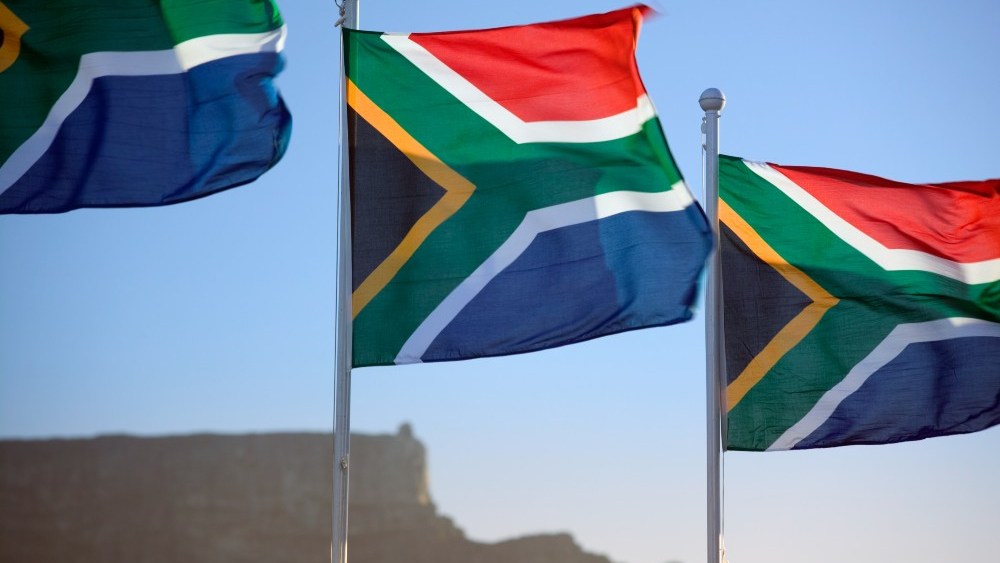
Public hearings on the Office of the United States Trade Representative’s proposed Section 301 duties took place last week, and a delegation from South Africa made its way to Washington to advocate against the imposition of new tariffs.
Led by the Department of Trade, Industry and Competition (DTIC), South Africa’s government made the case that the country—which was targeted alongside 59 other U.S. global trade partners for allegedly failing to enforce the prohibition of imports made with forced labor—does in fact have laws that address such issues.
In oral testimony, DTIC representatives supported by the country’s labor department and trade administration emphasized that South Africa has ratified International Labour Organization fundamental conventions that bar forced labor in supply chains.
The nation also has an existing legal framework to enforce bans on imports produced through such illicit practices, including an International Trade Administration Act, which empowers a national executive to prohibit or control the importation of any class of goods, as well as the Customs and Excise Act, which gives customs the power to detain or seize prohibited products at South Africa’s border.
During the testimony, South African government officials requested that the USTR exempt the country from the 12.5 percent duties its imports are being targeted with—or, at the very least, that certain metals, vehicles and food products face exceptions from tariffs as there is “no evidence” that the inputs are produced using forced labor.
The USTR, in turn, requested that South African officials submit a post-hearing submission elucidating the request and reasoning behind it by Thursday.
South African Minister of Trade, Industry and Competition Mpho Parks Tau said the U.S. is an important trading partner and destination for the country’s exports, and that the government will continue to engage with the USTR on “all matters of interest” concerning bilateral trade, including the Section 301 investigations, the Section 232 tariffs (imposed globally on steel, aluminum and automobiles), and the renewal of the Africa Growth and Opportunity Act (AGOA).
South Africa is among 32 sub-Saharan African nations that are eligible for AGOA in 2026. The trade preference program, which lapsed briefly last September after nearly 25 years, was retroactively extended in late January until Dec. 31. Five months remain until AGOA faces another expiration date, but the Senate has not yet scheduled a vote on the program’s future.
South Africa, which has enjoyed AGOA eligibility and free trade with the U.S. on a slew of exports since the program was enacted in 2000, faced expulsion under a bill introduced in the Senate last year by Senator John Kennedy (R-La.). The lawmaker’s AGOA Extension and Bilateral Engagement Act aimed to prioritized countries that prioritize America’s economic and foreign policy interests—a bar he said South Africa couldn’t clear given its trade partnerships with U.S. adversaries.
China’s influence in Africa has been growing, the senator argued—with investments in plants and export hubs accelerating across the continent—and South Africa, a founding member of the BRICS Alliance alongside Brazil, Russia, India and China, had aligned itself with the wrong partners.
AGOA beneficiaries are not exempt from the Trump administration’s bevy of tariff actions—including the proposed Section 301 tariffs—meaning that the duty-free preference afforded by the program will be moot if the USTR decides to move forward with its 12.5 percent duties.
