

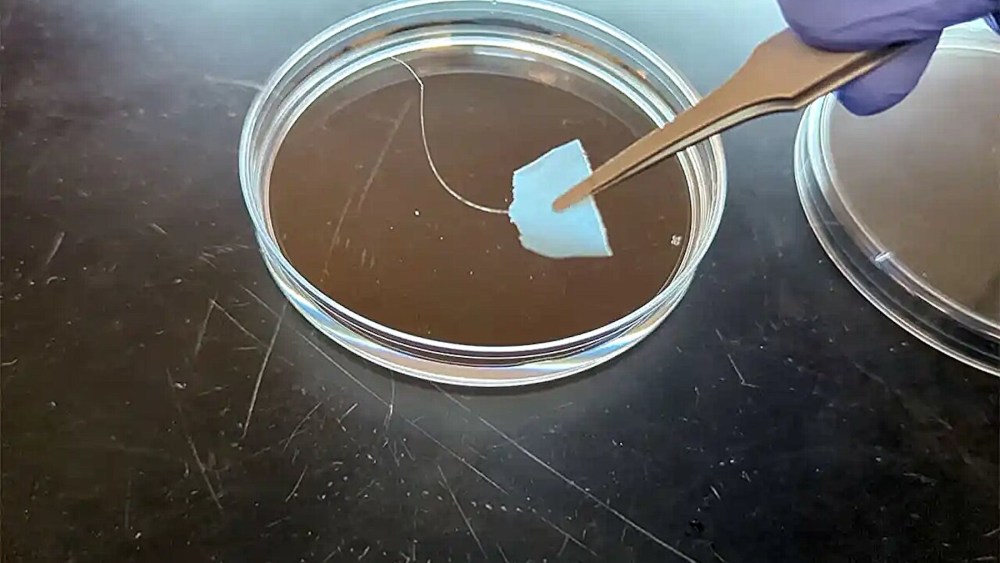
Engineers at Washington University in St. Louis developed a protein-based textile material to address microfiber pollution and low textile recycling rates through a closed-loop production system.
The research, published in the peer-reviewed scientific journal “Advanced Materials,” was led by Fuzhong Zhang, Francis F. Ahmann Professor of Energy, Environmental & Chemical Engineering at the university’s McKelvey School of Engineering and co-director of the Synthetic Biology Manufacturing of Advanced Materials Research Center (SMARC).
Produced in bioreactors—closed vessels that use genetically engineered microbes to manufacture substances—the protein-based materials can reportedly be dissolved and remade into new fibers across multiple recycling cycles while maintaining strength and performance. Researchers added that any microparticles shed during washing would biodegrade rather than persist as synthetic microplastics.
The development comes as scrutiny around synthetic textiles and microfiber pollution continues to grow. Each wash cycle can release tiny plastic particles into wastewater systems, many of which eventually end up in oceans and other aquatic environments. At the same time, most discarded textiles still never make it back into recycling streams.
“We engineered recyclable protein fibers that dissolve in a formic acid solution within seconds, yet remain stable in water and strong after drying,” Zhang said.
According to the research team, formic acid acts as a solvent that temporarily disrupts the protein interaction—holding the fibers together—without altering the proteins themselves. Once the solvent evaporates, the proteins can be reused to produce fibers with properties similar to the original material.
The material, known as SAM, combines protein sequences derived from mussels, spider silk and amyloids, proteins capable of forming strong fibrous structures. Researchers said the hybrid structure was designed to independently control durability and recyclability, a longstanding challenge in polymer and textile recycling systems.
Its mussel-inspired protein sequences help control recyclability while reducing shrinkage when exposed to water. If microparticles are released during washing, researchers added that the particles would biodegrade rather than persist like conventional synthetic microplastics. The team also demonstrated that recycled proteins could be repurposed into adhesive hydrogels before being recycled again into fibers or gels, extending the material’s possible applications beyond textiles.
Zhang said a circular production model could also help lower costs associated with biomanufacturing, which has historically been concentrated in higher-end applications due to expense.
“Recycling the final product for multiple rounds can greatly reduce manufacturing costs over time,” he said.
