

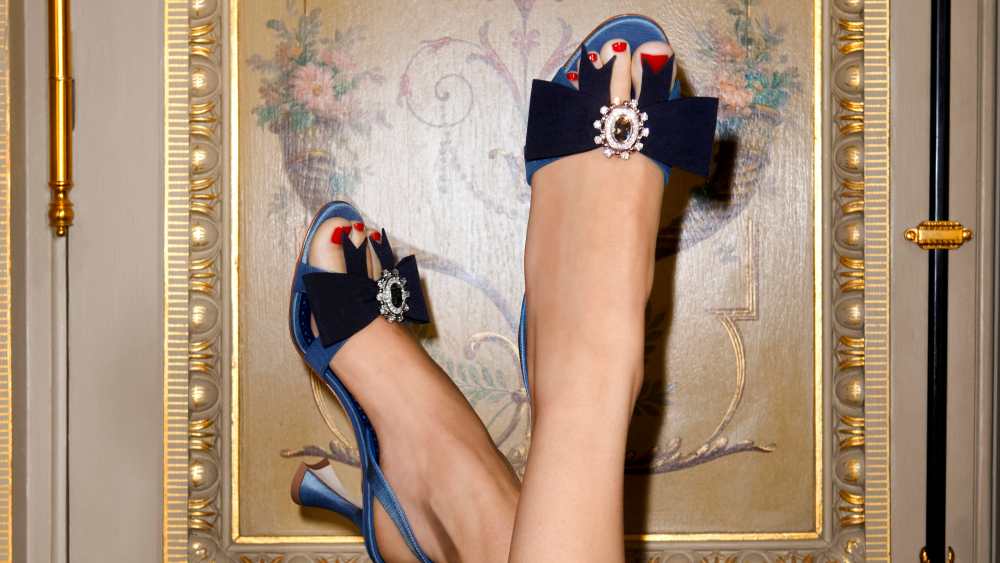
LONDON — Last year was a challenging one for Manolo Blahnik due partly to the Saks Global bankruptcy, but 2026 is off to a strong start as the luxury footwear and accessories brand positions itself for growth through increased direct-to-consumer sales.
In the 12 months ended Dec. 31, turnover at Manolo Blahnik was 83.5 million euros, down 3 percent year-over-year at reported rates, and down 1 percent at constant currency, dented chiefly by the troubles at its major wholesale partner, Saks Global.
By contrast, direct-to-consumer sales were up 14 percent year-over-year, the result of a strategic shift toward the channel.
Gross margin rose 1 point year-over-year, following more DTC sales and tighter cost controls. EBITDA, or earnings before interest, taxes, depreciation and amortization, fell 36 percent to 5.4 million euros, reflecting investment behind new stores worldwide.
The company posted a pre-tax loss of 1.6 million euros, driven by one-off external factors including a debtor impairment and unshipped goods “linked to a key U.S. wholesale partner’s payment difficulties,” and a weaker U.S. dollar.

Kristina Blahnik and Manolo Blahnik
WireImage/Courtesy of Manolo Bla
That key partner was Saks Global, parent of Saks Fifth Avenue, Neiman Marcus and Bergdorf Goodman, which spent six months in bankruptcy court and emerged as the rebranded Exemplar Luxury Group. The new owners are its former lenders; the debt load is much more manageable; and retail veteran Geoffroy van Raemdonck is the new CEO.
Manolo Blahnik isn’t the only luxury brand that suffered the consequences of Saks’ bankruptcy. Names large and small were hit hard, one reason why Manolo Blahnik is focusing more intensely on the DTC channel.
Looking ahead, the company said revenue from the group’s “key U.S. wholesale partner” is expected to rebound in 2026 following the conclusion of a restructuring process in the first half.
It added that the DTC sales momentum has continued into 2026 with the group achieving double-digit growth in the channel in the first half. “This places Manolo Blahnik in a strong position to navigate ongoing uncertainty in the luxury sector and to continue delivering sustainable, long-term growth,” the company said.
The company’s CEO, Kristina Blahnik, said that “against one of the most challenging backdrops we have faced in recent years, Manolo Blahnik delivered a year of real resilience and strategic progress. We grew our direct-to-consumer sales, strengthened our margins and extended the brand into important new markets while remaining vigilant and agile to the external pressures on the wider industry.”
The Bridal Hangisi.
She added: “We invested with purpose this year — opening beautiful new stores, bringing e-commerce to China and nurturing long-lasting partnerships. Turnover was impacted by one-off factors beyond our control, but beneath everything lies the enduring strength of a brand built over more than 55 years of craftsmanship and artistry. That strength, above all, comes from our people, whose talent, dedication and creativity are the heart of the brand, and who will continue to shape its future.”
The current year is shaping up to be buoyant, she said, with direct-to-consumer trading already showing double-digit growth year-over-year. “We see real momentum building and have every confidence in the year ahead,” said Blahnik.
The company added that it continues to invest for the “longer term,” which means more stand-alone stores in markets worldwide.
The brand now has 24 stores, 14 of which are directly operated flagships, with the remaining 10 overseen by franchise partners. In 2025, new boutiques opened in Miami, Milan and Costa Mesa, Calif. Beijing opened in January 2026, part of the company’s focus on “retail expansion in high-growth markets.”
The company also launched e-commerce in China, a key luxury growth market, and acquired the remaining shares in its Hong Kong entity to tighten regional control.
The upfront costs of the new store openings and the associated distribution setup contributed, in part, to the 36 percent year-over-year decline in EBITDA.
Those challenges didn’t stop Manolo Blahnik from keeping its commitments to people and culture. The brand said it remained a U.K. and U.S. living wage employer and a certified Great Place to Work.
The first styles from Balenciaga and Manolo Blahnik collaboration, which landed in-store in May.
Balenciaga
It continued the Manolo Blahnik Foundation pledge of earmarking 10 percent of operating profit for mental health and animal welfare charities and for nurturing the next generation. Even amid the financial pressures of 2025, the group said it prioritized “team recognition,” awarding bonuses to employees across all levels of the business.
During 2025, it also pursued brand partnerships and collaborations, including its sponsorship of the sell-out “Marie Antoinette Style” exhibition at the V&A. As reported, the brand created a dedicated capsule collection and hosted a variety of events in London and Paris to mark the opening.
The brand also unveiled a collaboration with Balenciaga in December 2025 featuring a range of crystal-embellished heels inspired by one of the eponymous designer’s signature silhouettes, the Nadira. The shoes hit shop floors in May.
Blahnik saw “strong momentum” across key product categories in 2025. It delivered a global wedding campaign called Married in Manolos, encompassing performance marketing, PR, client engagement and VIP events.
The campaign ran globally from the second quarter of 2025, with activity peaking during Bridal Week in October. The company said the campaign resulted in a 44 percent year-over-year increase in wedding product sales.
