

Updated 6:52 p.m. ET May 14
Marc Jacobs is moving to a new home.
LVMH Moët Hennessy Louis Vuitton has reached a definitive agreement to sell Marc Jacobs to WHP Global.
Under the deal, Jacobs, who founded the company in 1984 with Robert Duffy, will continue his role as creative director, ensuring continuity for the brand’s vision, runway collections and shows. After that deal is closed, WHP will own the brand with G-III Apparel Group under a separate arrangement.
While it’s unusual for LVMH chief Bernard Arnault to sell off a brand, a parting of the ways has been in the cards for a while. Last year, the luxury giant was close to selling the business to WHP’s competitor Authentic Brands Group, but that deal fell through over price and the involvement of Jacobs himself.
“I am forever grateful to Bernard Arnault for his support, belief and trust in me over the last 30 years,” Jacobs said in a statement. “It has been an honor and privilege to work alongside the Arnault family and LVMH. I remain committed in my role as creative director of Marc Jacobs International and look forward to this bright new chapter.”

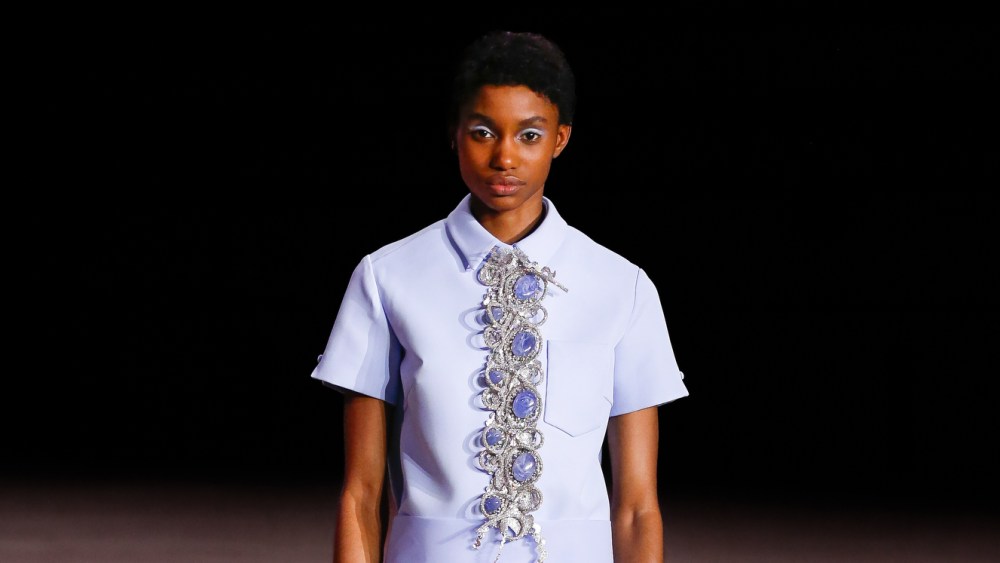
Backstage at Marc Jacobs, spring 2026
Lexie Moreland/WWD
LVMH bought the designer business in 1997 after Jacobs was appointed the first creative director of Louis Vuitton and has provided the company with the support and resources needed to go global.
“Marc Jacobs is a designer of rare creativity and unique vision,” Arnault said. “His impact on the world of fashion is undeniable, and I want to warmly thank him for his contribution to the success of the maison and the LVMH Group over the last 30 years. I am confident that this new chapter will offer new avenues of opportunity for Marc Jacobs, that the brand and its designer will continue to inspire customers and creators around the world.”
A key player in this new chapter for the storied brand is Yehuda Shmidman, founder, chairman and chief executive officer of WHP Global, who said the deal “marks a defining moment” for his company.
“LVMH has been an exceptional steward of the Marc Jacobs brand over the past three decades,” Shmidman said. “Together with Marc Jacobs, G-III and the team, we look forward to expanding the brand’s global reach and building on its strong legacy for years to come.”
Sources familiar with the negotiations said Shmidman was very clear that he understood the value of Jacobs as a creative force at the brand and that the two had met and established a rapport. A townhall was held at the brand to explain the switchover.
But WHP is not going it alone with Marc Jacobs.
When the brand management company buys the brand from LVMH, it will also set up a 50/50 joint venture with G-III Apparel Group to hold the brand.
G-III will then buy the global Marc Jacobs operating business from the joint venture and set up a long-term agreement to use the brand while WHP sticks to its expertise and handles licensing.
That will make G-III a 50 percent owner of the Marc Jacobs brand as well as a major licensee — solidifying the designer positioning of G-III chairman and CEO Morris Goldfarb. Already, the company counts Donna Karan and DKNY, which it bought from LVMH in 2016, and Karl Lagerfeld among its brands.
While terms of the broader deal were not disclosed, G-III is putting up approximately $500 million to fund its portion, using cash on hand and borrowings under its revolving credit facility.
“Marc Jacobs is one of the most influential names in fashion,” Goldfarb said. “This transaction underscores our long-standing commitment to building a diversified portfolio of iconic, globally relevant brands. LVMH has been an exceptional steward of the brand, and we look forward to working with the Marc Jacobs team to build on that strong foundation. With our portfolio of premium brands and backed by our powerful global platform, this opportunity accelerates our transformation efforts and positions us to drive long-term shareholder value.”
At WHP, Marc Jacobs will be the “cornerstone” of the premium fashion vertical, joining Vera Wang, Rag & Bone and G-Star. With Marc Jacobs, the company will surpass $9.5 billion in global retail sales.
During the WWD CEO Summit in October, Shmidman and Vera Wang sat down to discuss their partnerships, opening a window into the situation Jacobs is stepping into.
Wang said she and Shmidman speak three times a day. “That kind of dialogue is so important, because you really have to be flexible,” she said. “You really have to pivot. You really have to realize that whatever went before may not be valid anymore, and you really have to move on.”
For his part, Shmidman said: “We look for brands that are exactly like the brand that Vera Wang built. We look for brands that have awareness, entity and purchase intent to the desired audience. We look for brands that are already great brands, that are big brands that are established.”

Marc Jacobs custom pet bags.
Courtesy Marc Jacobs
The Marc Jacobs brand is for sure a premium property, but the business never really achieved what many saw as its full potential.
Jacobs stepped down from Louis Vuitton in 2013 to focus on his namesake brand, which was being prepped for an eventual IPO. But that offering never came. LVMH was rumored to be shopping the Marc Jacobs business last year, looking for a $1 billion price tag.
And while the designer’s fashion collections get good reviews, the business is really centered not on those ethereal looks, but around other categories, like bags.
Now, WHP and G-III will have a chance to put their heads together with Jacobs and reimagine the business anew.
The sale is expected to be finalized in the third quarter and G-III said it would be dilutive to its results during the first 12 months after closing.
