

The trend cycle spins a lot faster for women than it does men — a great suit, khakis, penny loafers, the classics stay classic for a reason.
But to use the obvious “Project Runway” reference: in fashion, one day you’re in and the next day you’re out. So the question becomes how to go the distance while staying relevant?
During last week’s Chicago Collective trade show, WWD’s senior menswear editor Jean E. Palmieri moderated a panel of two retailers and two manufacturers who seemed to have cracked the code. Joining her were Cecile Revah of Bugatchi, which is celebrating its 45th anniversary; Gina Zangrillo of Darien Sport Shop, celebrating its 80th; Ken Giddon of Rothmans, celebrating one century, and Douglas Raicek from Peerless Clothing, the oldest of the group at 107.
Impressive on their own, those numbers were even more so after researching the statistics: nearly half of all businesses never survive their fifth anniversary and only about one-third reach the 10-year mark.
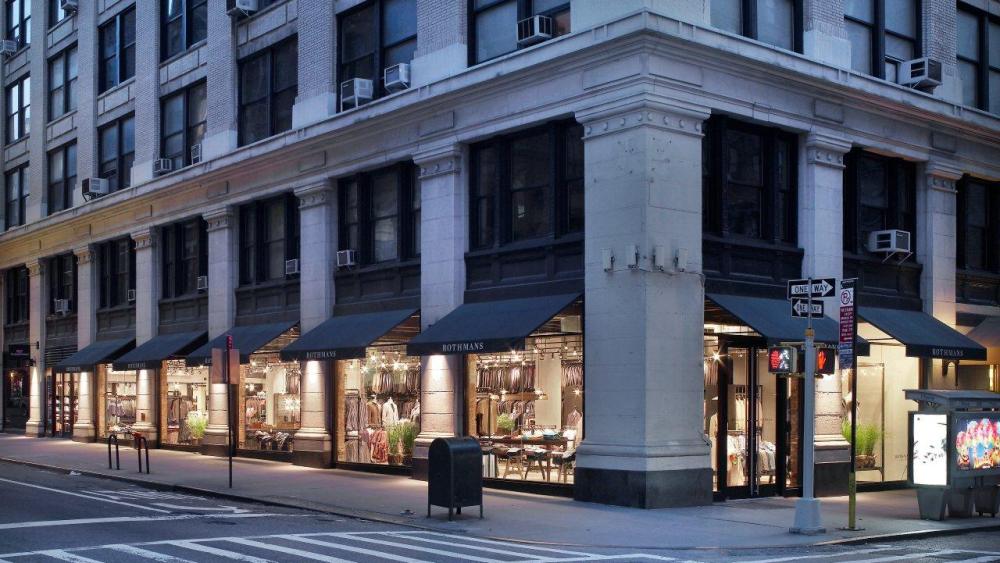
According to Giddon, whose grandfather founded Rothmans, one reason the Union Square retailer has survived 100 years is resilience. Sept. 11, superstorm Sandy, the COVID-19 pandemic, looting, “we’ve been through everything, and we just keep getting back up,” he said.
Giddon later advised against chasing hype, adding that Rothmans, which started as a discounter, acknowledges those humble beginnings by never chasing a seat at the “cool table.” As proof, he referenced a New York Times article about the top 50 clothing stores in the city. “Guess who’s not in it?” he joked. “This article comes out every single year, and we’re never in it, and then half those stores are gone.” But guess who has the last laugh? Rothmans.

Ken Giddon, right, with his brother Jim.
Giddon said his family was able to survive because of the premium it put on excellent customer service, something Revah underscored. The Bugatchi cofounder and chief executive officer cited customer feedback and insight from stores like Rothmans (a key Bugatchi stockist) for persuading her to grow the shirtmaker into a full lifestyle collection. “I think that what’s important is to always keep your ears open, to always have something new.”

Cecile Revah
But Revah doesn’t conflate newness with hype — whether it’s offering a fresh colorway or venturing into an entirely different category, it’s about expanding the means with which customers can engage in the same story. “Unfortunately, or fortunately in our business, every six months you start over and that gives you a chance to look at what’s new and interesting, and it’s important you find it in the market,” she said.
Raicek from Peerless put it a different way. As executive vice president of North America’s largest suit producer, newness equates to nimbleness. “The global sourcing landscape shifts, and it still does today,” he said, referring to the Canadian-based company’s increased reliance on Chinese manufacturing and U.S. President Donald Trump’s fluctuating tariff policies. “We’re still making the same product we did 100 years ago, and still trying to be the best value in men’s tailored clothing in the market, but just how you get there has changed a lot, and staying on top of it has forced us to constantly rethink the business and evolve.”

TailoRed is one of the lines produced by Peerless Clothing.
Courtesy of Peerless Clothing
Sometimes that evolution involves pain points. Zangrillo said the biggest struggle she’s encountered leading Darien Sport Shop is competing with the same brands she helped develop, namely Vineyard Vines.
“I remember when those guys walked in with a knapsack of ties, and we bought them. We bought everything they made,” she said. “We grew that business into probably $2 million to $3 million, and then they opened stores in both towns on either side of us, so you just have to know how to ride the waves and when to get off.” Interestingly, however, Darien Sport Shop still carries the Vineyard Vines collection.

Gina Zangrillo
Courtesy
Giddon argued, “That’s the nature of the business,” adding it’s why he returns to Chicago Collective twice a year: “to find the next guy that we’re gonna help create.”
The conversation then shifted from AI (everyone’s embracing it with the primary benefits in data analysis) to the joys and pitfalls of working alongside family, and finally, retirement, which no one seems to be planning for just yet.
Wrapping things up, Giddon was asked during the Q&A portion about his highlights from this year’s trade show. He singled out Rakho, Mason Cruz and Oncept.
The latter his team scouted last year, “but we’ll find five to 10 new brands here,” he said. “We really work hard at it. We have appointments from Saturday at noon till Tuesday at three, and we see everybody. We enjoy the hunt.”
