

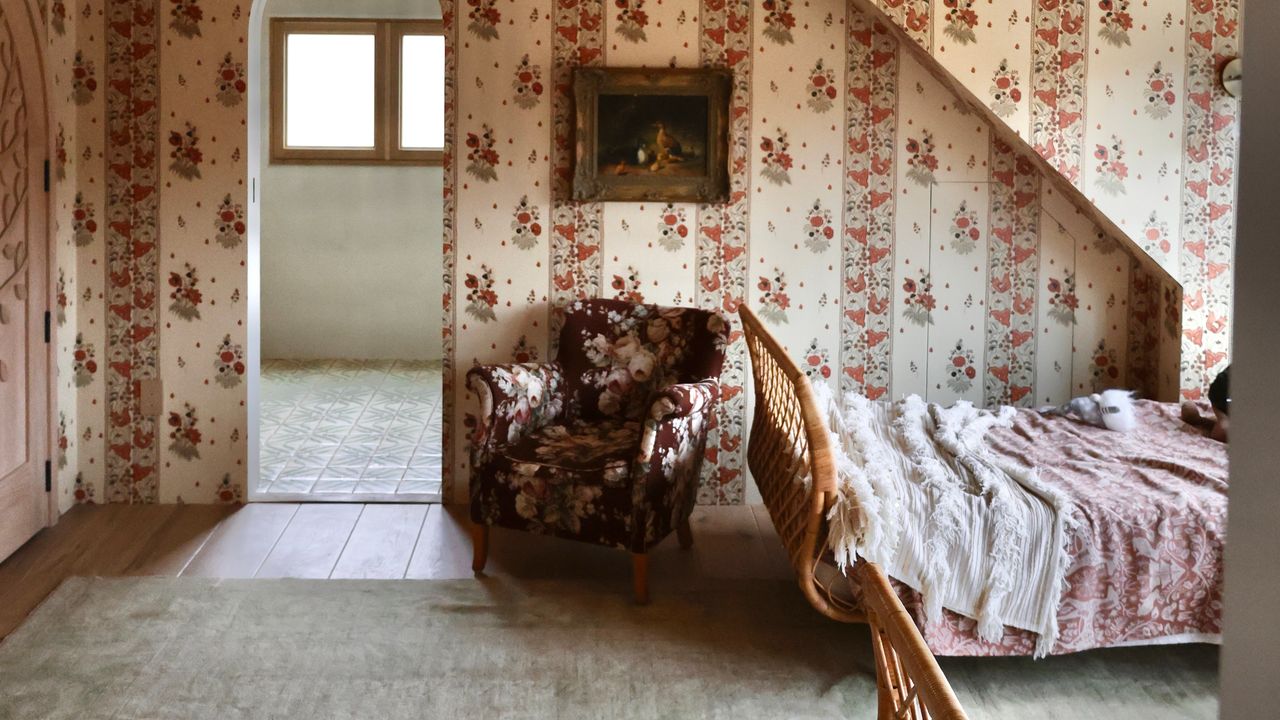
“Natural fibers are a must,” says Rowell. “Washed linens, brushed cotton, wool, and ticking all become more beautiful with age.” They also lend a grounding, welcoming feel to a space—the sort that invites you to properly hunker down.
While vintage textiles—heritage quilts, hand-stitched napkins, lace, and embroidered linens—can be found at flea markets, thrift stores, and antiques shops, Speake suggests starting closer to home. “Rummage around in the family box or drawer—everyone has one—that is often full of old bits of fabric, like lace, napkins, sheets, ribbons, doilies, or christening gowns and gloves,” she says. “You could keep them sitting in a box, or you could play around with them, making cafe curtains or stitching them together to create a tablecloth.” Even old, moth-eaten blankets can be given a new lease of life: stick them in the freezer to kill the eggs, then use them to upholster a footstool, for example.
And if you’re feeling really handy, get the knitting needles out or try your hand at embroidery. Failing that, buy yourself a checked or patchwork blanket—we love Daylesford’s Patchwork Quilt—and say you did.
Where to have the fun

Yes, wooden beams, worn-in surfaces, and functional furniture may be the backbone of the prairie-core aesthetic, but there’s always room for a little whimsy. Vintage florals, paisleys, and botanical block-print wallpapers bring softness and character to a space—lending it the sort of lived-in, layered charm that feels as though it has been passed down through generations.
Pattern needn’t be reserved for the walls, either. Take Rowell’s gingham-checked floor, created in lino using three tones of brown. While the Ingalls family may have favored the fabric variety, this clever riff on a familiar frontier check transforms a homespun classic into something that feels fresh, contemporary, and unexpected.
The finishing touches

