

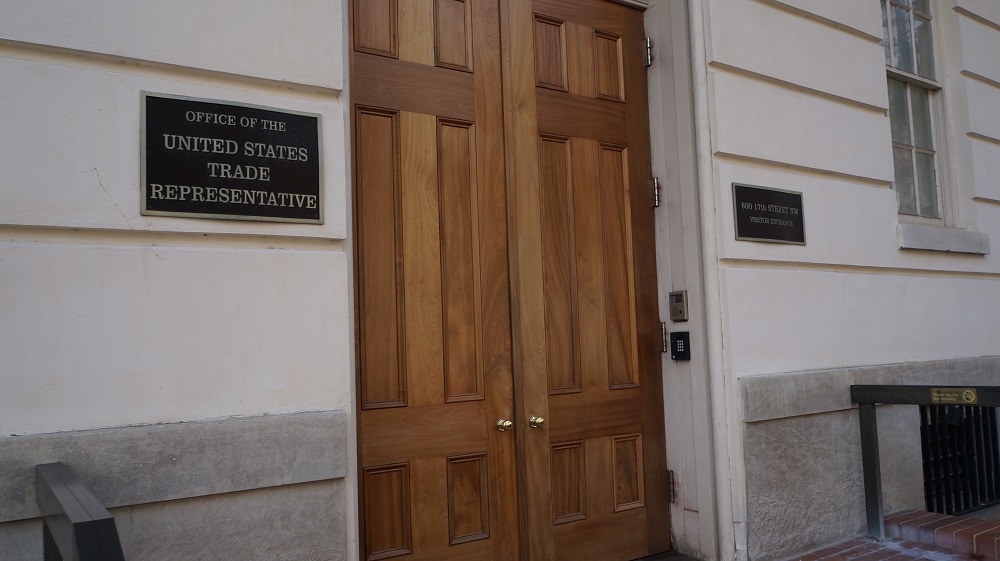
As the Office of the United States Trade Representative conducts hearings this week related to its intention to levy new double-digit duties on 60 U.S. trading partners over inadequate protections against imports made with forced labor, industry advocacy groups are weighing in on whether such tariffs will improve conditions for global laborers or simply raise costs on American consumers.
Launched under Section 301 of the Trade Act of 1974 in March, the investigations into apparel and textile sourcing hubs like Bangladesh, Cambodia, China, Guatemala, India, Indonesia, Mexico, Pakistan, Sri Lanka, Thailand, Turkey and Vietnam determined in early June that the economies in question failed to “impose and effectively enforce measures banning goods produced with forced labor from entering their markets.”
The USTR subsequently announced its intention to levy duties worth 10 percent to 12.5 percent on the markets found in violation.
The National Council of Textile Organizations (NCTO), which represents mills and manufacturers of man-made fiber, yarns, fabrics, apparel and sewn products valued at $61 billion last year, submitted comments to Chair of the Section 301 Committee Megan Grimball, Esq. this week. NCTO CEO and president Kim Glas will testify in front of the committee on Thursday.
In her letter, Glas said the group believes that “[f]orced labor remains prevalent in global textile and apparel supply chains and unfairly disadvantages U.S. textile manufacturers” and that the Trump administration “now has the opportunity to take meaningful actions in the investigations… to revitalize the domestic textile industry and to defend it from unfair, predatory trade practices like forced labor.”
The textile supply chain in the U.S. employs some 453,000 workers, and the sector exported $27 billion in textile-related products last year, she added. Despite ranking as “one of the top textile exporters in the world,” the U.S. has struggled over the past two years with rampant plant closures and job losses—a direct result of unfair or abusive practices that undermine U.S. producers that are subject to stringent standards surrounding labor and environmental compliance, Glas believes.
NCTO has been eager to see domestic industry claw back market share through a manufacturing renaissance, and has asserted that the federal government has a role to play in leveling the playing field for U.S. textile manufacturers—but the strategy it employs must be thoughtful, nuanced and surgical.
“The right approach could potentially double industry capacity; the wrong solution will cost U.S. jobs and create irreparable harm,” Glas wrote.
The letter laid out NCTO’s proposed solutions to combatting the issue, including imposing Section 301 duties on imports of apparel and finished textiles originating from China and South and Southeast Asia countries that have been found to use forced labor in their manufacturing operations. Duty-free treatment should be preserved, however, for textiles and apparel that are covered by the U.S.-Mexico-Canada Agreement and the Dominican Republic-Central America Free Trade Agreement, she wrote.
In addition to addressing the need for new duties on certain economies, Glas asked that the USTR improve its proposed textile mechanism that was crafted to help the domestic textile industry. The mechanism “would allow for a certain volume of textile and apparel imports from designated economies to enter the United States at a reduced Section 301 tariff rate based on the quantity of U.S. textile exports to that trading partner,” and would also allow such reduced tariff rates based on the volume of American cotton products a trading partner imports from the U.S.
NCTO opposes the mechanism as it stands, as Glas wrote that it will not promote the export of U.S. yarns and fabrics or open up new market opportunities for domestic industry “because of Asia’s chronic reliance on subsidized textile inputs.”
“The industry is experiencing unprecedented price differentials fueled by subsidies in Asia as
high as they ever have been, despite the tariffs,” Glas wrote as a part of her testimony to be delivered Thursday morning. The cotton portion of the mechanism is especially concerning, Glas wrote, noting that “[r]ewarding the export of raw commodity cotton and allowing our Asian competitors to receive a tariff benefit is an offshoring incentive.”
Glas also asked that the government strengthen customs enforcement and fraud deterrence measures like penalties for bad actors, exempt textile manufacturing machinery and inputs that aren’t available domestically from new tariffs, and incentivize more sourcing from the Western Hemisphere via a framework announced by multiple industry groups this week.
One of those groups—the American Apparel and Footwear Association (AAFA)—also submitted its own comments to the USTR, and requested that the issue of new duties be handled with care.
According to AAFA CEO and president Steve Lamar, who co-authored the letter with Jeff Vockrodt, CEO and president of the Fair Labor Association, “the current proposal to impose Section 301 tariff sanctions on over 50 of our trading partners because they do not also have a forced labor ban is both a threat and an aid to our sector.”
Expounding upon the “threat” to the industry, Lamar and Vockrodt wrote that imposing new tariffs under Section 301 would cause direct harm to the industry and its workers because the move would raise costs for companies and consumers—as was seen when the administration imposed its sweeping International Emergency Economic Powers Act (IEEPA) duties last year. Many companies admitted to raising retail prices to offset the impact of the duties, effectively passing through the cost of tariffs to consumers.
“Tariffs are a tax on U.S. importers, not on foreign producers, and would compound the compliance costs for the very companies that are already heavily investing in forced-labor compliance and fair labor practices within their own supply chains,” they wrote.
But there are two sides to the equation, the letter writers acknowledged, and the industry would see some upsides.
“The aid comes from the proliferation of forced labor import bans. The more that our supply chain partners do to create effective forced labor enforcement mechanisms, the more successful we will be in eradicating forced labor,” they wrote. As long as an “uneven legal playing field” exists, bad actors can take advantage of the discrepancy in enforcement, putting workers at risk and undermining efforts to combat forced labor being made in other markets.
“The question remains, however, whether Section 301 sanctions are the appropriate tool to achieve this level playing field. We urge you to consider limiting the scope and duration of the tariffs in favor of other means of diplomatic pressure and capacity building,” Lamar and Vockrodt wrote.
The Forced Labor Working Group, which includes industry associations like AAFA, the Retail Industry Leaders Association, the United States Fashion Industry Association, the National Retail Federation and the Footwear Distributors and Retailers of America, among others, wrote to the USTR that the administration’s proposed Section 301 duties would represent a fresh burden to consumers and would fail to effectively combat forced labor in supply chains.
The group’s letter surmised that blanket applications of tariffs across the 60 economies in question would fail to comply with Section 301’s statutory framework, which calls for economy-specific analysis. The proposed duties are “disproportionate, inflationary and untethered from the objective of eliminating forced labor,” they added.
Meanwhile, detractors of the administration’s trade agenda and tariff policies have come out in full force against the USTR’s stated intention to levy new Section 301 duties, including targeted countries and the president’s political opponents.
Twenty-two Democratic state attorneys general led by California Attorney General Rob Bonta, Oregon Attorney General Dan Rayfield and Arizona Attorney General Kris Mayes wrote a letter that argued that the tariff proposal is “an obvious pretext to continue the tariffs that President Trump sought to impose under IEEPA” which were ruled unlawful by the Supreme Court. The administration subsequently imposed 10 percent global duties using Section Section 122 of the Trade Act of 1974, “which have now also been ruled unlawful.”
“After his first two attempts to impose tariffs were declared illegal by the courts, including the U.S. Supreme Court, the President is back at it again,” Bonta said. “Tariffs are taxes, and the American people cannot shoulder extra costs—no matter how much President Trump wants them to.”
