

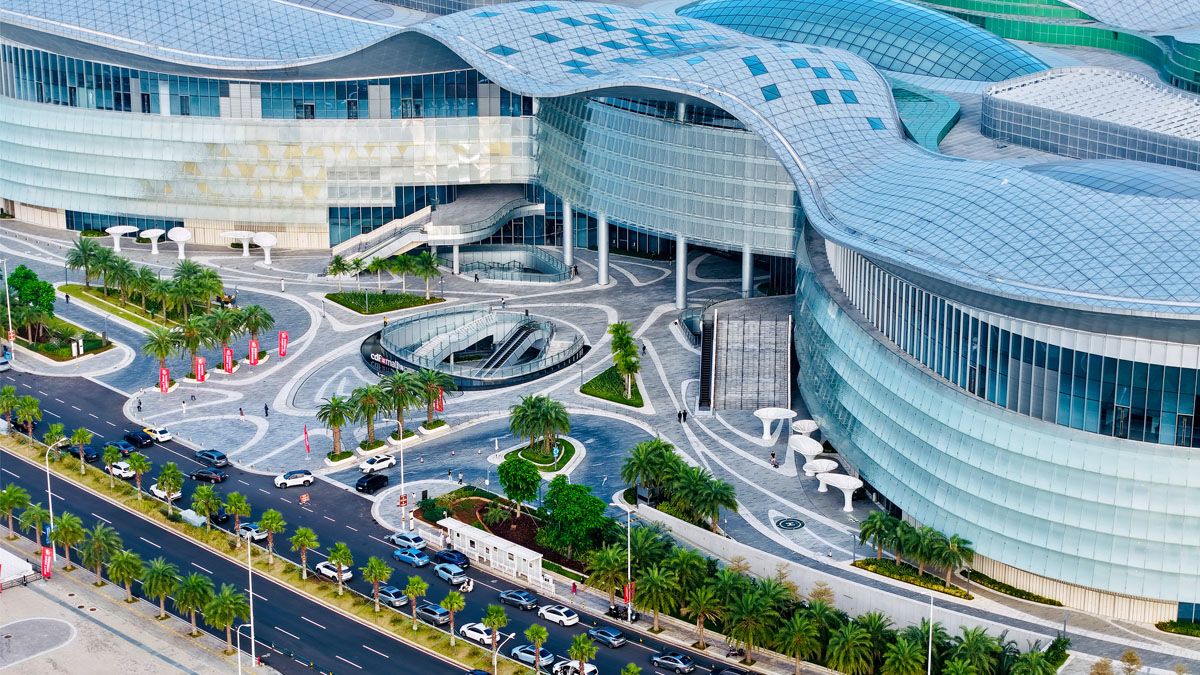
Earlier this year, when LVMH began unwinding parts of its global DFS business, including the sale of key assets to China Duty Free Group, the move was widely viewed as a corporate restructuring. Inside the travel retail industry, however, it was interpreted as something more consequential: a sign that the airport-centric, duty-free model that shaped global travel retail for decades is entering a period of reinvention.
For decades, DFS represented one of luxury retail’s most powerful distribution systems: an empire built on airports, downtown duty-free complexes and the idea that travel itself could unlock a cottage industry of consumption. From Hong Kong to Guam, Okinawa to Hawaii, DFS once embodied the glamour of cross-border luxury shopping at scale.
Now, China’s new travel retail story is no longer one of offshore tax arbitrage, explosive daigou-driven demand through unofficial resale networks, or airport megastores lined with beauty counters. The market is evolving into something broader and more structurally complex: a hybrid system in which tourism policy, domestic consumption strategy, infrastructure investment, and lifestyle-driven retail increasingly operate as one. As a result, China is becoming a key testing ground for what travel retail could look like for the rest of the industry.
China’s travel retail market is estimated to have reached between $15 billion and $19 billion in 2025, with forecasts projecting it could more than double over the next decade. Much of that growth is tied not only to luxury demand, but to the sheer scale of China’s mobility economy: the country’s civil aviation network carried roughly 770 million passengers in 2025, while inbound and outbound border crossings recovered to nearly 97% of pre-pandemic levels.
At the center of that ecosystem sits Hainan, which has evolved into both China’s largest offshore duty-free market and one of the most closely watched retail experiments globally. Since the offshore duty-free policy launched in 2011, Hainan’s duty-free sales expanded from roughly RMB 1.6 billion ($235 million) in its early years to RMB 43.7 billion ($6.4 billion) in 2023, before moderating to RMB 30.9 billion ($4.5 billion) in 2024 as Chinese outbound travel resumed and luxury spending slowed. Even after that correction, the island still accounted for nearly 30% of China’s total travel retail market in 2025, serving more than 5.6 million duty-free shoppers annually under one of the world’s highest offshore shopping quotas at RMB 100,000 ($11,100) per person.

Today, China’s travel retail market spans airports, offshore duty-free zones, downtown retail districts, outlet villages and tourism destinations. What once existed as separate channels are increasingly converging into a broader consumer ecosystem, where shopping, leisure, hospitality, and mobility reinforce one another. Retailers are no longer competing simply for transactions. They are competing for a traveler’s time, attention, and experience across an entire journey.
“China’s travel retail landscape is no longer defined by format, but by consumer intent,” says Desiree Bollier, chair and global chief merchant of The Bicester Collection, which operates 12 shopping villages worldwide, including Shanghai Village and Suzhou. “Boundaries between duty-free, downtown retail and off-price have blurred into a broader ecosystem shaped by travel, leisure and lifestyle.”
