

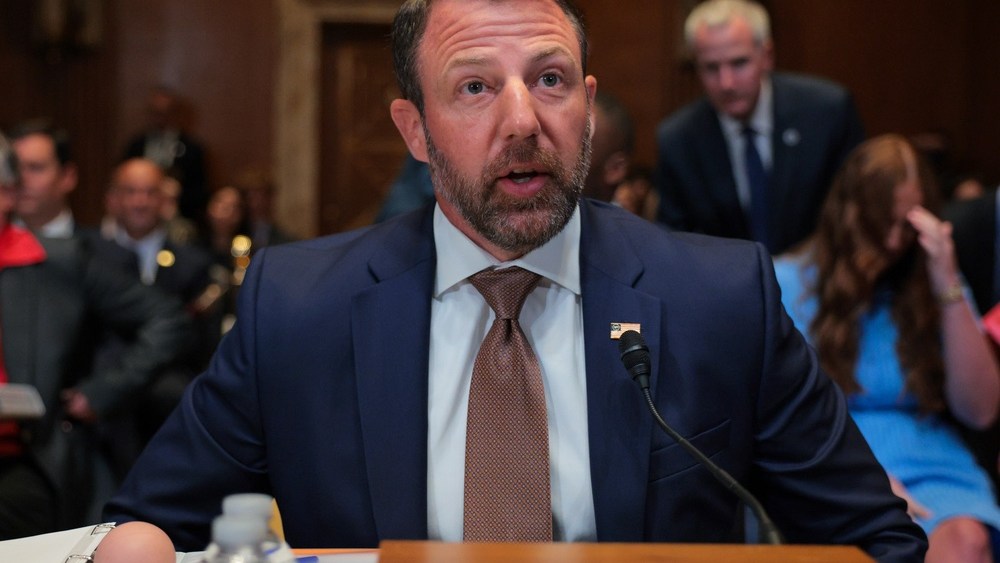
A bipartisan group of more than a dozen U.S. representatives has sent a letter to Homeland Security Secretary Markwayne Mullin urging him to implement an enforcement plan to combat what they say is widespread fraud and abuse harming American textile manufacturers and their workers.
In a letter led by Textile Caucus co-chairs David Rouzer, a North Carolina Republican, and Adriano Espaillat, a New York Democrat, 16 House lawmakers called on Mullin to address unfair trade practices by countries that purposefully undervalue or misclassify imported goods to pay lower tariffs.
Textile-related duties and fees account for a significant share of customs revenue. In fiscal year 2024, Customs and Border Protection collected $13.2 billion, or nearly 17 percent of all U.S. duties. But the letter said customs fraud is “especially common” due to the high volume of duties collected by the United States on imported clothing and the large number of suppliers in the market.
“With billions in duty revenue at stake, and countless suppliers and countries involved, importers are incentivized to circumvent U.S. tariff and trade requirements,” the letter said.
America’s trade policies and tariff structures are only as effective as their enforcement, the letter added. It cited China and Vietnam as countries with a “long history” of deceptive commercial practices that are “further corrupted” by illegal subsidies, state-sponsored production, forced labor and an intentionally devalued currency.
“Additionally, U.S. free trade agreements have resulted in targeted transshipping by countries without agreements to take advantage of significantly reduced tariff levels,” the letter added. “Failure to detect and penalize customs fraud allows the benefits of these agreements to flow through to third parties who are not signatories to those agreements.”
The letter drew praise from Kim Glas, president of the National Council of Textile Organizations, who said it sends a “powerful message” that customs fraud, illegal transshipment and tariff evasion are “rampant and must be stopped.”
“These illegal trade practices cost American jobs, undermine legitimate manufacturers, weaken our trade agreements, and deprive the U.S. Treasury of billions of dollars in revenue,” Glas said. “The industry looks forward to working with Congress, DHS and CBP to strengthen enforcement efforts and ensure a level playing field for American textile manufacturers and workers.”
In their letter, the lawmakers said a “comprehensive” textile enforcement program should include several major elements: maximum fines and penalties for repeat offenders, a public blacklist of importers who continue to violate trade laws, increased customs enforcement of FTA-qualifying duty-free goods, increased onsite enforcement at offshore FTA production sites to verify rules of origin, and lab testing of imports claiming FTA benefits to determine product origin.
“This program should safeguard the interests of the domestic textile industry while also preventing unscrupulous shippers and importers from robbing the U.S. Treasury of billions of dollars of textile-related tariff revenue,” the letter said.
