

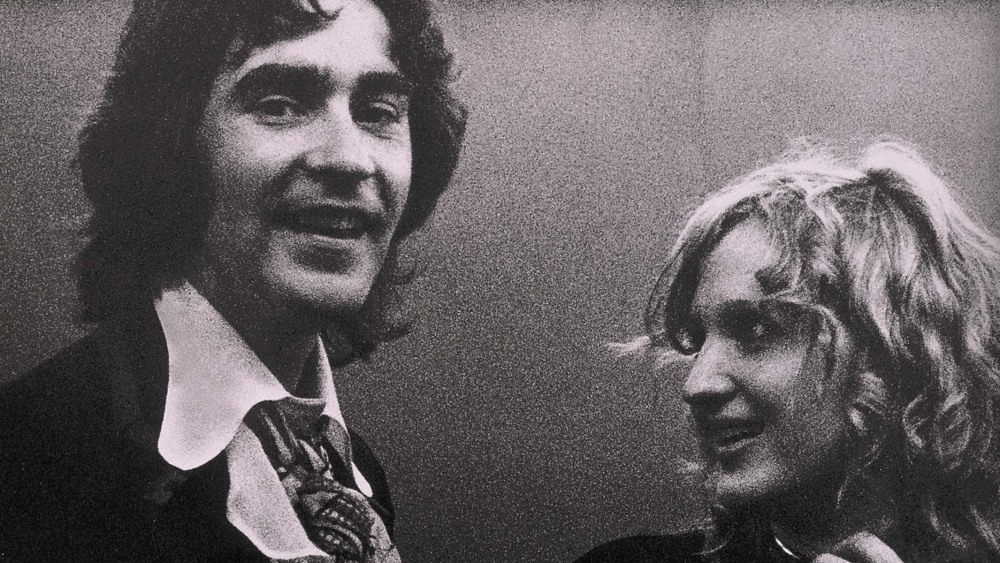
LONDON — The Fashion and Textile Museum on South London’s trendy Bermondsey Street this fall is set to stage a major exhibition on Ossie Clark and Celia Birtwell, who were married from 1969 to 1974, focusing on their role in shaping the London look of that era.
Running from Oct. 2 to April 11, 2027, the show will revisit the years when Clark, often called the “King of King’s Road” for his fluid dresses inspired by the 1930s and 1940s, worked closely with Birtwell, known for her prints on crêpe, silk and chiffon.
Their clothes, cut on the bias, often transparent and close to the body, were worn by the likes of Bianca Jagger, Marianne Faithfull, Marisa Berenson, Elizabeth Taylor, Mick Jagger, Keith Richards and Jimi Hendrix.

Gala Mitchell. Photographed by Celia Birtwell
Courtesy of Celia Birtwell
The exhibition will feature more than 120 garments from a private collection, together with loans from Birtwell. It will cover their joint work from 1965 to 1974 and place equal emphasis on both parties.
A key section will look at Quorum, the Chelsea boutique that served as their base. Early pieces on display will include a mail-order paper dress with Art Deco-style floral motifs and the 1967 Bakst dress, which uses circular patterns inspired by Leon Bakst and Sonia Delaunay.
The museum will also highlight how Clark and Birtwell translated vintage glamour into clothes suitable for everyday wear.
One of the main pieces is the powder blue Ziggy Stardust dress, built from a spiraling strip of chiffon wrapped around the body and printed with black birds and golden flowers. The dress reflects Clark’s research into designers such as Vionnet, Chanel, Poiret and Schiaparelli, but presents those ideas in a modern way.

Candy Girls, Celia Birtwell’s sketches.
Courtesy of Celia Birtwell
The exhibition will then look at Clark’s use of performance in fashion, with archive runway footage and images from shows staged at venues including the Royal Court Theatre and Chelsea Town Hall.
Tailored satin trouser suits embroidered with strawberries, chiffon shirts worn by Brian Jones, and long satin jackets such as the 1968 “Lamborghini” style will be shown next to hip-hugging python and water snake jackets.
Personal garments will include Birtwell’s Ophelia wedding dress from 1969, made almost entirely in chiffon and printed with her Floating Daisy and Lollipop designs, as well as the Heavenly Twins dress seen in David Hockney’s painting “Mr and Mrs Clark and Percy.”
An upstairs section will follow their separate careers after their split, showing Clark’s jersey dresses and jumpsuits, and Birtwell’s later work in fashion and interiors, including her 2006 Topshop collaboration and her home textiles.
Dennis Nothdruft, head of exhibitions at the Fashion and Textile Museum, which was founded by designer Zandra Rhodes in 2003, said that while Clark and Birtwell helped define the Swinging London look, their contributions to fashion, especially Clark’s skillful cutting and innate understanding of the human form, have not always been fully recognized.
“We hope this exhibition, which features a large collection of their work, will help to redress the balance,” Nothdruft added.
In 2022, an exhibition in Italy touched on the same topic. It was built on the discovery of Clark and Birtwell within costume designer Massimo Cantini Parrini’s collection. The show opened at Prato’s Museo del Tessuto with around 40 dresses on display, and then traveled to Milan’s Fondazione Sozzani at 10 Corso Como under the patronage of Camera della Moda.
