

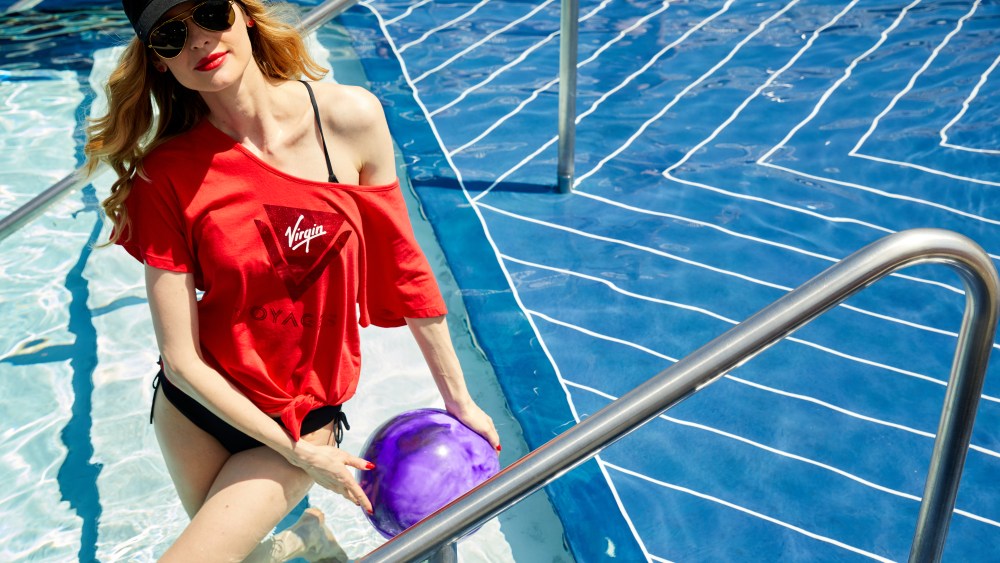
Cruise passengers aren’t just buying T-shirts anymore. As sea travel hits record volumes, guests are increasingly looking to bring home something that captures the feeling of the trip, not just proof they took it. That shift has turned onboard logo merchandise into one of the fastest-growing categories at sea, with Starboard, which manages retail across 14 cruise line partners, reporting 20 percent growth in its branded business over the past year.
Behind that growth is a design-to-shelf operation that looks more like an in-house fashion house than a typical retail concession. Starboard’s product development team builds every logo item from concept through manufacturing, tailoring collections to each ship, itinerary and demographic cohort while also managing premium collaborations with brands like Lululemon and Peter Millar.
Here, Benito Mendez, Starboard’s senior vice president of merchandising and planning, talks with Sourcing Journal about what’s fueling demand for branded merchandise and how the company navigates a constantly moving retail footprint as well as why today’s cruise shopper is more open to discovery than ever before.
Sourcing Journal: What has led to the growth of the cruise line-branded logo business onboard?
Benito Mendez: Cruises offer unforgettable, multi-destination vacation experiences that create lifetime memories and the industry is seeing record-setting growth. In 2025, Cruise Lines International Association (CLIA) estimated that more than 37 million passengers globally took a cruise. As more guests experience sea travel and become more discerning, they’re looking to build deeper connections with the brands they sail with and take home meaningful keepsakes, not just traditional souvenirs, from their vacation.
Branded merchandise offers travelers a tangible reminder of the moments that mattered on their trip. Whether it’s a favorite ship, a sunset in the Caribbean, a stroll down the streets of Barcelona or the beauty of the Alaskan coast, these items evoke specific memories of the sensory experiences guests enjoyed with their family and friends at sea.
Wearing or displaying cruise line–branded products also creates a sense of belonging, connecting guests with a community of fellow travelers who share a passion for exploring the world.
Our logo business has grown by 20 percent over the past year, and spans cruise line– and ship-branded apparel, accessories, drinkware, home goods, collectibles and lifestyle products designed specifically for each ship and itinerary. The collections also include exclusive ship-specific collections and original artwork inspired by each cruise line and destination.

Benito Mendez
Michael Hopkins 954 325 2742
We’re seeing strong demand for logo merchandise across all of our cruise line partners, including in the luxury segment. Collections we’ve developed for partners like The Ritz-Carlton Yacht Collection resonate because guests are seeking premium products that reflect the travel experiences they’ve had and that they’re proud to wear long after their voyage ends.
At its best, logo merchandise extends the vacation experience far beyond the trip, and we’re creating products that inspire pride, spark memories and deepen the emotional connection between our guests and the brands they love.
S.J.: How do you decide what products to offer with logos?
B.M.: Branded merchandise should tell a story, and our product development team, led by our renowned senior buyer, Ramona Pino, works closely with each of our 14 cruise line partners to develop logo collections that celebrate the unique personality of each brand, each ship and each destination. From apparel and accessories to collectible keepsakes, every product is thoughtfully designed to help guests remember not just where they traveled, but how they felt while they were there.
While timeless favorites like logoed T-shirts and hoodies, ship models, keychains and magnets will always be popular, today’s guests are also looking for customized accessories, home décor, artisanal foods and other lifestyle products. To continually surprise and delight guests, our passionate team of professionals is constantly pushing creative boundaries, looking beyond these core categories and reimagining what cruise line retail can be.

For example, for Alaska itineraries, we’ve developed destination-exclusive collections featuring local artisan brands, Alaska-inspired apparel, locally sourced foods and personalization offerings that help guests take home mementos that uniquely reflect their journey.
We’ve also curated logo collections specifically for Gen Z, introducing elevated and trend-driven assortments that appeal to a broader and younger audience without losing the authenticity of the brand. We even offer a full assortment of branded UV protection, waterproof accessories and beach towels, as well as toys and gifts, even pet toys.
Every collection begins with great storytelling. We obsess over the details—from artwork, color palettes, premium fabrics and modern silhouettes to the way we interpret each logo and weave destination-inspired graphics into every design. The result is merchandise that feels current, aspirational and relevant, while remaining unmistakably connected to the cruise line’s identity.
S.J.: How do branding collaborations work with specific brands like Lululemon and Peter Millar?
B.M.: We partner with premium brands like Lululemon, Peter Millar, Onia, Anatomie, TravisMathew and Victorinox because they’re brands our guests already wear and are excited to find onboard. Our amazing product development team has decades of collective experience that they leverage as they collaborate closely with each brand throughout the design process, developing exclusive collections, carefully selecting everything from logo placement and artwork to product selection and design details.
These collaborations allow us to offer guests premium brands they know and trust while creating exclusive products they can’t find anywhere else. The result is an elevated onboard retail experience with products that reflect the quality guests expect from both the brand and the cruise line.
SJ: Is there a specific merchandising strategy for logo items? Is it different from the other shops Starboard curates?
B.M.: We approach every product category—including branded merchandise—through a “good, better, best” framework that ensures thoughtfully curated assortments are available across a range of price points. However, unlike with other categories, where our teams partner with external brands and suppliers to bring products to market at sea, our logo merchandise team designs and develops every branded item from concept to shelf.
Delivering cohesive branded assortments requires extensive planning and coordination, from product and collection briefs to design, sampling, manufacturing and production, as well as tagging, packaging, supply chain management, visual merchandising and in-store execution.
Throughout the process, our team works with our cruise line partners to determine the right product mix, logo treatment and design details, so every collection feels cohesive and true to the partner’s brand and the particular ship where the goods will be sold. Guests continue to respond strongly to this offering both emotionally and commercially, and logo merchandise remains one of our most successful categories.
We see a significant opportunity to expand into additional branded categories moving forward and will focus on elevating our assortment while continuing to deliver exceptional value. Value will always be an important part of the guest experience, but today’s guests are looking for premium products that they are proud to wear, collect and gift long after their vacation ends.
SJ: How does inventory management and replenishment work with onboard merchandise?
B.M.: Unlike traditional retail stores, ours are constantly moving, with demand shifting by region and season. For example, winter itineraries typically focus on the Caribbean and Australia, while summer itineraries center on the Mediterranean and Alaska, with some ships operating year-round in Asia or the Caribbean. This dynamic environment creates significant supply chain complexity.
Our expert merchandise planning team works closely with suppliers to develop accurate demand forecasts and collaborates with logistics teams to ensure the right product is delivered to the right place at the right time.
We’re also leveraging AI-powered tools to enhance planning precision and help our teams optimize their inventory decisions across all of our cruise line partners’ fleets.
SJ: Do tariffs affect any of the onboard sales?
B.M.: We operate under a bonded, duty-free warehouse model, so we don’t directly import products, limiting our exposure to tariffs. While tariffs have had some impact on certain domestic suppliers, we work closely with our partners to mitigate these pressures and ensure we continue to deliver strong value to our guests with minimal disruption to our business.
SJ: What is the cruise ship shopping experience like?
B.M.: Onboard shopping is different from traditional retail because it’s seamlessly woven into the overall vacation experience, which often lasts seven days or longer. We aren’t competing for just a few moments of a guest’s attention. We have the opportunity to connect with them multiple times throughout their journey while they’re in the mindset to explore, discover new brands and products, and immerse themselves in personalized brand experiences.
Whether a guest is browsing for the perfect branded souvenir after an unforgettable port visit, attending a jewelry trunk show, enjoying a spirits tasting or finding an exclusive logoed product that’s only available onboard, our goal is to make shopping feel like a highlight of the vacation rather than simply a transaction.
We work closely with our cruise line partners to create interactive retail environments that reflect each line’s unique brand, each ship’s personality and the specific destinations guests are visiting. Every display, activation and collection is designed to inspire discovery and create lasting memories. We also invest in making sure sales associates are highly educated about the brands and products they’re representing and are able to provide the high-touch service today’s travelers expect.
Personalization is another key to the onboard retail experience and we ensure guests can customize apparel, accessories, toys and gifts via embroidery, patches and engraving.
SJ: What are cruise guests looking for when they shop onboard, and how do their expectations differ from shopping on land?
B.M.: When guests book a cruise, shopping is rarely their top priority. They’re typically focused on visiting destinations, enjoying onboard dining and entertainment, and spending time with family and friends. But travel research agency m1nd-set recently found that 72 percent of cruise guests purchase at least one product they hadn’t considered before boarding, which demonstrates how open they are to discovering something new while at sea.
We also know that exclusive products, personalized service, luxury assortments and merchandise that can’t be found anywhere else hold great appeal for today’s travelers. Limited-edition collections, personalized keepsakes and immersive experiences like live product demonstrations, liquor tastings, luxury trunk shows, and personalized styling sessions all enhance the onboard experience and create lasting vacation memories.
Also, because guests have time to explore and learn onboard, they’re significantly more receptive to engaging with knowledgeable sales associates than they might be when shopping at home.
By combining thoughtfully curated assortments with immersive retail experiences and personalized service, we create unique shopping moments that strengthen guest engagement with our cruise partners’ brands and leave travelers with meaningful, tangible reminders of their voyage.
