

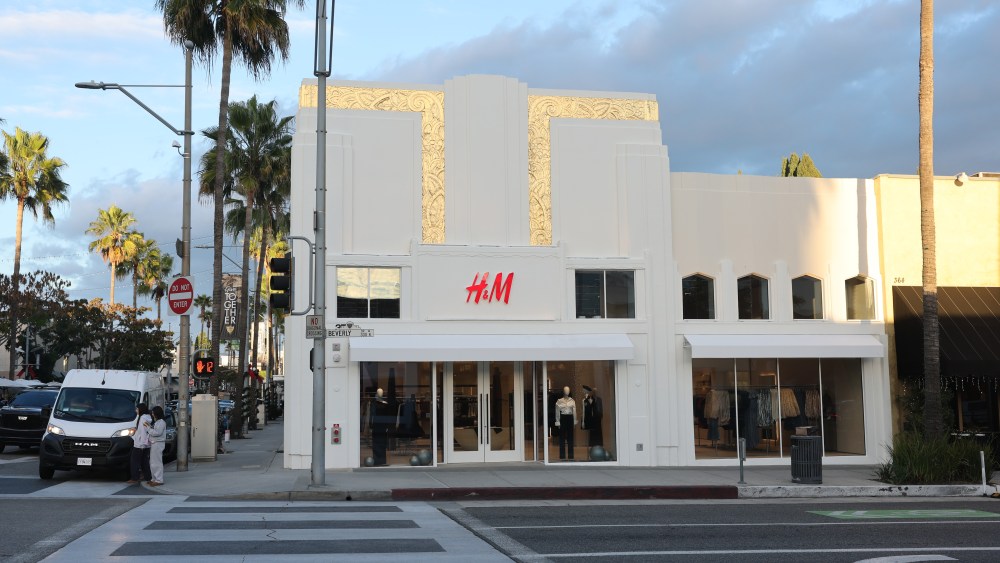
PARIS — Sales in local currencies remained relatively flat at fast fashion giant H&M in the second quarter, though the Swedish retailer took a hit on reported sales, which fell 3.3 percent year-on-year due to a strong Swedish kronor.
In the three months to May 31, revenues totaled 54.82 billion kronor, or 4.95 billion euros, down from 56.71 billion kronor, or 5.12 billion euros a year earlier.
The dip came as H&M continued to close underperforming stores, operating about 3 percent fewer than last year as it tried to streamline its retail network and increase full-price sales.
Heading into the third quarter, sales in local currencies are also flat and “expected to be on par” with the same period year-on-year.
Chief executive officer Daniel Ervér said sales during the second quarter were below forecast, but that the company is now focusing on profitability and tightening inventory.
“Sales in the quarter were somewhat lower than planned, while profitability and the stock-in-trade situation developed well. The profitability improvement and increased inventory productivity are in line with our long-term work to lay the foundations for sustainable and profitable growth,” Ervér said in statement.
The results were slightly below analysts’ expectations.
“We think H&M has taken various steps to improve its offer for customers, which should lead to a stronger sales performance in time. However, a lot of things have to improve together and so far, the recovery has been somewhat unbalanced in our view,” RBC analyst Richard Chamberlain said in a note following the release.
“We see potential for H&M to move to a double-digit operating margin goal over time, driven by gross margin gains and further cost efficiencies, but we see this as more of a medium- to long-term development,” he added.
Inventory fell 10 percent to 34.94 billion kronor, or 3.15 billion euros, or a decrease of 2 percent on a reported basis.
The retailer has continued to shutter stores, ending the quarter with 4,038 units worldwide compared with 4,166 a year earlier. Flagship brand H&M has been hardest hit on the closures, with 17 H&M stores shuttered in the second quarter, for a total of 61 in the first half. In the second quarter, the company added five Cos stores and one Arket store as it continues to develop its higher-end brands.
At the same time, the group is expanding in new markets, particularly in Latin America. During the quarter, the company opened its first store in Rio de Janeiro.
The retailer plans to open its first location in Paraguay during the second half of 2026 and enter Argentina in 2027 through a franchise partnership. Seven stores are scheduled to open in Brazil this year, while H&M also plans to launch in Malta and Azerbaijan this year.
Beyond its namesake chain, the group’s premium brand Arket is set to enter Lithuania in 2026. H&M also recently launched through Nordstrom in the United States, expanding its distribution in the market.
“Our long-term work has strengthened profitability and gives us good opportunities to create even more value for our customers,” Ervér said.
The group said it has not yet been impacted by the situation in the Middle East.
“The company is closely monitoring developments in the Middle East and the implications for global trade. With good flexibility in the supply chain and a low proportion of air freight, there are opportunities to adapt flows of goods to changed conditions. With 137 stores operated via franchise partners as of 31 May 2026, the Middle Eastern markets account for a small portion of the company’s total sales,” the company said.
The group also noted that online sales now account for just over 30 percent of group revenue.
