

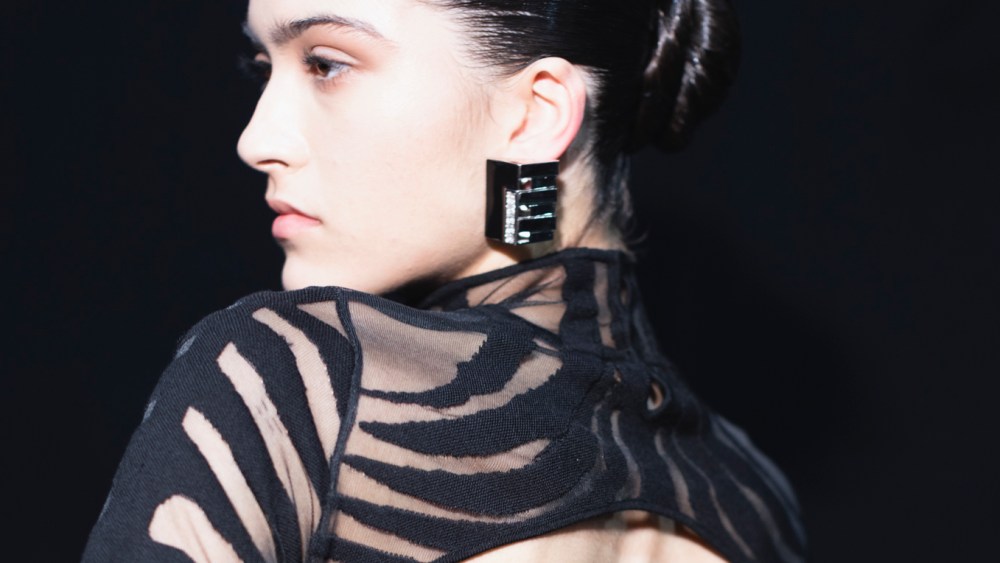
Fashion was hit by brand management tremors on Wednesday as two new fault lines opened up, further cracking the industry’s status quo.
Marquee Brands inked its deal to buy control of Roberto Cavalli. Heath Golden, chief executive officer of the intellectual property expert, described Cavalli as a “true capital L luxury brand” and said in an interview that it would remain so.
And Jamie Salter figured the third time might be the charm and revealed that the company could go public in the next 12 months, after starting the process two other times but ultimately bringing in more private equity investment instead, he said on CNBC.
Salter, who founded Authentic in 2010, said he’d also step up to executive chairman to focus on closing more deals — chasing the dream he laid out at WWD’s Apparel and Retail CEO Summit last year to grow annual retail sales from $38 billion to $100 billion in five years. Matt Maddox, the former Wynn Resorts executive who joined Authentic as president last year, will become president and CEO, in charge of the day-to-day managing of all that growth.
The market is also still digesting last week’s Marc Jacobs blockbuster, which has LVMH Moët Hennessy Louis Vuitton selling the designer brand to WHP Global and producer G-III Apparel Group at a roughly $925 million valuation.
The brand management companies — which scoop up intellectual property and work with partners who make and distribute the goods — were already doing more than nibbling around the edges.
Since the pandemic, fashion dealmaking that involves anything other than the latest, greatest growth brand seems to start and often end with the brand management crowd.
From WHP’s Vera Wang deal and Blue Star’s acquisition of Dickies to Authentic’s deal to buy Guess and Marquee’s Stance acquisition, the branded crowd is everywhere and reaching out further.
The immediate success of the model is clear, even if the long-term ramifications are murkier. If Authentic does go public, the world will get a close look at its books. And if they look sustainable, more IPOs could be in the offering.
“What Authentic’s been doing is essentially a licensing model,” said Nora Kleinewillinghoefer, luxury and fashion lead in Kearney’s consumer practice. “It buys a distressed company, pulls them in and it’s given them a lot of interesting leverage. But the problem is how large you can scale it is within the portfolio becomes a dilution problem.”
And then if the company is looking to continue to buy more brands, it becomes more “challenging” to manage, something Maddox can help with, she said.
But with Authentic both looking at owning brands that drive $100 billion in retail sales, and doing so under the klieg lights of Wall Street, the company is going to face more scrutiny than ever.
“I feel like Authentic started with a few brands and then it became a few more brands and it kind of just started happening,” Kleinewillinghoefer said. “And there wasn’t a lot of oversight, there wasn’t a lot of visibility to it other than, ‘Oh, OK, you bought that.’ This is going to be a big shift for them, both their managerial strategy and what their goals are.
“So if reaching a hundred billion dollars is the goal, how are you going to do that and how much are you building public confidence in part of that journey?” she said.
Antony Karabus, a veteran strategic retail adviser, said the brand management companies are using two different models.
“Salter has picked up a number of brands that were in distress and it looks to me like he’s trying to build enormous scale — and rapidly — in advance of an IPO,” Karabus said. “I think the jury is still out on whether those formerly troubled brands will be successful.
“The Marquees and the WHPs, they’re doing it very surgically,” he said. “They’re not running and grabbing everything in sight and they’re understanding what the real value is.”
But both approaches are building the kind of scale needed in fashion today.
“What’s going on with AI and technology and talent, these small to midsized brands, they don’t have the ability to invest in the technology the way a larger company can,” Karabus said.
Having a whole bunch of brands is not new, of course. In luxury, LVMH rules with its massive stable of well-heeled brands. But where their business model is built around the idea of growing the value of the brands, Kleinewillinghoefer said the IP experts are “extracting brand value, more so — not exclusivity, but more so.”
That’s a sentiment skeptics have aired for some time.
Still, the brand management companies are saying the right thing and making the right investments, winning over the likes of Marc Jacobs.
This week, Jacobs explained to WWD how his deal came together.
“I met with Yehuda [Shmidman, founder, chairman and chief executive officer of WHP] a few months back and I found him to be really nice,” the designer said. “I enjoyed meeting him and speaking to him, and he seemed to have a real genuine love and interest in this company….I felt very positive about that first meeting, and I still feel very positive.
“There are no guarantees of anything in life, but I do feel like my instincts are usually pretty good,” Jacobs said.
Shmidman has not spoken at length about the deal, or his skill as a designer whisperer, but he’s not the only one gaining a touch for the high end.
In the interview, Golden, Marquee’s chief, said he knows what he’s picked up with the Cavalli business and is going to take care of it.
After all, If the brand management players have a keen eye for anything, it’s brands.
“Cavalli, unlike many, is led by fashion and has a very well-developed home business,” Golden said. “It has strong codes, strong DNA and is incredibly strong in Southern Europe.
“We’re not buying this brand to take it down market,” the CEO said. “We’ve been very intentional about putting luxury players around it. Participating now in this luxury business will open up other avenues” for Marquee.
As is typical in brand management dealmaking, Marquee lined up a number of partners ahead of time so it had a sense of how big a business it could build. While there aren’t so many companies positioned to jump in and start churning out luxury goods and manage high-end retail, they are enough.
“There are skilled, multibrand players who know how to work with luxury brands and treat them like luxury brands,” Golden said, noting that Cavalli’s “product engine” was going to be based out of Milan.
Marquee teamed up with The Level Group, which will act as its core operating partner and lead development, manufacturing and distribution of the Cavalli’s women’s and men’s collections. TLG will also operate the brand’s retail, e-commerce operations and wholesale businesses in Europe and the U.S.
Cavalli’s current owner, Dubai-based luxury real estate developer DAMAC Group, retains a stake in the business and the rights to continue to grow the associated branded residences and hospitality projects.
“Roberto Cavalli is one of the most distinctive luxury brands in the world,” said Hussain Sajwani, founder of DAMAC. “After several years of solidifying the brand’s foundation, we set out to find a strategic partner with the skill set to take the brand to the next level. We are confident Marquee Brands is the right partner to do so.”
Once the deal closes, which is expected during the second quarter, Marquee plans to accelerate the brand’s growth with new categories, services and experiential touch points around the world.
“I don’t think there are tons of brands of the caliber of Roberto Cavalli,” Golden said. “I don’t think it’s a double-digit number” of brands. “Cavalli is a really powerful brand that has been built over the decades.”
The big luxury houses hold many of those brands — and lately have been looking hard at their portfolios.
“These global conglomerates are generally net sellers because the brand management model is the winning model in today’s fragmented, geopolitically complicated world,” Golden said. “Are there other luxury brands that some of the larger luxury groups are looking to offload? Yes, we’ve seen some [deals], perhaps there will be more. We encourage them to call us.”
