

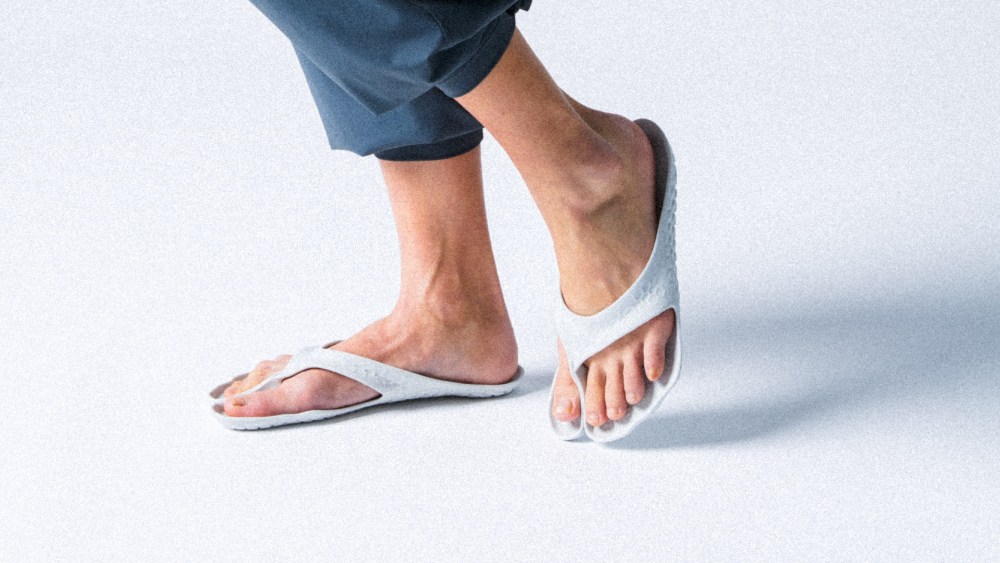
is rolling out its Tabi Gen 02 in-store scan-to-print footwear as part of its innovative Vivobiome platform.
The rollout is intentionally limited and phased to allow for learning and iteration. The company is working in partnership with digital printer manufacturer Carbon, using its Digital Light Synthesis (DLS) platform. The rollout started with key scan locations at Vivobarefoot stores in London and Bristol, to be followed by its U.S. location at TKTTK this summer, and then to select doors in the EU and Japan.
According to Asher Clark, the cofounder of Vivobarefoot and Vivobiome, scan-to-print footwear replaces traditional sizing and mass production with a fully personalized system.
“We capture a 3D scan of your feet, use that data as the input, and generate a unique product tailored to your exact shape and movement,” Clark told Footwear News. “It removes the need for standard sizes, reduces waste, and shifts footwear from mass production to on-demand personal production.”
The cofounder said the product is the closest experience to barefoot freedom that’s also personalized.
The company has been developing and testing scan-to-print for several years, but the new Tabi Gen 02 is the first time it has been able to bring it to market in a structured, consumer-facing way. “It’s the first real step toward a scalable, personalized footwear platform,” he said. The learnings from users and the made-to-measure releases will allow the company to refine the platform. Clark said that with each launch, the company will move closer to its vision for “locally made, and made to be remade.”
He said Carbon’s 3D printer combines advanced hardware, software and materials to product high-performance elastomer products with consistency at scale. A pair is printed in batches of seven on one printer and takes about 30 to 35 hours of print time, followed by post-processing, quality control and finishing. While printing takes days, he said the advantage is that it only uses the material that’s needed when it is needed versus traditional manufacturing that takes months.
Clark said the sandal’s material is made from an advanced engineered elastomer developed with Carbon. The EPU (elastomeric polyurethane)-based material is high-performance and rubber-like that was created specifically for 3D printing. He said it is lightweight and flexible, and designed for durability and comfort. Moreover, the material was “optimized for barefoot movement, sensory feedback, and long-term wear,” Clark added.
The design of the sandal features a signature split-toe design to allow the big toe to move independently for balance, propulsion and natural movement.
