

Many artists have painted their own portraits, but Kahlo’s 1944 painting The Broken Column stands out as a particularly vivid example of an artist using her own body (and, in Kahlo’s case, her own pain and suffering) in her art. This oil-on-masonite painting was created shortly after Kahlo underwent spinal surgery to address an injury she suffered in a traffic accident at 18 years old. “Kahlo’s body, punctured by countless nails and torn open to reveal a crumbling architectural column as a metaphor for her own spinal column, is held together by an orthopedic brace,” wrote Margaret A. Lindauer in her 1999 book Devouring Frida: The Art History and Popular Celebrity of Frida Kahlo. “At the same time that the painting is considered to represent the accident, Kahlo’s psychological and sexual health are implicated.”
Ana Mendieta
This Cuban-American performer and sculptor’s Mexico- and Iowa-based “Silueta” series, in which she carved and shaped her figure into the earth using materials including flowers, moss, gunpowder, and fire, has a haunting resonance in the wake of Mendieta’s 1985 death. Mendieta’s husband, fellow artist Carl Andre, has remained under a cloud of suspicion following her fall from the window of their 34th-floor Greenwich Village apartment. Decades after his acquittal, protestors at an exhibition of Andre’s in 2017 unfurled fabric with silhouettes representing Mendieta’s physical body and her work, chanting “¿Dónde está Ana Mendieta?” (“Where is Ana Mendieta?”).
Yoko Ono
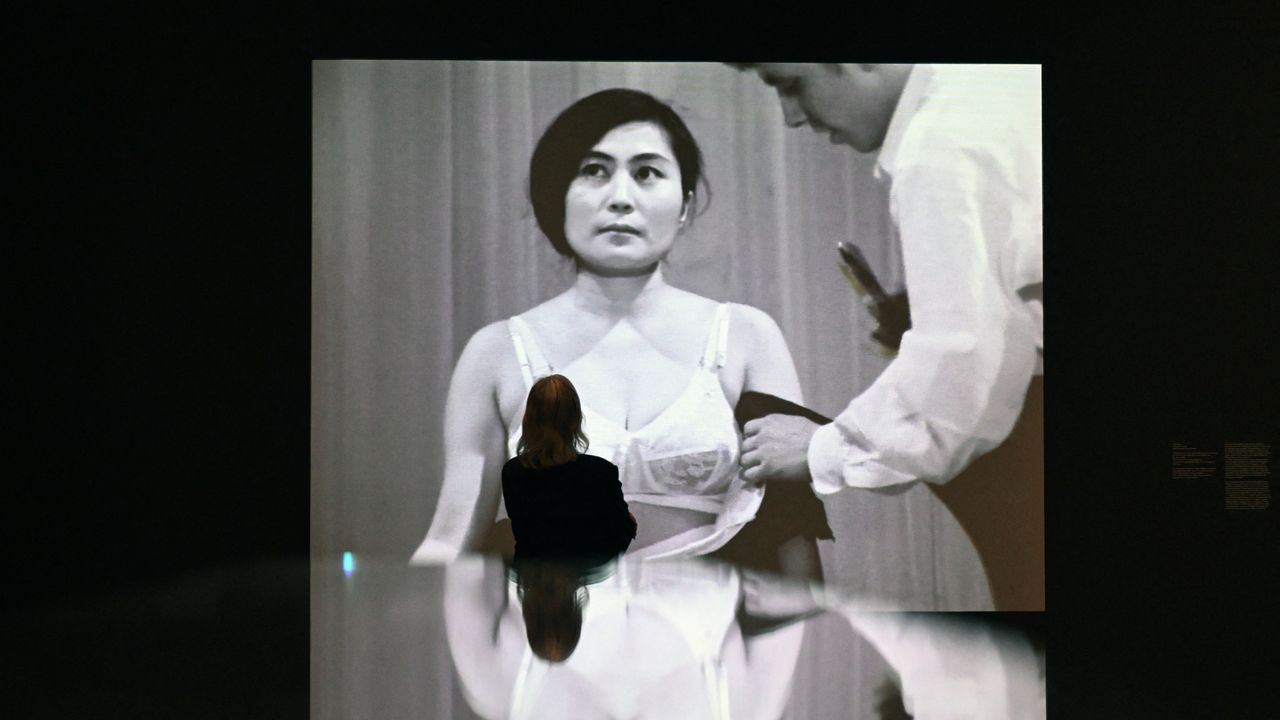
Ono developed a significant conceptual practice after moving to New York from Japan in the early 1950s. One especially memorable work was 1964’s Cut Piece, in which she sat on a stage, laid a pair of scissors in front of her, and invited the audience to cut pieces of her clothing off—raising questions about agency, identity, violence, and power.
