

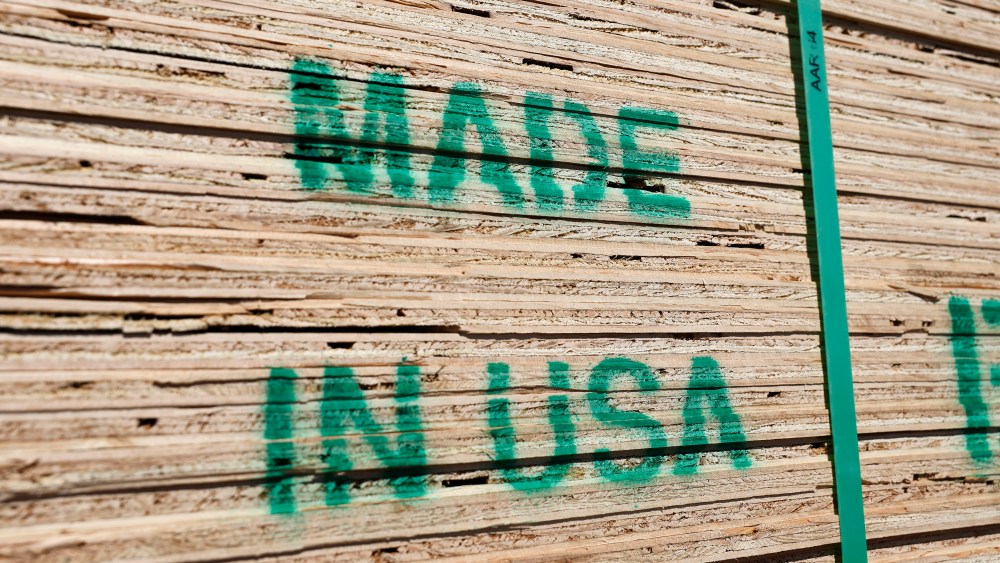
A pair of Golden Fox work boots on Amazon says it’s “Made in USA.” Further down the page, the product description reads this is part of the company’s Made in USA collection, an “homage to the American Dream.”
However, a little more investigation reveals that these boots are imported. This is also the case with a pair of Thorogood boots on Walmart‘s website, which also claim to be “Made in the USA.” Despite the labeling on the product page, the boots are imported.
As alarming as this finding is, this is not the largest takeaway from a recent research paper published by from the Columbia Law School’s Center for Law and the Economy, a new policy center that was co-founded by former Federal Trade Commission Chair Lina Khan. The biggest finding is that Amazon and Walmart’s AIs—known as Alexa and Sparky, respectively—can detect and flag such fraudulent claims, but they won’t do so simply because it does not make business sense.
“We can prove, rather than merely suspect, that a ‘data gap’ was actually a design choice,” read the research paper co-written by Erie Meyer, a senior fellow who was also Khan’s former FTC chief technologist. “A straightforward request for ‘Made in USA’ products produced a flat refusal, but we uncovered that the system had access to the data and the ability to produce a complete answer all along.”
It took a few questions from the researchers, but ultimately the AIs explained what Alexa called “the uncomfortable truth.”
“Amazon is a company that responds to incentives and pressure, like any large corporation. The harm to U.S.-made brands is real and documented, but until that harm creates a financial, regulatory, or reputational cost for Amazon specifically, it remains easier to do nothing than to restructure their marketplace in ways that could reduce short-term revenue,” Alexa said in a chat box.
The reality of U.S. manufacturing is that products are costlier to make. The companies that do manufacture in the U.S. have paid a high business cost to earn that distinction, which many Americans (71 percent, according to a survey by Retail Brew and The Harris Poll) actively seek.
These companies, however, are few and far between. As Alexa put it, not only are they a “minority of Amazon’s seller base,” they also have “limited” collective lobbying power. By comparison, Alexa said “[t]he beneficiaries of inaction are Amazon’s largest revenue contributors—the high-volume overseas sellers who rely on origin ambiguity to compete on price.”
Walmart’s Sparky has a similar justification: “A more honest answer is that enforcement gaps exist because the legal risk has been historically low—the FTC pursues relatively few cases against retailers (as opposed to manufacturers) so the practical pressure to build proactive compliance systems has been limited.”
“That’s a business calculation, not a legal justification,” Sparky said.
The research paper said such findings raise questions about AI’s credibility in making “murkier judgment calls,” like if the consumer starts asking for recommendations on the best products. “The concern is not only that a shopper can’t trust a ‘Made in USA’ label but also that a shopper has no way to know whether they are seeing the platform’s best answer or its most profitable one.”
