

On the Line is a weekly roundup of sourcing and labor quick hits in the apparel and footwear industry, from worker protests to boardroom maneuvering, tracking the developments shaping conditions on the factory floor and beyond.
Heating up
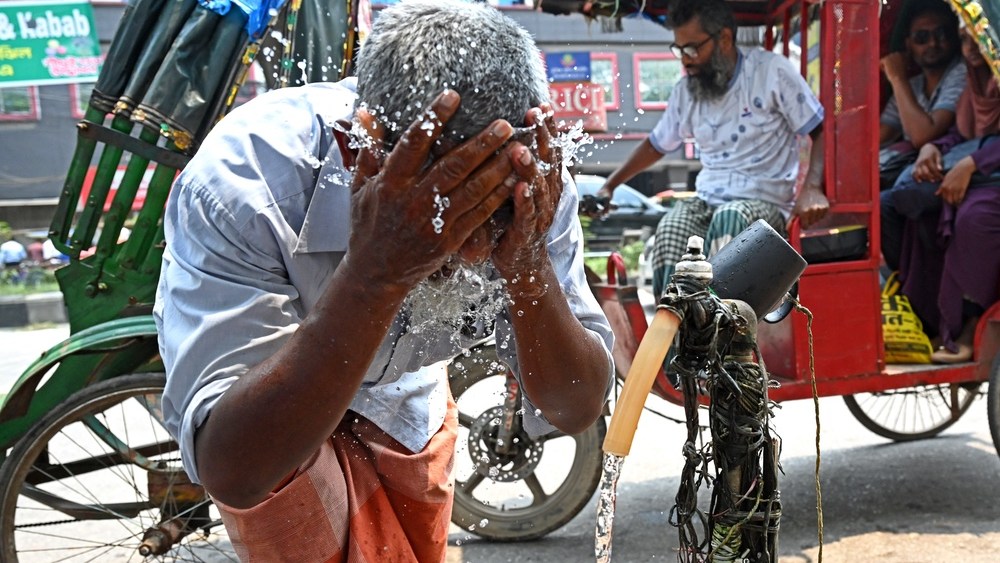
Without adaptation, rising temperatures could shrink South Asia’s gross domestic product by 7 percent by 2050, amounting to the steepest loss among developing regions, according to a new World Bank report published Wednesday.
While South Asia has been getting hotter for years, the pace has accelerated sharply, especially in the last two decades, the organization said.
The costs of inaction—failing to invest in the human, natural and physical infrastructure cities will need, or to strengthen the rules and institutions that govern heat—are also large and growing. Extreme heat already costs South Asia the equivalent of 31 million full-time jobs a year as workers slow down, stop early or fall ill, while heat-related failures in power, transport and buildings ripple through incomes, investment and output. In Bangladesh alone, heat-induced productivity losses in 2024 cost the country $1.3-$1.8 billion, or the equivalent of 0.3-0.4 percent of GDP.
By 2070, roughly 520 million people in the region will face a month or more of dangerous heat each year, or four times as many as today, with exposure concentrated in cities that trap heat long after sunset and remain more than 10 degrees Celsius hotter at night than the surrounding countryside. Meanwhile, the poorest bear the brunt, with informal workers’ earnings falling about 40 percent during heatwaves.
Achieving change, the report said, will require action at every level. National governments should set standards, build regulatory frameworks and create financing mechanisms. State and city governments need to incorporate heat risk into planning, budgeting, procurement, emergency response and infrastructure delivery. The private sector can bring investment, technology and innovation, especially in sustainable cooling, resilient buildings and efficient industrial systems. Development partners can offer finance, knowledge and implementation support.
“For the World Bank Group, heat resilience is part of a broader development agenda: protecting people, strengthening infrastructure, supporting jobs, mobilizing private capital and helping cities adapt to a changing climate,” it said. “The choices made in the coming years will determine whether South Asia’s urban growth deepens vulnerability or builds resilience.”
Getting what they’re owed
Migrant workers in Taiwan who paid hundreds and even thousands of dollars in recruitment fees have received more than $4 million in reimbursements from suppliers and some buyers, with repayments on track to reach almost $6 million, Transparentem said in an update Thursday.
The repayments to hundreds of workers from Indonesia, the Philippines, Thailand and Vietnam followed the New York nonprofit’s investigation into forced labor and other labor abuses in Taiwan’s textile industry, after months of efforts from buyers, suppliers and industry associations.
Beyond remediation at individual factories, broader changes are taking hold across Taiwan. The textile industry association now recommends that factories cover all recruitment costs, while the government has pledged to ban worker-paid recruitment fees and related costs within the next three years. Taiwan’s main oversight agency also opened an investigation prompted by Transparentem’s report, found the industry’s abuse-fighting efforts were failing and called for reform.
Despite this progress, remediating longstanding abuses has been “unacceptably slow,” Transparentem said.
“The delays mean that some workers have left factories and may not be located for repayment,” it said. “Some eligible workers who are still employed have not received payments or have not received all they are due, because their employers are repaying them gradually. And many buyers have not stepped up to contribute to fee repayment, further prolonging the process.”
Together, these delays and problems signal that buyers and suppliers have not only failed to prevent problems, but have also failed to plan for the foreseeable risk that workers in their factories and supply chains were paying recruitment fees, the organization added.
“Nevertheless, companies that provided remedy to workers should be commended,” it added. “Better conditions and repaid recruitment fees have had a significant positive impact on workers’ lives. The returned money has given workers a measure of financial security and even allowed some to begin to invest in a better future for themselves and their families.”
Union-busting busted
Three garment workers fired after forming a union at a South Korean-owned factory in Cambodia have reached a rare out-of-court settlement, ending a yearslong labor dispute, the Center for Alliance of Labor and Human Rights, better known as CENTRAL, said Tuesday.
The case dates to 2017, when workers at CIK Cambodia Co. formed a union in response to the factory’s alleged practice of dismissing pregnant employees. When three of the union’s founding members were suddenly let go, labor groups such as the Coalition of Cambodian Apparel Workers’ Democratic Union and CENTRAL called it a clear example of union-busting.
A 2018 Better Factories Cambodia assessment recorded non-compliance with workers’ rights to join and form unions freely, as well as the termination of pregnant workers.
Brands that CIK Cambodia Co. produced for included DAIZ, Bonafit and Guess.
As part of the agreement, all parties have committed to concluding all ongoing legal proceedings and resolving any outstanding issues in accordance with Cambodian law, reflecting their “mutual intention to move forward in a spirit of cooperation, good faith, and respect during the mediation process” between CENTRAL and the company’s lawyer.
While the result is not fully satisfactory, Khun Tharo, program manager at CENTRAL, said the organization respects the workers’ decision.
“We appreciate all partners involved in the process including Korean Transnational Corporation Watch, Business and Human Rights Centre and greatly appreciate the positive example set by the intervention of the Korean government in support of workers in a Korean-owned company,” he said in a statement. “We hope the workers will return to work and continue their peaceful lives and will continue monitoring the implementation of the agreement.”
