

One bright spring day in Paris, the man who would years later become my husband and I walked over a stone bridge onto the Ile St Louis to meet a distant cousin of his grandmother. In the dark, smoky, wood-lined interior of a tiny bistro, this princess from another world removed her chinchilla coat. I tried to restrain myself from asking her too quickly if it was true that she was Marcel Proust’s goddaughter. She said that she was.
Princess Priscilla Bibesco did not remember anything about her godfather, who died when she was two. But from the cork-lined bedroom into which the novelist had retreated (to block out noise, dust, and all other distractions) he wrote to Priscilla’s father in 1920: “It is in this little girl that all we know now continues.” And here she was: the only child of Proust’s handsome, charming, aristocratic friend, the Romanian diplomat, Prince Antoine Bibesco. It was Antoine, with whom Proust had a secret language and on whom Proust based the figure of the Marquis de Saint-Loup in In Search of Lost Time.
After lunch, we stepped with her across the cobbles to 45 Quai Bourbon, where her first-floor apartment faced the Seine from the end of the island like the prow of a ship sailing towards Notre Dame. This apartment in itself told a story of grandeur and decline. At one point, the proud Bibescos owned the whole house, a golden limestone palace with the Seine as its moat. But by now, with the other apartments sold off, the princess had retreated into the piano nobile.
We climbed up the winding back stairs into a light-flooded expanse of polished parquet floors, gilt-tooled leather-bound books, Louis XVI furniture, rugs, Édouard Vuillard paintings, and John Singer Sargent charcoal drawings of women. Most beautiful of all was the way that everything—the walls, the silk curtains—reflected water and sky in a pale shade of eau de nil, the river bouncing sunlight through the glass. The Belle Epoque, that retrospectively-named period when the Third Republic was rebuilding the city into the “capital of the nineteenth century” (as Walter Benjamin would call it), had captured my imagination.

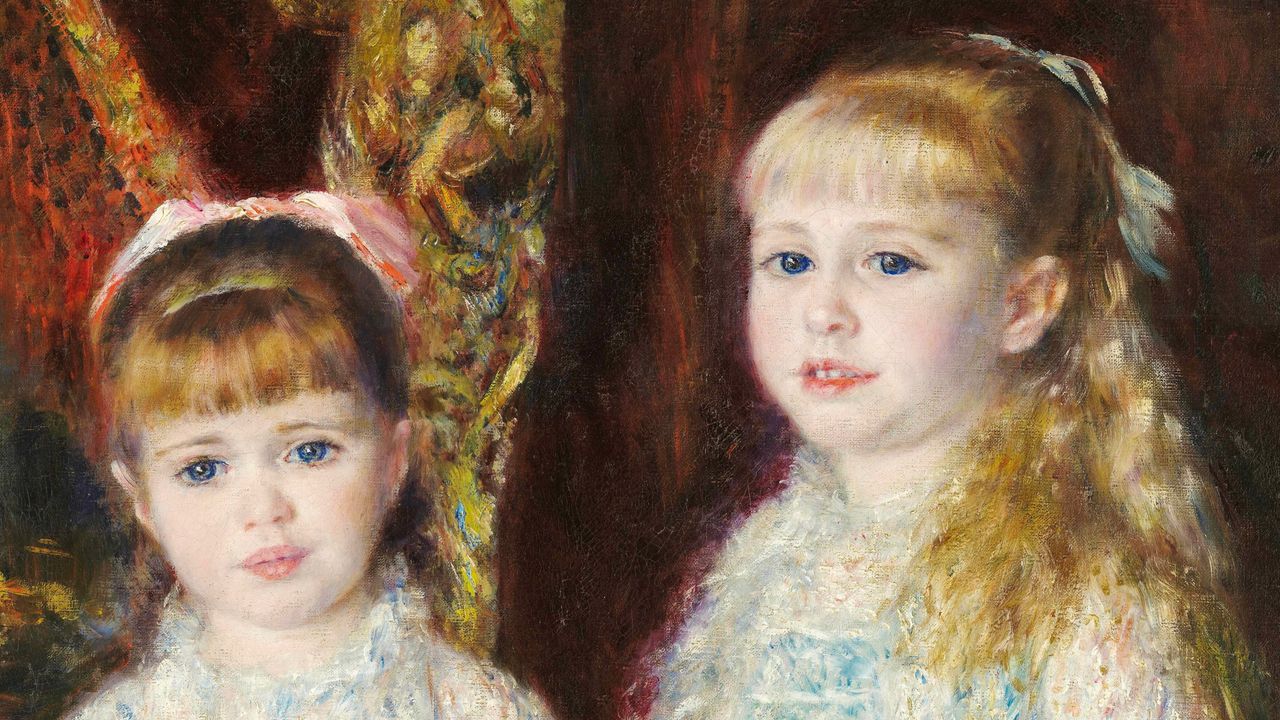
Pierre-Auguste Renoir, Madame Georges Charpentier (Marguerite-Louise Lemonnier, 1848–1904) and Her Children, Georgette-Berthe (1872–1945) and Paul-Emile-Charles (1875–1895), 1878, oil on canvas.Photo: Sepia Times / Universal Images Group / Getty Images
Somewhere in the same dreamscape was the Impressionist art I had seen—paintings such as Pierre-Auguste Renoir’s Mme Charpentier and her children, hanging in the Metropolitan Museum in New York, in which Mme Charpentier’s kindly face watches over her two frothily dressed children. Proust wrote about this painting that Renoir had depicted “the poetry of an elegant home and the beautiful dresses of our time.” (Mme Charpentier wears black and white couture from the House of Worth.)
