

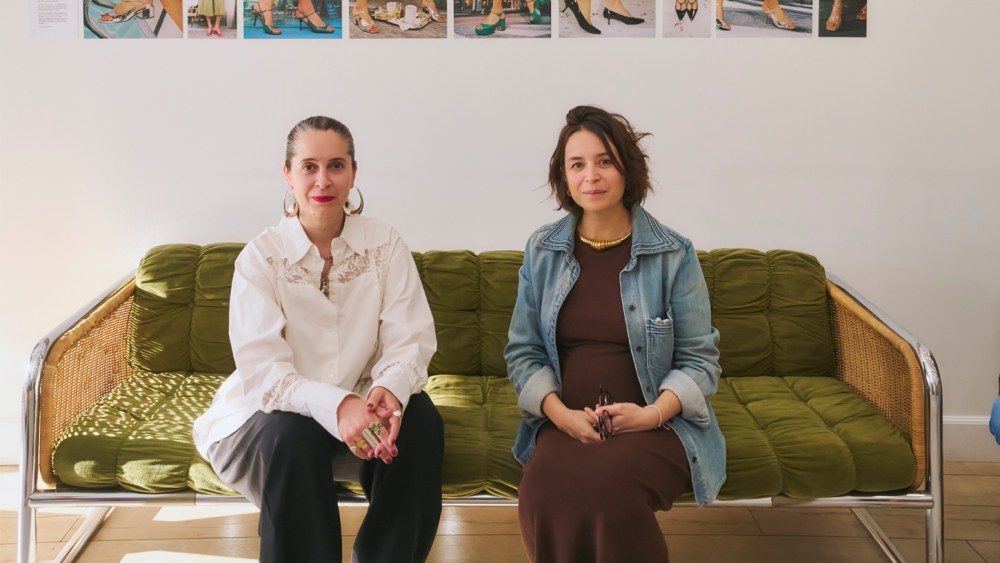
In a moment when technology is bringing a fresh wave of AI-powered disruption, Nomasei founders Marine Braquet and Paule Tenaillon are almost radical in how deliberately human their approach to disruption is.
“Maybe it’s more than ever back to basic skills: Always more soft skills and human skills are key from what we experience,” Braquet told Footwear News. “The work of the hand, the expertise of craftsmanship and creativity are key for us.”
So is being flexible, agile and having a will to go that step further in search of coherence, consistency and relevance, Tenaillon is quick to add.
That “human first, values first, craft first” approach is also how they’ve built Nomasei as a brand that’s explicitly about women, for women. And empowerment is not a fuzzy notion to the founders; it’s a daily necessity that comes with “comfort and with a design that flatters the silhouettes.”
Enabling women to take on their day is their definition of success, one that has not been diluted by six years of building Nomasi in a tough market. If anything, it’s only solidified their resolve.
Tenaillon traces that back to why she went down the footwear path.
“I began designing shoes because they were synonymous of beauty and harmony and happiness. It was very emotional, and it’s still the same today,” she said.
Both founders talked of power as being a matter of impact and alignment, never ego. Braquet framed it as a personal satisfaction at seeing vision and values come together to “create a movement in a collective group,” she said. “This makes me feel powerful, the power of the team.”
For Tenaillon, it comes from a result that is visible, tangible and out in the world, “when I see the product I designed being worn, appreciated and fulfilling its mission and that gives happiness to the women who are wearing them.”
The path there has not been smooth. As female founders, they faced “men patronizing us for sure and the imposter syndrome that is a real deal, but we learned to put behind us little by little,” Braquet said. “Being two women actually helps because we support each other by reflecting on some situations [such as] dismissive or condescending behavior.”
Over time, that resistance has sharpened their instincts rather than eroded their confidence. “We’ve learned how to trust our intuition more and to say no to them and to follow our guts,” she continued.
The best they can do for the next generation is to “say the truth about the reality of building of business,” the founders said. “It’s a lot of hard work. It doesn’t come easy.”
Braquet added that it was crucial to “be aware from the start what your skills are and aren’t” and to “surround yourself from the beginning to avoid certain mistakes.”
One of them would be to stay in your lane. “Open your network more. That’s how you get access to funding and and opportunities,” Braquet continued.
If Nomasei started as a quest to make luxury-level footwear comfortable enough to be danced in at prices that their friends could stomach, Braquet and Tenaillon’s bet now is that female entrepreneurship backed by craft, comfort and clear-eyed realism about the grind can do more than sell their shoes. It could pave the road for the next generation, too.
A version of this article appeared in the June 1 print issue of FN, as part of the “Women Who Rock” special section. On June 3, FN and Two Ten Footwear Foundation honored these women at the annual live event in New York City.
