

The clothes are on fire.
A widely accepted statistic about the fashion industry: somewhere in the world, a garbage truck full of clothing gets burned every second, if not thrown into landfills. The flames have ceased to be metaphorical for an industry long guilty of overproduction; the global fashion industry is simply making too many clothes.
There is another way to look at this. If every factory in the world stopped production, as per another statistic, people wouldn’t run out of things to wear. There would still be enough clothes for the next seven generations of consumers.
But regardless how the problem is painted, either in flames or in generational excess, this still speaks to an economic reality that circular fashion entrepreneurs like Vincent van der Holst know all too well: it is difficult to turn a profit from clothes that somebody else already wore.
“I very much believe that the first step to circularity is using and reselling what we already have,” he told Sourcing Journal. “In those seven generations of clothing, there’s definitely trillions of dollars of value captured somehow and it’s very hard to release because this is such an extremely fragmented and manual process.”
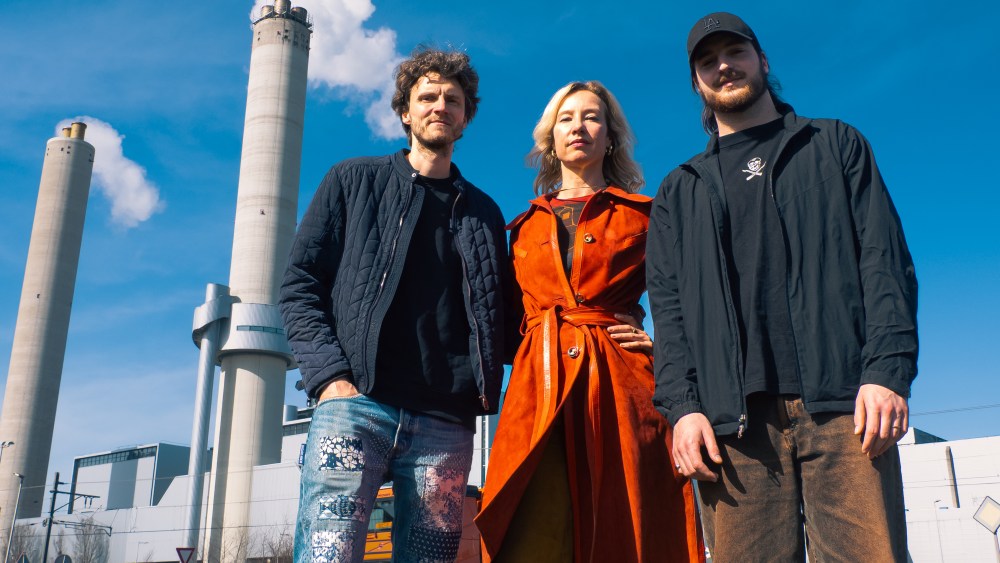
Van Der Holst, 33, co-founded a fashion startup in 2025 that wants to rewrite that economic reality with the help of AI and robotics. Under the status quo, a retailer would have to spend a considerable amount of time and resources to prepare a single preloved garment for online resale. From doing due diligence like ironing and quality checks to taking measurements and pictures for posting, the process could take an average of 20 minutes for each piece of secondhand clothing, as per his estimates. VNYX, a tech startup he co-founded with Romy Goedhart and Balazs Kosa, aims to do it all under one minute. So far, he said their proprietary technology could already do so in three minutes.
The name came from the mythological bird that rises from the ashes—a nod, he said, to the huge piles of clothes that are burned simply because doing so is cheaper for the global profit-oriented fashion industry. The goal of VNYX is simple, and it is even the slogan on its website: Make Resale Profitable.
The industry loves talking about the circular economy, but the trail of money, or the lack thereof, tells a different story. Only 2 percent of investments have gone to circular businesses, according to estimates in the Circularity Gap Report Finance in 2025, the world’s first empirical study that quantified the financial streams to circular business models. This reality does not escape even the most idealistic in the industry, including Van Der Holst, who also co-founded a startup a few years ago called BOAS, a Profit for Good company selling pre-owned vintage fashion and donating most of its profits to charities.
“If you produce sustainable clothing, for example, that would be more difficult,” he said. “But we sell robotics and AI to logistics companies who would use it to process more and more clothing, which makes it a really interesting investment case,” he said.

The first version of the robotics, as featured at the Global Fashion Summit in Copenhagen in 2025.
VNYX seems to be enjoying a momentum that is otherwise hard to come in this line of business. Last May, it announced it secured 1.3 million euros in funding, money that Van Der Holst said he did not expect to get. They were only aiming for a fraction of it. But the investment speaks volumes to the investor interest in the pitch, granted that they can prove it works at the scale it promises. The startup currently finds itself in a Catch-22 situation: to show it works, it needs funding. To get funding, it needs to show it works.
But thankfully there were investors who believed in the vision before they saw the product, including an angel investor who Van Der Holst said started them with 20,000 euros. To develop the robotics required, VNYX tapped Dutch design firm Sparks, which agreed on the project in exchange for equity in the company. It has already proven that the model could work. The early prototype was able to process 10,000 used garments a year.
Van Der Holst deferred from disclosing the specifics of the latest prototype as patent applications are prepared, but he described it as a system with “specially adapted hanging devices” that would essentially automate nearly the entire process at scale, aided by an AI that would process the necessary information about the preloved garment, including a lifelike digital avatar wearing it. This new prototype, called VNYX100, would be able to process 100,000 garments a year.
“We’re seeing that the market wants it, and preferably they want it now, actually,” he said, calling this excitement “a good problem to have.” Because of this interest, he said they are trying to see if they could build a system capable of processing a million garments annually by next year, a goal they were originally eyeing for 2028. But for now, it’s all about hitting 100,000.
It remains to be seen if the law could push the industry where the market couldn’t. Government pressure, however, is already underway. The European Union will ban the destruction of unsold clothes and shoes starting July, as part of the bloc’s framework called the Ecodesign for Sustainable Products Regulation (ESPR). Whether or not VNYX could grab this opportunity is another story, but Van Der Holst, who broke a world record in 2024 for the greatest distance cycled without using his hands, is more than willing to try.
