

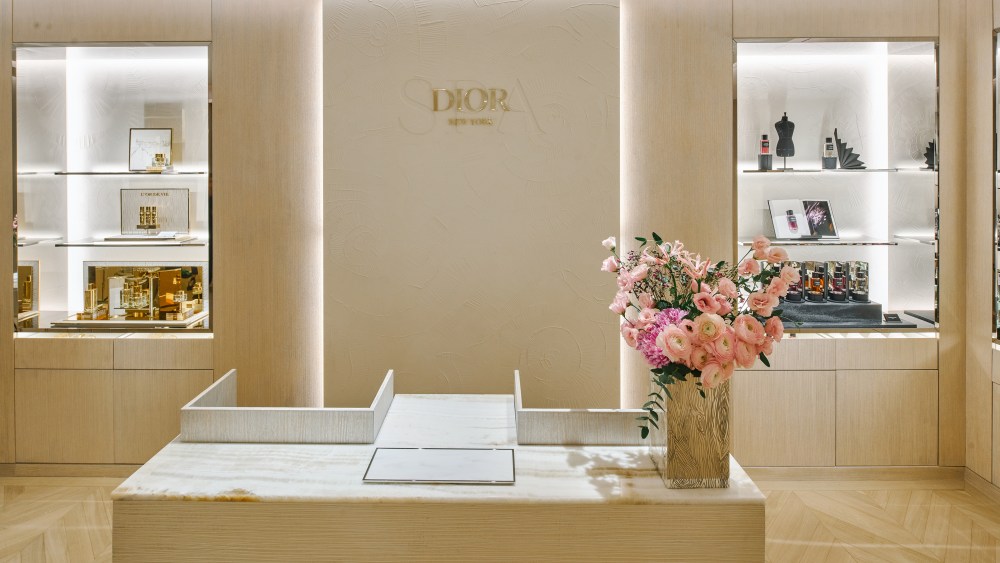
As the French elite gather in New York to celebrate 250 years of Franco-American luxury with Comité Colbert this month, they can toast a U.S. market that is now key to driving the sector forward.
But with any excitement about the U.S. resurgence comes some anxiety and one key question: Will the momentum of the still-nascent recovery hold?
The hope is a very firm yes as the U.S. is the only game in town right now.
China, the driver of the luxury world for a decade, has become iffy. The home market for most high-end European brands is only OK. And the still simmering U.S.-Israeli war in Iran, which has already pushed up oil prices and could wreak global economic havoc, is the industry’s other big question.
Even Bernard Arnault, chairman and chief executive officer of LVMH Moët Hennessy Louis Vuitton, told investors last month that if the Middle East goes bad, it could be very bad.
“It all depends on how this crisis plays out,” Arnault said. “Either it will be a global catastrophe, so to speak, with extremely serious and highly negative economic impacts, and if that’s the case, who can say how 2026 will unfold?”
If the standoff is resolved quickly, the luxury titan said that “chances are” LVMH will “continue to gain market share, as we did in 2025.”
Gaining share in a market as diverse as the U.S. is always a trick, although it’s one that Arnault & Co. has been working toward for years — and with all the resources a brand could want.
Louis Vuitton, for instance, just held its cruise 2027 show in New York — while LVMH stablemate Dior headed to Los Angeles — and is preparing to open a multifaceted, mega-flagship with a permanent exhibition space and multiple eateries in Beverly Hills in 2029. More than a store, the flagship will be a single building with two structures that are connected by pedestrian bridges.
That, for sure, is one way to plant your flag in the U.S., but not the only one as many brands are also pushing out deeper in the market than ever before.
“There are these tertiary markets that are starting to pop up out of necessity,” said Michael Prendergast, managing director in Alvarez & Marsal’s consumer and retail group, who pointed to Westport, Conn.
“There is this really great outdoor downtown area and it’s been upper middle to sort of high-endish brands like Aeire, Faherty, Lululemon, a couple of cosmetic shops and then Chanel shows up. And that’s a small format Chanel too. You’re going to start to see more of that. What pops up in Charleston, S.C.? What pops up in these areas around a high income area?”
Of course the stand-alone store push is nothing new.
Luxury brands have for years been focused on building their own direct-to-consumer U.S. presences. But the Saks Global bankruptcy appears to have given them a nudge to go a little further.
Saks Global has gone a long way toward righting its business and is preparing to exit bankruptcy this summer — but with a trimmer profile and less than half as many Saks Fifth Avenue doors. Most of its Neiman Marcus stores will remain open, but that still has luxury looking at a smaller department store universe in the U.S.
And brands could be feeling a little “once bitten and twice shy.”
“Reading between the lines, a lot of the luxury houses are thinking better off for us to invest in our own stores and build out our own brand and control the experience,” Prendergast said. “And honestly, nobody is better at it than they are. The Hermès store in downtown Greenwich — you walk in there and you feel elevated and you feel the luxury.
“You’ll start to see some interesting, more micro-oriented decisions that are happening by these luxury brands that will set them up for success in the U.S. market,” he said.
And that’s just one way the established luxury houses will have to flex to really make it in the U.S. market, where the consumer sensibility is different and a different feel is required.
While high-end brands have proven to be malleable enough to, say, add sneakers to their collections or bring edgy designers into stately houses, it’s always a question of just how much should a brand flex as it expands.
“It’s very dangerous territory for them,” Prendergast said. “The luxury brands have established a brand equity that gives them a license to almost do whatever they want. However, it’s the challenge of: Is it brand appropriate? And will it resonate with my customers? And does it create some excitement?
“Some of the brands have done a great job of that,” he said. “And some have gotten into trouble like Gucci by doing a little bit of it and being successful and then chasing a market that’s too trendy, too embellished, too far out of their core and thinking, ‘Well, it’s great because it’s Gucci.’ And then what happens is it’s not great because the cool crowd doesn’t want it. There’s this odd balance of doing new, innovative, interesting things that I think it’s a very small radius of getting outside of the core before you start alienating the customer.”
So as French luxury brands expand in America — and no doubt keep trying new things — they’ll also have to mind their roots at home.
Certainly, the American competition is looking to expand the other way with Veronica Beard, James Perse and Frame stores all landing on Rue François 1er in Paris this year.
What those clearly prove is that the special relationship between America and France is, even after 250 years, still very much alive and well.
