

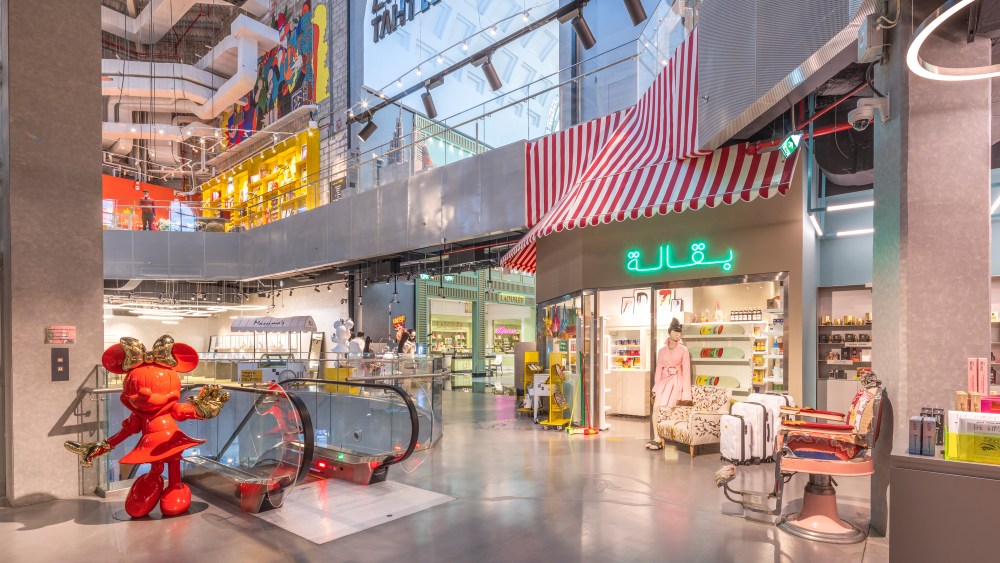
DUBAI — Majid Al Futtaim is closing THAT Concept Store, the homegrown multibrand retailer it launched at Mall of the Emirates in 2021, and redeploying its space as part of a $1.3 billion overhaul of the Dubai shopping center.
In a statement provided exclusively to WWD, the company framed the move as a strategic reset rather than a retreat. The mall, it said, “will be reimagined as a next-generation lifestyle destination,” with an elevated luxury footprint and new experience-led concepts.
“As part of this transformation, THAT’s footprint will be redeployed to support this bold new vision.”
The group said it would honor THAT’s legacy “by delivering a sharper luxury proposition, stronger global brand partnerships, and a truly immersive destination experience.”
The final date of closing has yet to be determined.
THAT opened in January 2021 as Majid Al Futtaim’s first homegrown concept destination, occupying more than 48,000 square feet across two floors in the mall’s Via Rodeo luxury wing. The store carries more than 150 international and regional labels across fashion, fine jewelry, beauty, interiors and art, tilting toward designer names hard to find elsewhere in the region, from JW Anderson, Simone Rocha and Marni to regional talent such as Bil Arabi and Azza Fahmy. Paired with a beauty and grooming hub, a fitness studio and art space, it filled a niche for a curated, discovery-led alternative to the department store that placed emerging regional designers next to global cult brands.
Before the current turmoil in the region, Majid Al Futtaim unveiled the expansion in April 2025 to mark the mall’s 20th anniversary, with roughly 100 new stores planned. Recent months have brought first-to-market openings including Ulta Beauty’s January UAE debut, underscoring that the group is adding retail weight even as it sheds its own concept.
Still, the closure of a flagship homegrown brand arrives at one of the most turbulent moments for Gulf retail in years. Since the U.S.-Israeli strikes on Iran in late February, the UAE’s tourism-dependent retail economy has been under acute strain. Dubai hotel occupancy, 84.7 percent in February per CoStar, fell to 33.1 percent in March, and Moody’s Analytics has warned it could slide toward 10 percent in the second quarter.
That matters for fashion. Tourists account for an estimated 60 percent of UAE luxury spending, according to Morgan Stanley, and the wider region represents 5 to 10 percent of global luxury sales. With long-haul arrivals stalling, brands run by Chalhoub Group and Kering temporarily thinned operations after the strikes. Debenhams has exited Dubai Mall for digital, West Elm and Pottery Barn are winding down, and marquee hotels, including the Armani Hotel Dubai and Burj Al Arab, have gone dark for extended refurbishment.
This backdrop frames Majid Al Futtaim’s decision to reposition real estate during a downturn. The closure of THAT ends a homegrown experiment in concept retail, with global partnerships and experience being positioned as the engine of growth of the mall’s next chapter.
