

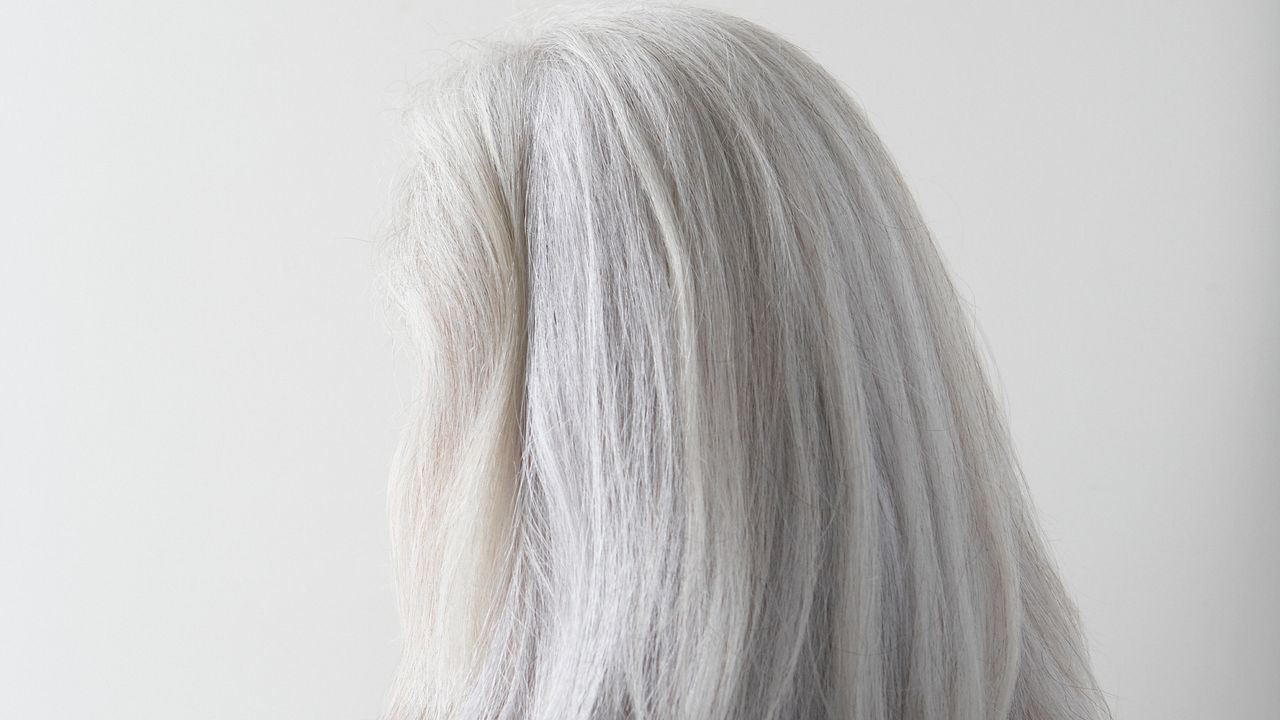
For the longest time, gray hair has been a telltale symbol of aging. But as it turns out, there are a few other factors to consider when your natural hair color loses its vibrant pigment. After analyzing the origin of gray hair, Robert H. Shmerling, senior teaching editor at Harvard Health Publishing, concluded that there is more than one reason they appear.
To illustrate this, the doctor begins with this example: The physical change of former President Obama before he ran for president and after he left office. If we contrast the before and after photos, the increased amount of gray on Obama’s head is pretty glaring. “It seems like the stress of governing a country would turn anyone’s hair gray,” notes Shmerling in an article on the university’s website. “But is stress really the culprit? And why does hair turn gray, even for those of us who don’t have a job as stressful as the president of the United States?” he asks.
According to the doctor, stress can definitely be a culprit—but gray hair actually comes down to many other factors as well.
Your Genetics
“Hair aging depends on both genetic and environmental factors, and has a key turning point around the fifth or sixth decade of life, where hair has less quality and volume, is frizzy, loses pigment, and gray hair appears,” explains Judith Joseph, psychiatrist and ambassador for Vichy Laboratories.
Joseph’s argument matches Shmerling’s research. “The timing and depth at which gray hair turns white depend mainly on the genes we inherit from our parents. Although stress may play a role in the process, it would be more useful to look at past generations rather than our current stress levels to help us predict when or if we will turn gray. This is true whether we are the president of the United States or have a less stressful job.”
All the Stress
A hectic lifestyle can certainly cause hair to age, but it isn’t the direct cause of gray hair—it’s a little more roundabout than that. “In humans, most gray hair is not related to stress. In fact, hair doesn’t actually ‘turn’ gray at all,” Shmerling says. “Once a hair follicle produces hair, the color is fixed. If a single strand of hair starts out brown (or red, or black, or blonde), it will never change color. Hair follicles produce less color as they age, so when hair goes through its natural cycle of death and regeneration, it is more likely to grow in gray from the age of 35. Genetics can influence when this starts.”
Although stress cannot change the color of individual strands of hair, it can trigger what is known as telogen effluvium, which causes hair to fall out up to three times faster than normal. “The hair grows back, so the condition does not cause baldness. But if you are middle-aged and your hair is falling out and regenerating faster due to stress, it is possible that the hair that grows back is gray instead of its original color,” Shmerling says.
Joseph explains it this way: “When we lose hair, we become stressed and release cortisol. This increase in cortisol can aggravate hair loss and alter hormones such as estrogen and testosterone, which would ultimately further exacerbate hair loss. It sounds like a classic case of the chicken or the egg, but this vicious cycle is well studied: We need to make sure we address both issues, stop hair loss, and reduce stress levels.”
