

I first visited Mercedes-Benz Fashion Week (MBFW) Tbilisi in 2018, and at the time, the city was full of creative optimism. Demna, a famous Georgian fashion export, was making waves at Balenciaga and Vetements, and plenty of eyes were on the capital, scouting for the next breakout star. Designers, drag performers, and club kids alike were collaborating on subversive, politically charged shows and events, culminating in an output that was an electric mélange of queer culture, performance, and bold resistance to the nation’s Soviet roots.
But MBFW Tbilisi has taken place intermittently over the years since. Following Russia’s invasion of Ukraine, the nation’s right-wing Georgian Dream party became increasingly conservative and pro-Russia, prompting political unrest and violent protests across the nation that both prevented fashion week and threatened the local creative community.
In 2024, the government then passed an anti-LGBTQ+ bill, which has deeply affected Georgia’s fashion industry, commercially and creatively. That same year, MBFW Tbilisi founder Sofia Tchkonia held Culture Days, a scaled-back take on fashion week allowing designers to express themselves and share their experiences with the world, via exhibitions, installations, and shows. The Fall/Winter 2026 edition of MBFW Tbilisi, which ran from May 7 to 11, was the first since May 2023.
“Over the last few years, while we were on pause, a few Georgian designers continued to grow globally despite difficult circumstances,” says Tchkonia, who founded MBFW Tbilisi in 2015. “But there was a clear need to bring back a strong platform that reconnects local talent with international buyers, press, and industry professionals. Relaunching MBFW Tbilisi is about supporting that momentum and creating opportunities for the next chapter of Georgian fashion.” To bring it to life, Tchkonia secured existing partners Mercedes-Benz and Coca-Cola, alongside newer organizations like Stenheim and recent hotel opening The Telegraph.
“Like many creative industries, fashion in Georgia has been affected by economic uncertainty, regional instability, and broader geopolitical tensions,” Tchkonia continues. “These realities impact production, logistics, investment, and international mobility. At the same time, the Georgian creative community has shown remarkable resilience. Designers have continued creating, adapting, and finding ways to stay internationally relevant despite difficult conditions. In many ways, those challenges have strengthened the authenticity and emotional depth of the work coming out of Georgia today.”

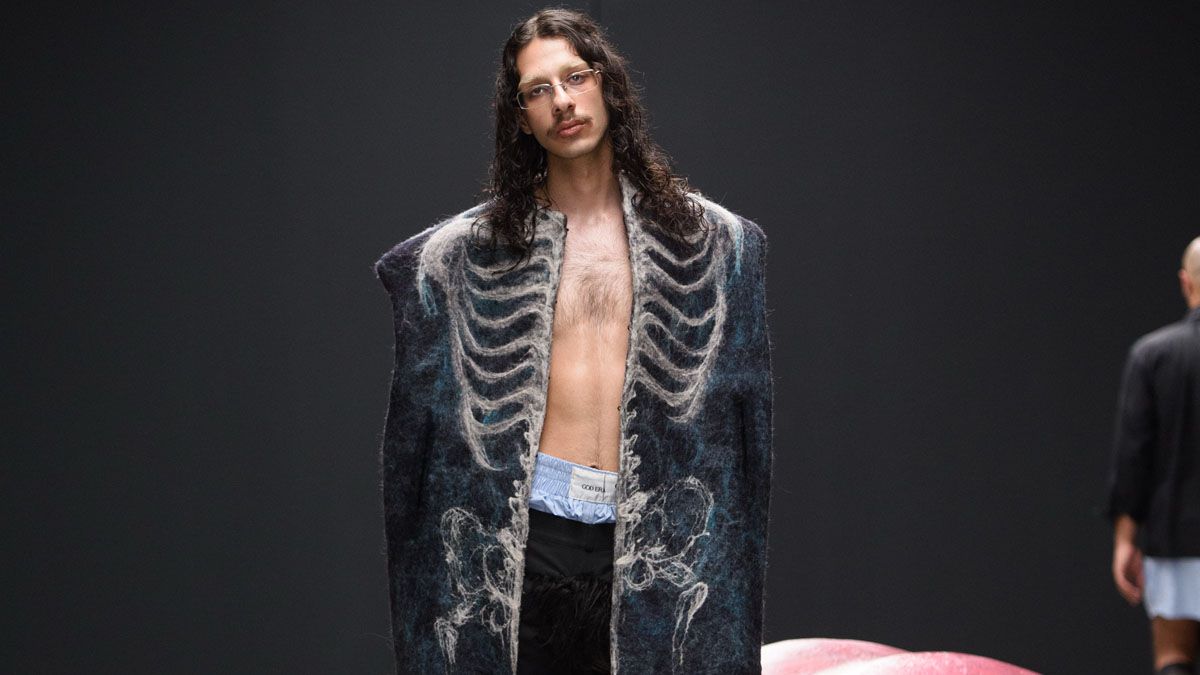
MBFW Tbilisi FW26 featured 11 shows and three exhibitions, alongside a rich program of concerts, cultural events, dinners, and of course the drag ball, now a Tbilisi institution. “There is really something special here in Georgia,” says Andam Prize founder Nathalie Dufour, who visited the capital for the third time this fashion week. “There’s lots of commerciality, the inspiration is very rich, [from] Saint Laurent to Balenciaga, but there’s something unique and dramatic about Georgian designers,” she says. “I’m sure it is not easy in terms of building an international career and finding buyers and press here. But the reason why they do what they do is so amazing.”
