

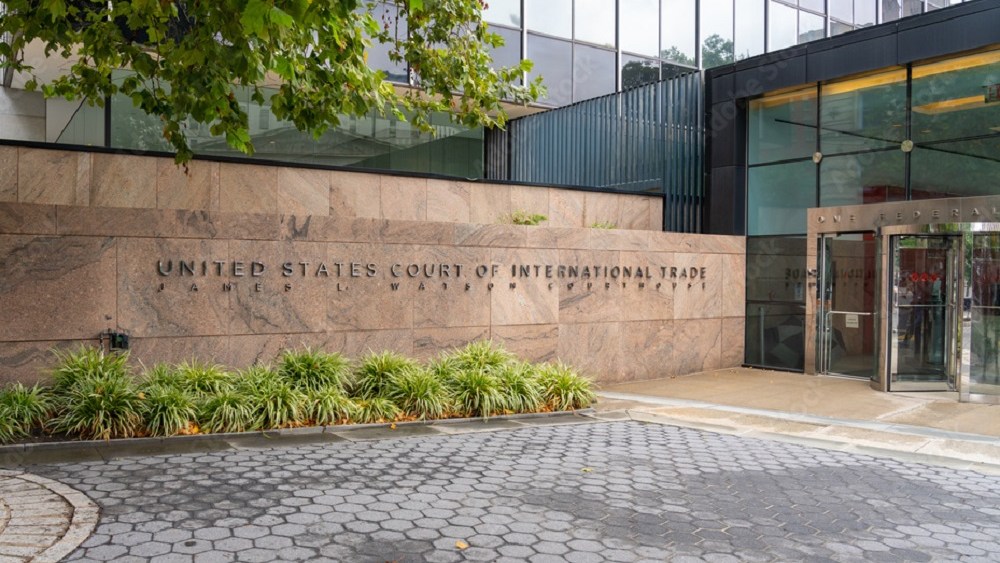
Global 10 percent tariffs imposed under the Trump administration’s second-string trade strategy were deemed unlawful by the Court of International Trade (CIT) this week—but that doesn’t mean importers should be counting on refunds anytime soon.
The same New York-based trade court that deemed President Donald Trump’s International Emergency Economic Powers Act (IEEPA) tariffs illegal in May of last year made the declaration on Thursday. Now that the industry has seen how that decision played out—namely, in months of appeals that ended, finally, in the Supreme Court—it would be wise to look to that precedent as a playbook for the administration’s forthcoming actions, experts say.
Like clockwork, the government filed a notice of appeal on the CIT decision Friday, alleviating any mystery as to its intent to seek an alternate outcome.
Trade lawyers weighed in with their predictions on what’s to come.
“I think it’s likely that we’re looking at another months-long appeal process, if not longer because time is not as much of-the-essence as it was in the IEEPA litigation; the Section 122 tariffs are statutorily limited to 15 percent and 150 days,” Luke Mathers, member and litigation lead at Sandler, Travis & Rosenberg, P.A. told Sourcing Journal. The tariffs, imposed on Feb. 24, were due to expire on July 24.
In the meantime, he said, the Department of Justice (DOJ) is likely going to move to stay the CIT’s judgment pending appeal.
“The case could potentially go to the Supreme Court, though the Supreme Court has discretion to decide whether to take up a case, and it could choose not to,” he added. Mathers noted that the High Court’s decision on the IEEPA tariffs in February was specific to the application of that statute alone, and therefore doesn’t establish a precedent in this case.
In other words, anything’s possible. The fate of the last set of global tariffs won’t necessarily determine the future of the ones at hand.
Before the government’s decision to appeal was made public, Lizbeth Levinson, co-chair of the International Trade Practice Group at Fox Rothschild, mused that there was a chance that the government “may just rest on its attempts to impose new Section 301 duties, a process that is now undergoing” since “[t]he courts have previously upheld the validity of the Section 301 duties” and the administration has a clear shot at success.
Section 301 investigations into dozens of U.S. trade partners are currently underway and being expedited by the U.S. Trade Representative (USTR), with the administration repeatedly stating its goal of reconstituting the defunct IEEPA duties. Should the Section 301 investigations yield evidence of wrongdoing, the administration could hit other economies with tariffs much higher than the Section 122 provision allows.
But Josh Teitelbaum, trade and policy expert and senior counsel at Akin Gump Strauss Hauer & Feld LLP, said he couldn’t see a situation where the government would readily abandon the current tariffs without a major fight.
“For a variety of reasons, I do not see a situation where they just let the 122 tariffs go away because the CIT issued a narrow ruling,” he said.
“Those reasons include the fact that tariffs are something the President obviously cares very deeply about, and that DOJ and USTR can work together to both defend their Section 122 policy and advance the Section 301 investigations,” he explained.
“The journey through the courts of the validity of the Section 122 tariffs is very likely going to go on for much longer than the tariffs will actually be in place,” he added. “So, there are many more steps between yesterday’s decision and a potential refund, including appeals potentially all the way up to the Supreme Court.”
What’s more, the trade lawyers said, the CIT’s Thursday decision applies only to the plaintiffs in the case, explicitly eschewing a universal injunction that would prompt Customs and Border Protection to refund all importers who paid the 10 percent duties over the past several months.
Because of this, Matthew Seligman, founder of Grayhawk Law, believes the government has a good chance of evading refunds for all.
“That implicates the lurking issue in the IEEPA tariff refund process—the government disputes the courts’ authority to issue such universal relief, and it’s on solid legal ground in doing so,” he said. A 2025 decision from the Supreme Court ruled that federal district courts don’t have the power to issue “universal” injunctions that apply to everyone, rather than just the plaintiffs in a case.
As such, “I expect that we’re going to have to bring a lot more cases again to get the benefit of the ruling,” Fox Rothschild’s Levinson added.
Now that the government has appealed the Section 122 decision, Seligman believes “we could be looking at IEEPA redux: many months before a final decision on the lawfulness of the Section 122 tariffs, while the government continues to collect them in the meantime—thus setting us up for another big refund fight.”
The government has firm ground to stand on in its appeal, though, he said, given that “the CIT acknowledged that the key statutory phrase, ‘balance-of-payments deficit’, was ambiguous.”
Lawyers for the government argued that America’s large trade deficit with the rest of the world constitutes a balance-of-payments crisis.
Seligman said that if, after this potentially grueling appeals process, refunds to importers are in order, “[w]e may see a process like CAPE—where the government issues refunds for entries up through 80 days post-liquidation, but not after that,” as has been deployed by customs for the IEEPA tariff refunds. “But whether CBP extends CAPE to the Section 122 tariffs is entirely within the administration’s discretion,” he added.
“I suspect that CBP would use CAPE to refund Section 122 tariffs,” Sandler, Travis & Rosenberg’s Mathers opined. “The way that the Section 122 tariffs were implemented through the tariff schedule was very similar to how the IEEPA tariffs were implemented, so it should not be difficult for CBP to expand the existing CAPE functionality to Section 122 tariffs.”
